

Blog
Why Is My Motorcycle Leaking Oil?
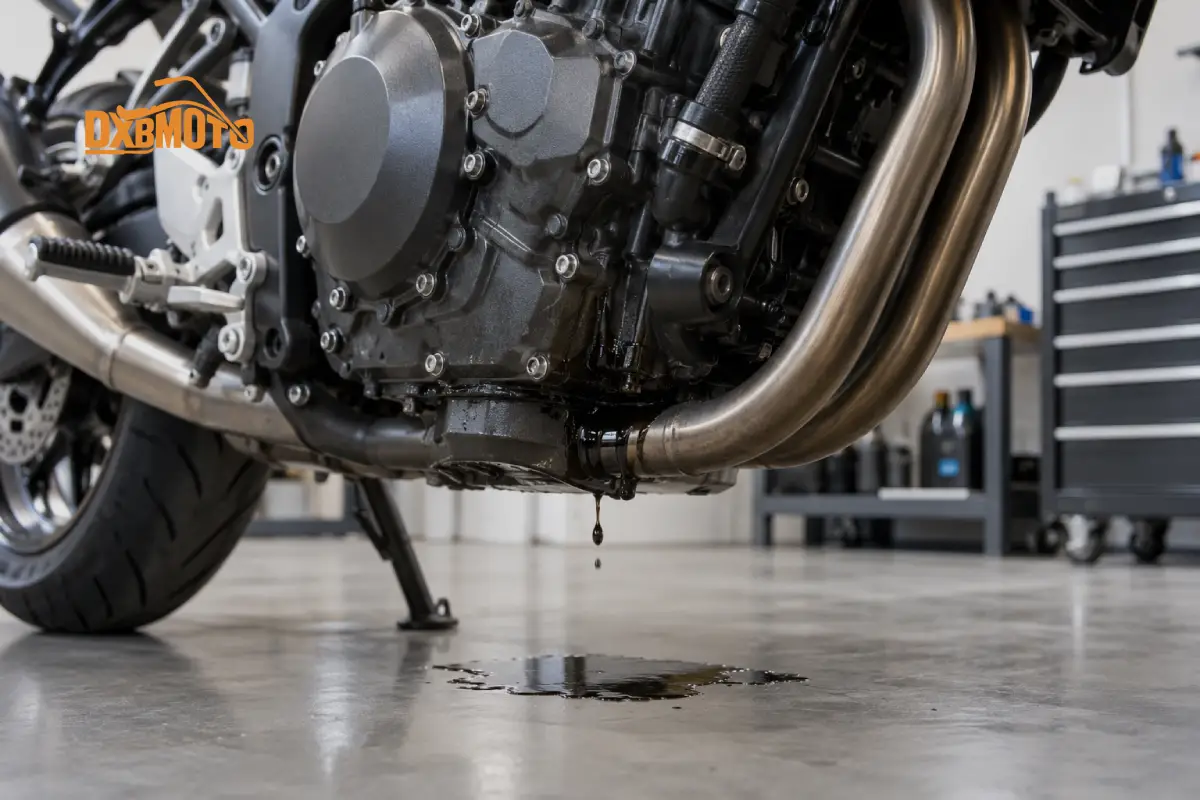
A failing gasket or seal most often causes a motorcycle engine oil leak, a drain plug or washer problem, an incorrectly fitted oil filter, overfilling, or damage to an engine cover or crankcase. Before replacing anything, locate where the fresh oil actually starts, because oil can travel across the engine and drip far from the real leak. Read more in this guide on DXB Moto.
Some leaks are minor seeps. Others can lower the oil level fast enough to damage the engine or put oil onto the tire, brake, or exhaust.
That means the first question should not be “Which gasket should I replace?” It should be “Where is the oil actually coming from, and how serious is the leak?”
What Causes a Motorcycle Engine Oil Leak?
Most motorcycle oil leaks start at an external sealing point. The location and timing of the leak can often narrow down the cause before any parts are removed.
| Possible Cause | Common Clue | What Usually Needs Checking |
|---|---|---|
| Engine gasket | Wet line around an engine joint | Gasket and sealing surface |
| Drain plug or washer | Oil underneath the engine, often after service | Washer, plug and threads |
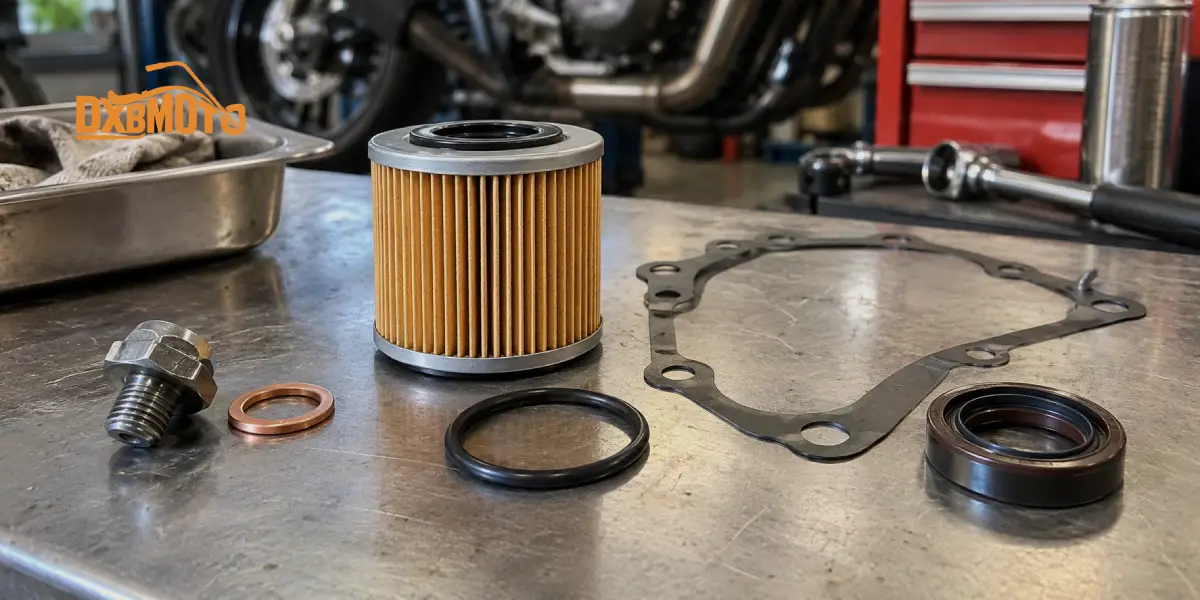
| Oil filter or O-ring | Fresh oil around filter area | Filter fitment and seal |
| Shaft oil seal | Oil concentrated around a shaft | Seal and shaft condition |
| Engine side cover | Oil around cover edge | Gasket, bolts and sealing surface |
| Too much engine oil | Leak or oil in airbox after oil change | Correct oil level |
| Crankcase breather problem | Repeated leaks or oil near breather | Breather hose and crankcase ventilation |
| Cracked case or sump | Leak following an impact or drop | Engine casing damage |
Worn or Damaged Gaskets
Gaskets seal the joints between different parts of the engine. Age, repeated heat cycles, incorrect installation, or damage to the sealing surface can eventually allow oil to escape.
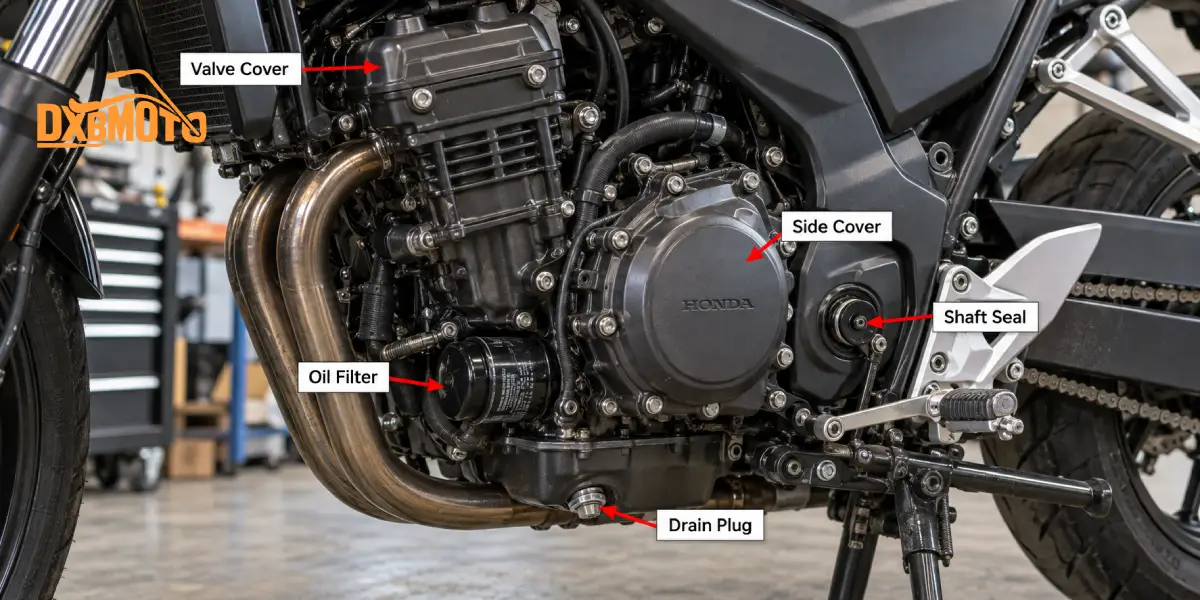
Common leak areas include the valve cover, engine side covers, cylinder base, and crankcase joints.
Important: Oil around the cylinder head does not automatically mean the head gasket has failed. A higher-up valve-cover leak can run down and make the source look much more serious than it really is.
Drain Plug or Crush Washer Problems
If the leak appeared immediately after an oil change, check the drain plug area early in the diagnosis.
Typical causes include:
- damaged or reused crush washer
- loose drain plug
- incorrect washer
- cross-threaded plug
- stripped threads
- damaged sealing surface
Do not keep tightening a leaking drain bolt until it stops. Over-tightening can damage the threads in the sump or crankcase, turning a simple sealing problem into a larger repair.
Use the torque specification for the specific motorcycle model, not a generic torque figure found online.
Oil Filter or O-Ring Leak
An oil filter leak often becomes obvious shortly after servicing.
Check for:
- loose filter
- damaged O-ring
- pinched O-ring
- incorrectly fitted filter
- dirt on the sealing surface
- an old gasket still stuck to the engine
Leaving the old filter gasket in place can create a double-gasket condition. The filter may appear installed correctly but can leak heavily once oil pressure rises.
Worn Shaft Oil Seals
Oil seals are used around moving shafts where a normal flat gasket cannot be used.
Depending on the motorcycle, possible leak points include the:
- gear-shift shaft
- countershaft/output shaft
- clutch pushrod
- crankshaft
Oil concentrated around one of these shafts is a stronger clue than oil found at the bottom of the engine.
Replacing the seal is not always the end of the diagnosis. A worn, damaged, or loose shaft can cause the replacement seal to leak again.
Engine Side-Cover Leaks
Clutch covers, stator covers, and other engine covers normally use a gasket, an O-ring, or a manufacturer-specified sealant.
Oil appearing around the cover edge may be caused by a failed gasket, incorrect installation, a damaged sealing surface, or fasteners not tightened properly.
Always follow the oil trail upward before blaming the lowest wet gasket.
Can Too Much Engine Oil Cause a Leak?
Yes. Overfilling can cause oil to be pushed through the crankcase ventilation system into the airbox or breather hoses.
If the problem started just after an oil change or top-up, verify the oil level using the procedure specified by the motorcycle manufacturer.
This matters because oil-level checking procedures differ between bikes. The engine may need to be warm or cold, the bike may need to be upright, and some models require a short waiting period before the reading is accurate.
Can a Blocked Crankcase Breather Cause an Oil Leak?
Yes. A restricted crankcase breather can increase pressure inside the engine and encourage oil to escape through seals or gaskets.
A breather hose may become kinked, blocked, or incorrectly routed.
This becomes particularly important when a seal or gasket is replaced, yet the leak keeps recurring. The visible leak may be the symptom, while excessive crankcase pressure is the actual problem.
Cracked Engine Case or Sump
Not every oil leak is a sealing problem.
The crankcase, sump, or engine cover can be damaged by:
- road debris
- hitting a curb
- a hard speed bump impact
- dropping the motorcycle
- an accident
- off-road impacts
A small crack may only seep oil at first. A larger crack can cause rapid oil loss.
If the casing itself is damaged or the oil level is dropping quickly, the motorcycle should be inspected before it is ridden again.
Do Not Diagnose an Oil Leak From the Drip Location Alone
The puddle underneath the motorcycle only tells you where the oil ended up.
Oil can move downward with gravity, spread across the engine while riding, collect on an engine cover, and finally drip from the lowest point.
The most useful clue is usually the highest point where fresh oil first becomes visible.
How Do I Find Where My Motorcycle Is Leaking Oil From?
Start with the highest fresh oil point, not the puddle on the floor.
Oil can run down the engine, spread while riding, and collect around the sump or side cover. The lowest wet area is often not the actual source.
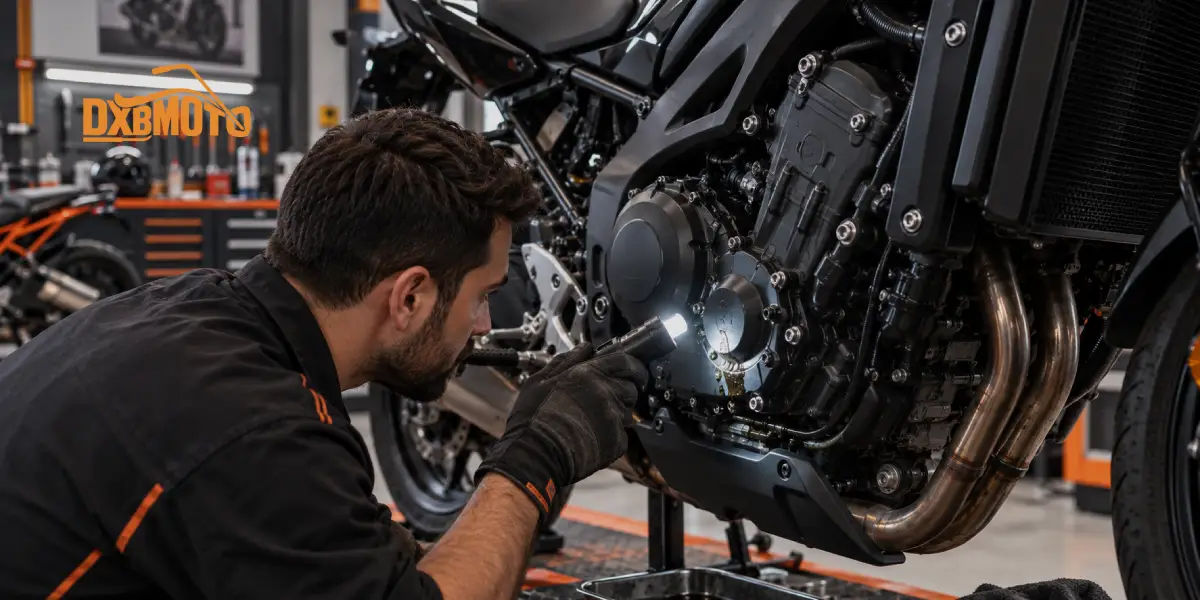
A practical inspection sequence is:
- Check the engine oil level first.
- Let the engine cool enough to inspect safely.
- Clean old oil and dirt from the affected area.
- Dry the engine surface.
- Start the motorcycle and let it idle.
- Watch for fresh oil appearing around seals, covers, filters, and joints.
- Trace the oil upward until you find the first wet point.
If the leak is very slow, inspect the area again after a short ride.
Use Powder to Trace a Slow Oil Leak
A very small seep can be difficult to see on a dark or dirty engine.
After cleaning and drying the area, a light dusting of talcum powder can make a fresh oil trail easier to spot. The oil will create a visible dark path through the powder.
For more difficult leaks, workshops may use an oil-compatible UV dye and inspection lamp.
Do not add random dye products to the engine. Use only products specifically suitable for engine oil systems.
Important: The point where oil drips onto the floor is not always the source of the leak. Always trace fresh oil upward before replacing a gasket, seal, or cover.
Is It Actually Engine Oil?
Not every oily-looking substance around a motorcycle engine is engine oil.
Chain lubricant, coolant, fork oil, brake fluid, and fuel can sometimes collect around the motorcycle and be mistaken for an engine leak.
| Fluid | What It May Look or Feel Like | Common Area |
|---|---|---|
| Engine oil | Oily, amber to dark brown/black | Engine cases, sump, filters and seals |
| Chain lubricant | Thick and sticky | Front sprocket, chain guard and rear wheel |
| Coolant | Thin, often coloured | Radiator, hoses and water pump |
| Fork oil | Oily film | Front fork tubes and fork seals |
| Brake fluid | Thin, clear to amber | Master cylinder, brake lines and calipers |
| Fuel | Thin with a strong petrol smell | Fuel tank, hoses and injectors/carburettor |
Color alone is not enough to identify the fluid.
Old engine oil may be very dark, while fresh oil can be light amber. Coolant colors also vary between manufacturers.
Chain Lube Can Look Like an Engine Oil Leak
This is particularly common around the front sprocket.
Excess chain lubricant mixes with road dirt, forming a thick black residue. It can then drip near the bottom of the engine and appear to be a crankcase or shaft-seal leak.
Clean the sprocket area before assuming engine oil is escaping from the countershaft seal.
What If the Engine Oil Level Is Going Down?
A falling oil level makes an actual engine oil leak more likely, but it still does not confirm where the oil is going.
Oil loss can happen through:
- an external leak
- oil entering the airbox through the breather
- internal oil consumption
- oil burning inside the engine
Blue exhaust smoke, oily spark plugs, or high oil consumption without visible external leakage can point toward an internal engine problem rather than a simple gasket leak.
Why Is My Motorcycle Leaking Oil From the Bottom of the Engine?
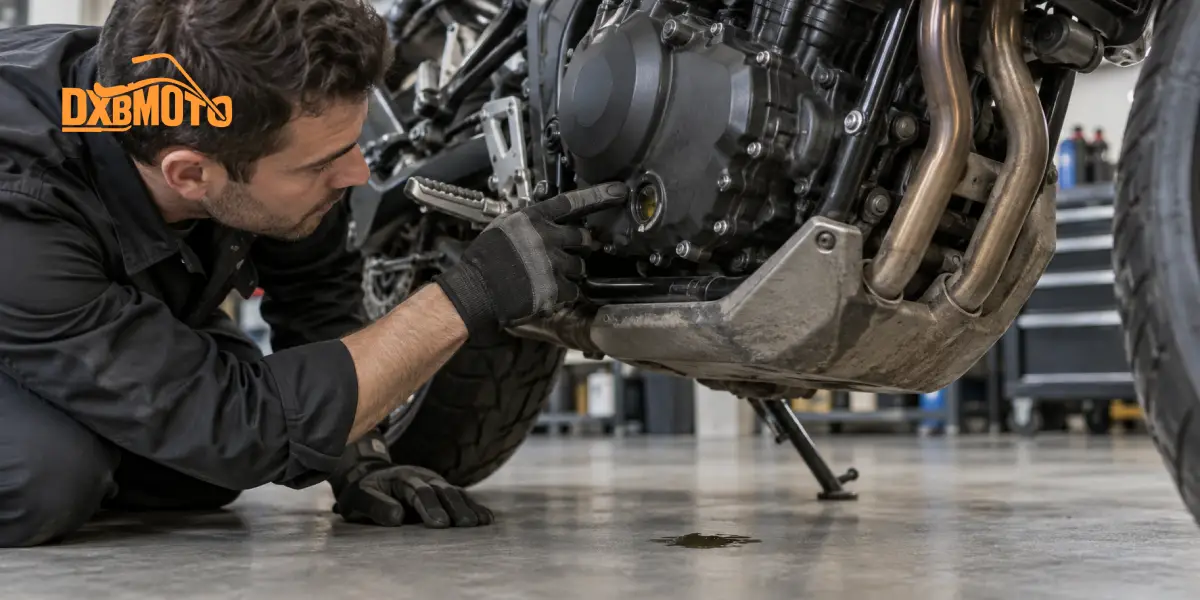
Oil dripping from the bottom of a motorcycle engine does not always mean the leak started there.
The most common areas to check are:
- drain plug and crush washer
- oil filter or filter cover
- sump or oil pan
- crankcase joint
- lower engine cover
- damage to the engine casing
Start by cleaning the underside of the engine and then look for fresh oil.
If the upper part of the engine is also wet, trace the leak upward first. Oil from a valve cover, side cover or shaft seal can travel downward and eventually drip from the sump.
Check the Drain Plug First
The drain plug is especially important if the leak appeared after servicing.
Look for oil forming directly around the plug or washer.
A damaged washer may only cause a slow seep, while damaged threads or an incorrectly fitted plug can produce a much faster leak.
Do not use excessive tightening force to stop it.
Check for Impact Damage
If the leak started after hitting road debris, a curb or a hard speed bump, inspect the sump and lower engine casing carefully.
A small crack can be difficult to see when the engine is dirty.
If there is visible casing damage or the oil level is falling quickly, do not continue riding the motorcycle.
Why Is My Motorcycle Leaking Oil After an Oil Change?
If a motorcycle starts leaking oil shortly after an oil change, the service points should be checked before assuming an unrelated gasket has failed.
The most likely causes are:
| What to Check | Possible Problem |
|---|---|
| Drain plug | Loose, cross-threaded or damaged |
| Crush washer | Reused, damaged or incorrectly fitted |
| Oil filter | Loose or incorrect installation |
| Filter O-ring | Pinched, damaged or displaced |
| Filter gasket | Old gasket left behind |
| Oil level | Engine overfilled |
| Filler cap | Loose or seal damaged |
A leak that starts immediately after servicing is a strong clue that something disturbed during the service may be responsible.
Watch for a Double-Gasketed Oil Filter
When a spin-on filter is removed, its rubber gasket can occasionally remain stuck to the engine.
Installing the new filter on top of the old gasket creates two sealing surfaces instead of one.
The filter may initially look secure but can leak once the engine is running.
If oil is appearing rapidly around the filter after a recent oil change, stop the engine and inspect the filter installation.
Is a Small Motorcycle Oil Leak Serious?
A small oil seep is not necessarily an immediate engine failure, but it should still be investigated.
The important questions are:
- Is the oil level dropping?
- Is the leak becoming worse?
- Is oil reaching the tire?
- Is oil reaching the brakes?
- Is oil dripping onto the exhaust?
- Is the oil warning light on?
A slightly damp gasket with a stable oil level is very different from an active leak leaving drops underneath the motorcycle.
| Condition | Risk Level | What to Do |
|---|---|---|
| Light oil film, level stable | Low–Medium | Find the source and monitor closely |
| Several drops after parking | Medium | Arrange repair soon |
| Oil level noticeably dropping | High | Stop and diagnose |
| Oil reaching rear tyre | Critical | Do not ride |
| Oil reaching brake components | Critical | Do not ride |
| Oil pressure warning light | Critical | Stop the engine immediately |
| Leak with knocking or overheating | Critical | Stop riding and inspect |
Can You Ride a Motorcycle With an Oil Leak?
Only when the leak is confirmed to be minor, the engine oil level remains correct, and there is no risk of oil reaching the tires, brakes, or exhaust.
Do not ride the motorcycle if:
- the oil pressure warning light is on
- the oil level is falling quickly
- a puddle forms underneath the bike
- oil is reaching the rear tire
- brake components are contaminated
- oil is dripping onto a hot exhaust
- the engine is overheating
- unusual knocking or mechanical noise has started
Running an engine with insufficient oil can quickly turn an external leak into serious internal engine damage.
If an oil leak is accompanied by abnormal metallic noise, see our guide to motorcycle engine knocking before continuing to ride.
How Do You Fix a Motorcycle Engine Oil Leak?
The correct repair depends entirely on the source of the leak.
Do not replace seals or gaskets until the engine has been cleaned and the fresh leak point has been confirmed.
Drain Plug Leak
If oil is coming directly from the drain plug area, inspect the washer, plug threads, and sealing surface.
A damaged crush washer is usually replaced rather than reused.
If the threads are damaged or stripped, simply tightening the bolt harder is not a safe repair.
Oil Filter Leak
For a filter-area leak, check:
filter tightness
O-ring or gasket condition
correct filter installation
sealing surface
signs of a double gasket
If the seal is damaged or incorrectly seated, replace it and reinstall the filter according to the motorcycle manufacturer's procedure.
Gasket Leak
A leaking cover gasket typically requires removing the affected cover and replacing the damaged gasket.
The mating surfaces should be inspected and cleaned before installation.
Do not assume adding extra sealant will improve the repair. Some motorcycle engines require specific sealant only in certain locations.
Shaft Seal Leak
A leaking shaft seal usually needs replacement.
The shaft should also be checked for:
- scoring
- corrosion
- excessive movement
- damaged sealing surface
Installing a new seal over a damaged shaft may only stop the leak temporarily.
Cracked Engine Case or Sump
A cracked casing is different from a normal gasket leak.
The correct repair depends on the location and severity of the damage. It may require specialist repair or replacement of the damaged component.
Temporary external patches should not be treated as a permanent solution where engine oil loss could continue.
Can I Use Oil Stop-Leak in a Motorcycle?
Using a stop-leak additive is not the first-choice repair for a motorcycle engine oil leak.
Many motorcycles use the same oil for the engine, transmission, and wet clutch. Adding an unapproved chemical can therefore affect more than just the leaking seal.
Before using any additive, confirm that it is specifically compatible with:
- motorcycles
- the required engine oil specification
- wet clutches, where applicable
- the motorcycle manufacturer's requirements
A mechanical leak caused by a damaged gasket, O-ring, washer, or cracked case should normally be repaired at the source.
What About RTV or External Sealant?
Smearing RTV or silicone over the outside of a leaking gasket is usually not a proper repair.
The leak area should be opened, inspected, and resealed according to the service procedure when required.
Using too much sealant internally can also be a problem if excess material enters an oil passage.
When Should You Take the Motorcycle to a Mechanic?
Professional diagnosis is recommended when the source cannot be confidently identified, or the repair involves internal engine components.
Get the motorcycle inspected if:
- the oil level keeps dropping
- the leak returns after replacing a gasket or seal
- the crankcase or sump is damaged
- drain-plug threads are stripped
- oil reaches the tire or brakes
- the oil warning light appears
- the engine begins knocking or overheating
- several engine areas appear to leak at the same time
Repeated leaks from different seals can sometimes point to a crankcase ventilation or pressure problem rather than several unrelated gasket failures.
If you are unsure where the leak starts, motorcycle service and repair in Dubai can help confirm the actual fault before unnecessary parts are replaced.
Does Dubai Heat Make Motorcycle Oil Leaks Worse?
Dubai's heat does not automatically cause a healthy motorcycle engine to start leaking oil.
However, high operating temperatures and repeated heat cycles can cause aging seals, O-rings, and gaskets to deteriorate more noticeably.
Hot-weather riding also makes the correct oil level, the condition of the cooling system, and regular inspection more important.
Do not switch to a thicker oil simply because the motorcycle is used in Dubai.
Use the oil viscosity and specification recommended for your motorcycle unless the manufacturer provides a different approved range for high ambient temperatures.
How Can You Prevent Motorcycle Engine Oil Leaks?
Most leaks cannot be prevented forever, but correct servicing reduces avoidable failures.
Key steps include:
- use the correct engine oil specification
- keep the oil at the correct level
- replace sealing washers when required
- inspect O-rings during servicing
- use the correct tightening torque
- keep breather hoses clear and correctly routed
- inspect the engine after an oil change
- repair small leaks before they become larger
- investigate repeated seal failures instead of repeatedly replacing the same part
A quick inspection around the drain plug, filter, covers, and seals during routine servicing can catch a small seep before it becomes a significant oil-loss problem.
How Much Does a Motorcycle Oil Leak Repair Cost?
The cost of repairing an oil leak depends much more on where the leak is coming from than on how much oil you can see.
A leaking drain-plug washer or filter seal may be a simple service repair. A damaged shaft seal, a stripped drain thread, or a leaking engine gasket can require considerably more labor.
More serious problems include:
- cracked engine casing
damaged sump - internal gasket failure
- damaged sealing surfaces
- repeated leaks caused by crankcase pressure problems
For this reason, replacing parts before identifying the source of the leak can easily waste money.
A proper diagnosis should come before the repair estimate.
Get a Motorcycle Oil Leak Checked Before It Gets Worse
If you can clearly identify a minor leak and the repair is within your mechanical experience, fixing it early can prevent a larger problem.
But if the oil level is dropping, the source of the leak is unclear, or oil is reaching the tire, brakes, or exhaust, the motorcycle should be inspected before riding further.
At DXB Moto, our motorcycle service and repair team in Dubai can trace the source of the oil leak, inspect the affected seals and engine components, and determine what actually needs repair rather than replacing parts by guesswork.
Frequently Asked Questions
Why is my motorcycle suddenly leaking oil?
A sudden motorcycle oil leak can be caused by a loose drain plug, damaged crush washer, incorrectly fitted oil filter, failed gasket or oil seal, excessive engine oil, or physical damage to the engine casing. If the leak started immediately after servicing, check the parts that were disturbed during the service first.
Where do motorcycles usually leak oil from?
Common motorcycle oil leak locations include the valve-cover gasket, engine side covers, drain plug, oil filter, shaft seals, crankcase joints and sump. The point where oil drips onto the ground may not be the actual source, so trace fresh oil upward before replacing any part.
Why is my motorcycle leaking oil from the bottom of the engine?
Oil underneath the engine may come from the drain plug, crush washer, oil filter, sump, crankcase joint or damaged engine casing. Oil can also run down from a gasket or seal higher on the engine, so clean the engine and identify the highest fresh wet point before diagnosing the leak.
Why is my motorcycle leaking oil after an oil change?
Common causes after an oil change include a damaged or reused drain-plug washer, loose or cross-threaded drain plug, incorrectly fitted oil filter, pinched O-ring, double filter gasket, loose filler cap or excessive engine oil. Service-related areas should be inspected first.
Can too much engine oil cause a motorcycle to leak?
Yes. Overfilling can cause excess oil to move through the crankcase ventilation system and appear inside the airbox or around breather hoses. Check the oil level using the procedure specified by the motorcycle manufacturer because the correct checking method varies between models.
Is a small oil leak on a motorcycle serious?
A light seep with a stable oil level is usually less urgent than an active leak, but it should still be diagnosed. A leak becomes more serious if the oil level starts dropping, the leak becomes faster, or oil reaches the tyre, brakes or hot exhaust.
Can I ride a motorcycle that is leaking oil?
Only if the leak has been confirmed as minor, the engine oil level remains correct and there is no risk of oil reaching the tyres, brakes or exhaust. Do not ride if the oil pressure warning light is on, the oil level is falling quickly or a puddle is forming under the motorcycle.
Can a blocked crankcase breather cause an oil leak?
Yes. A blocked, kinked or restricted crankcase breather can increase pressure inside the engine and encourage oil to escape through seals or gaskets. Repeated gasket or seal leaks can be a reason to inspect the breather system instead of repeatedly replacing the same seal.
Why is there engine oil in my motorcycle airbox?
Oil can reach the airbox through the crankcase ventilation system. A small oily residue may occur on some motorcycles, while a larger amount can indicate overfilling, a breather problem or excessive crankcase pressure. Check the engine oil level and breather system first.
Can I use oil stop-leak in a motorcycle?
Oil stop-leak additives should not be the first repair choice. Many motorcycles use the same oil for the engine, transmission and wet clutch, so an unsuitable additive may affect more than the leaking seal. Repairing the damaged gasket, seal, washer or component is generally the better long-term solution.
How do I find the source of a motorcycle oil leak?
Clean and dry the oily area, then watch for the first appearance of fresh oil while the engine is running or after a short ride. Start with the highest wet point and work downward. For very slow leaks, powder tracing or an engine-oil-compatible UV dye can help locate the source.
How much does it cost to repair a motorcycle oil leak?
The repair cost depends on the actual cause. A drain-plug washer or filter seal may be a relatively simple repair, while a damaged shaft seal, stripped thread, engine gasket or cracked crankcase can require considerably more labour and parts. The leak should be diagnosed before estimating the repair cost.

DXB Moto Team combines technical content writing experience with practical knowledge of motorcycle parts, fitment checks and rider needs. The team focuses on clear buying guides, spare-parts references, maintenance topics and real-world motorcycle use in Dubai and across the UAE.