

Blog
How to Fix Motorcycle Engine Knocking: Causes, Symptoms and Solutions
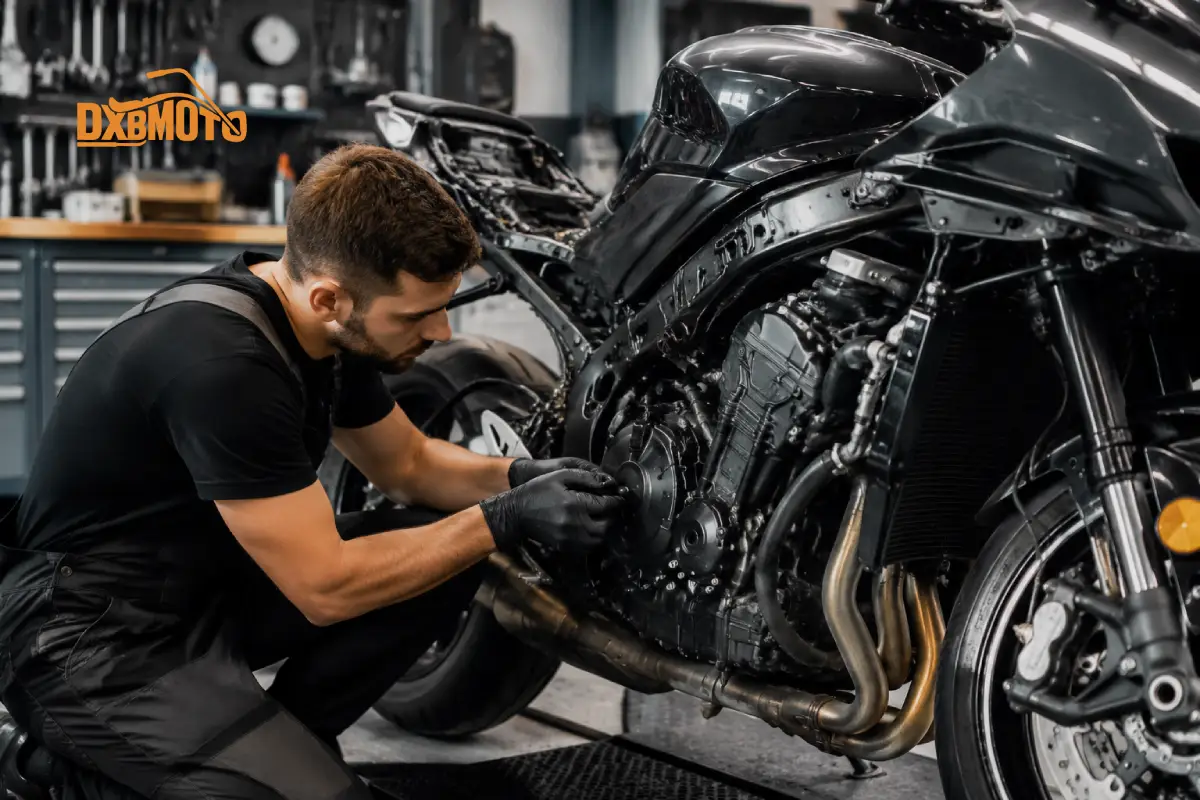
Motorcycle engine knocking is usually caused by abnormal combustion, poor fuel quality, insufficient lubrication, overheating, incorrect ignition timing, or internal engine wear. The correct fix depends on identifying the real source of the noise first, because replacing parts without proper diagnosis can waste money and may not solve the problem. If your motorcycle is making a knocking sound, start by checking the fuel, engine oil, operating conditions, and mechanical components before continuing to ride.
At DXB Moto, we understand that unusual engine noises should never be ignored. A small knocking sound can sometimes come from a simple issue like incorrect fuel or low oil, but in some cases it can indicate internal engine damage that requires professional inspection.
What Does Motorcycle Engine Knocking Mean?
Motorcycle engine knocking is a metallic tapping, pinging, or hammer-like sound that happens when combustion inside the cylinder does not occur normally or when internal engine components have excessive movement.
Many riders describe it as a “pinging” sound during acceleration, a deep knock from inside the engine, or a noise that becomes louder when the motorcycle is under load.
However, not every unusual engine sound is a true knock. Motorcycles naturally produce mechanical noises from components such as:
- Valves and camshaft systems
- Timing chains
- Fuel injectors
- Clutch components
- Cooling systems
The first step is to identify when the sound occurs and where it comes from.

Quick Engine Noise Identification
| Sound Type | Common Description | Possible Source |
|---|---|---|
| Knocking | Deep metallic pinging or hammer-like sound | Combustion problem or internal engine wear |
| Ticking | Light repetitive clicking sound | Valve train or injector noise |
| Rattling | Loose mechanical sound | Timing chain, cover, or worn components |
| Grinding | Rough metal-to-metal sound | Serious mechanical issue |
Why Is My Motorcycle Engine Knocking?
A motorcycle engine can start knocking for several different reasons, and the sound alone does not always reveal the exact problem. In most cases, the cause is related to abnormal combustion, poor lubrication, excessive heat, incorrect engine settings, or worn internal components.
The correct repair depends on diagnosing when the knocking happens, whether it changes with RPM or throttle input, and whether there are other symptoms such as power loss, overheating, smoke, or difficult starting.
Below are the most common causes of motorcycle engine knocking and how to address each problem.
1. Low-Quality Fuel or Incorrect Octane Rating
One of the most common causes of motorcycle engine knocking is fuel detonation, which happens when the air-fuel mixture ignites unevenly inside the combustion chamber.
Normally, the spark plug controls when combustion starts. However, if the fuel quality is poor or the octane rating is too low for the engine, parts of the fuel mixture can ignite too early, creating a sharp, metallic knocking or pinging sound.
This is especially noticeable during:
- Hard acceleration
- Riding uphill
- High engine load
- Hot weather conditions
How to Fix It
To solve fuel-related engine knocking:
- Use the fuel octane rating recommended by the motorcycle manufacturer.
- Avoid using old or contaminated fuel.
- If the problem started immediately after refueling, consider draining the fuel and replacing it with fresh fuel.
- Check the fuel system if the problem continues after changing fuel.
For motorcycles used in Dubai, high temperatures and heavy traffic can increase engine stress, making the right fuel quality and regular maintenance even more important.
2. Low Engine Oil Level or Incorrect Engine Oil
Engine oil does more than reduce friction. It creates a protective layer between moving components such as the piston, crankshaft, bearings, and camshaft.
When the oil level is too low, the oil is degraded, or the wrong viscosity is used, metal components may operate with insufficient protection. This may create knocking, tapping, or deeper mechanical sounds from inside the engine.
Common oil-related causes include:
| Oil Problem | Possible Effect |
|---|---|
| Low oil level | Increased friction and component wear |
| Old or contaminated oil | Poor lubrication performance |
| Wrong oil viscosity | Reduced protection under certain conditions |
| Incorrect oil type | Possible engine performance issues |
How to Fix It
- Check the oil level according to the motorcycle owner's manual.
- Replace old oil and the oil filter if maintenance is overdue.
- Use motorcycle-specific engine oil with the correct specification.
- Inspect the drained oil for metal particles, which can indicate internal damage.
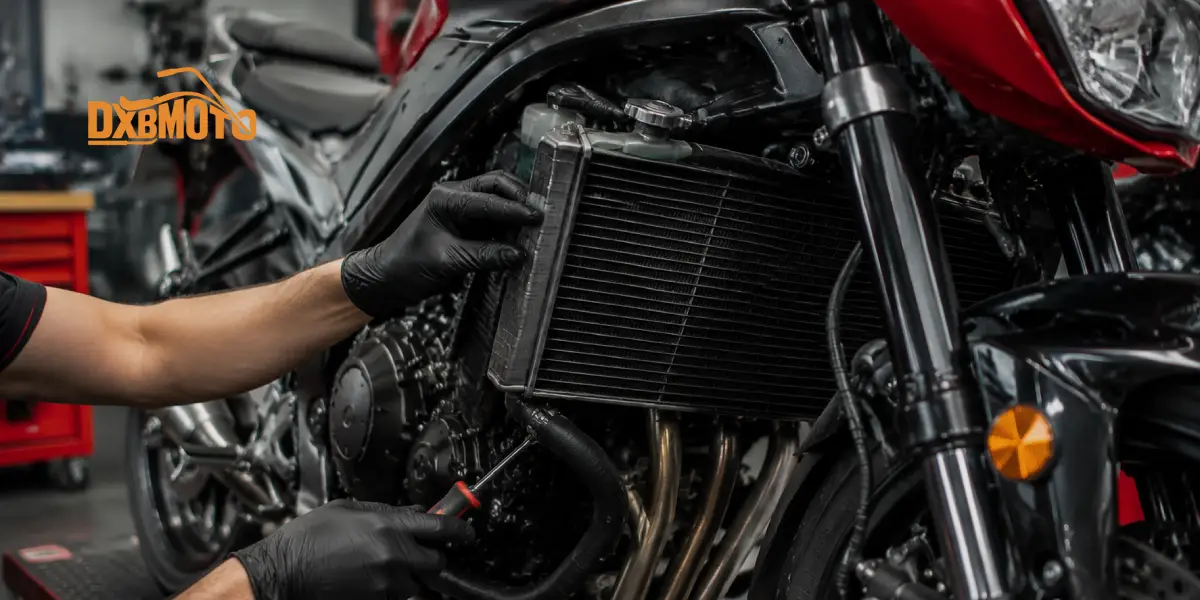
3. Engine Overheating
Excessive heat can increase the possibility of engine knocking because higher temperatures make uncontrolled combustion more likely.
Motorcycles operating in hot climates, especially during summer riding or in slow-moving traffic, may experience additional thermal stress if the cooling system is not functioning properly.
- Possible overheating causes include:
- Low coolant level (for liquid-cooled motorcycles)
- Blocked radiator
- Faulty cooling fan
- Poor airflow
- Running with incorrect fuel mixture
How to Fix It
Check:
- Coolant level and condition
- Radiator cleanliness
- Cooling fan operation
- Engine temperature warnings
If the motorcycle overheats and starts knocking at the same time, do not continue riding until the cause is identified. Excessive heat can turn a minor issue into expensive engine damage.
4. Incorrect Ignition Timing and ECU Problems
The ignition system controls the exact moment when the spark plug ignites the air-fuel mixture inside the combustion chamber. If the ignition timing is incorrect, combustion may happen too early or too late, creating abnormal pressure inside the cylinder and causing a knocking sound.
On older motorcycles, incorrect ignition timing can occur due to mechanical adjustment issues. On modern motorcycles, the ECU (Engine Control Unit) controls ignition timing electronically, so issues with sensors, software, or engine modifications can affect how the engine manages combustion.
Common causes include:
- Incorrect ignition timing adjustment
- Faulty crankshaft position sensor
- Damaged knock sensor (if equipped)
- ECU tuning or aftermarket modifications
- Incorrect air-fuel mixture
How to Fix It
To solve ignition-related knocking:
- Check the motorcycle's ECU for stored error codes.
- Inspect ignition sensors and wiring connections.
- Verify that aftermarket ECU tuning matches the motorcycle specifications.
- Check spark plug condition and heat range.
- Return modified engines to a correct fuel and ignition map if necessary.
A motorcycle that only knocks after performance modifications, such as an aftermarket exhaust, air filter, or ECU remap, should be inspected carefully because the engine calibration may no longer match the new setup.
5. Carbon Deposits Inside the Combustion Chamber
Over time, carbon deposits can build up on the piston crown, valves, and combustion chamber surfaces. These deposits reduce the available space inside the cylinder and can increase combustion temperatures.
As engine temperature rises and compression increases, the fuel mixture may ignite unevenly before the spark plug initiates normal combustion. This can result in knocking or pinging sounds, especially under acceleration.
Carbon buildup is more common in motorcycles that:
- Frequently run at low RPM
- Make many short trips
- Have poor combustion efficiency
- Use contaminated fuel
- Have high mileage
How to Fix It
Depending on the severity, solutions may include:
- Using a suitable fuel system cleaner
- Inspecting and cleaning the throttle body and fuel system
- Checking injector performance
- Performing professional carbon cleaning
- Inspecting the combustion chamber if symptoms continue
Regular maintenance and the use of quality fuel can reduce the risk of excessive carbon accumulation.
6. Internal Engine Wear and Mechanical Damage
Not all motorcycle knocking problems come from fuel or combustion. Sometimes the sound is caused by worn internal engine components that can no longer maintain proper clearances.
Internal engine wear is usually more serious and requires professional inspection, as continuing to ride can worsen the damage.
Possible mechanical causes include:
| Component | Possible Problem | Common Symptom |
|---|---|---|
| Connecting rod bearing | Excessive clearance | Deep knocking sound that increases with RPM |
| Piston and cylinder | Excessive wear or piston slap | Knocking during cold starts or acceleration |
| Crankshaft bearings | Bearing damage | Heavy metallic noise from engine |
| Valve train components | Incorrect clearance or wear | Ticking or tapping noise |
How to Fix It
If internal damage is suspected:
- Stop riding the motorcycle until it is inspected.
- Check engine oil for metal particles.
- Perform compression and leak-down tests.
- Inspect internal components if required.
A deep knocking sound that becomes louder with engine speed, appears during acceleration, or is accompanied by reduced performance should not be ignored. In these cases, changing oil or fuel will usually not solve the underlying problem.

How To Diagnose Motorcycle Engine Knocking Step by Step
Before replacing any engine parts, the first step is to determine where the knocking sound comes from and under what conditions it occurs. Many riders assume every engine knock means a major rebuild, but some causes stem from fuel, oil, or ignition problems that can be fixed without opening the engine.
A proper diagnosis follows a process: identify the sound, check basic maintenance items, inspect engine conditions, and only then move to internal testing if necessary.
Step 1: Identify When The Knocking Happens
The timing of the noise gives important clues about the possible cause.
Pay attention to:
- Does it happen when the engine is cold or warm?
- Does it appear only during acceleration?
- Does the sound increase with RPM?
- Does it happen at idle?
Use this information to narrow down the possible issue:
| When The Noise Happens | Possible Cause |
|---|---|
| During acceleration or heavy throttle | Fuel detonation, incorrect octane, ignition timing issue |
| Only during cold starts | Oil circulation delay, piston clearance, mechanical wear |
| At idle speed | Valve train noise, bearing issues, loose components |
| Noise increases with RPM | Internal engine wear or rotating component problems |
Step 2: Check Engine Oil Condition
Engine oil is one of the easiest things to inspect and one of the most common causes of abnormal engine sounds.
Check:
- Oil level
- Oil color and condition
- Correct oil specification
- Presence of metal particles
If the oil level is low, do not continue riding until it is corrected. Running an engine with insufficient lubrication can quickly damage bearings and other internal components.
Step 3: Inspect Fuel and Combustion Conditions
If the knocking appears mainly during acceleration, combustion problems should be considered first.
Check:
- Recent fuel quality
- Correct fuel octane rating
- Spark plug condition
- Air filter condition
- Fuel injection performance
A motorcycle that suddenly starts knocking after refueling may have a fuel-related problem rather than mechanical damage.
Step 4: Check Spark Plug and Ignition System
The spark plug can provide useful information about what is happening inside the combustion chamber.
Signs to look for:
| Spark Plug Condition | Possible Meaning |
|---|---|
| White or overheated electrode | Possible lean mixture or excessive heat |
| Heavy carbon buildup | Poor combustion or deposits |
| Damaged electrode | Ignition or combustion problem |
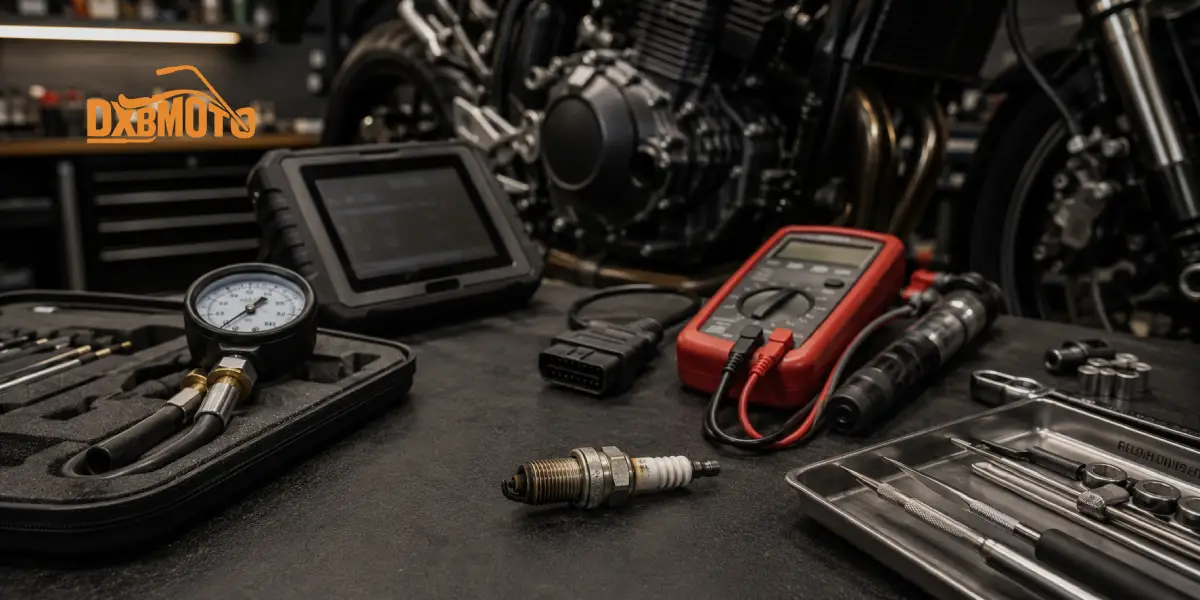
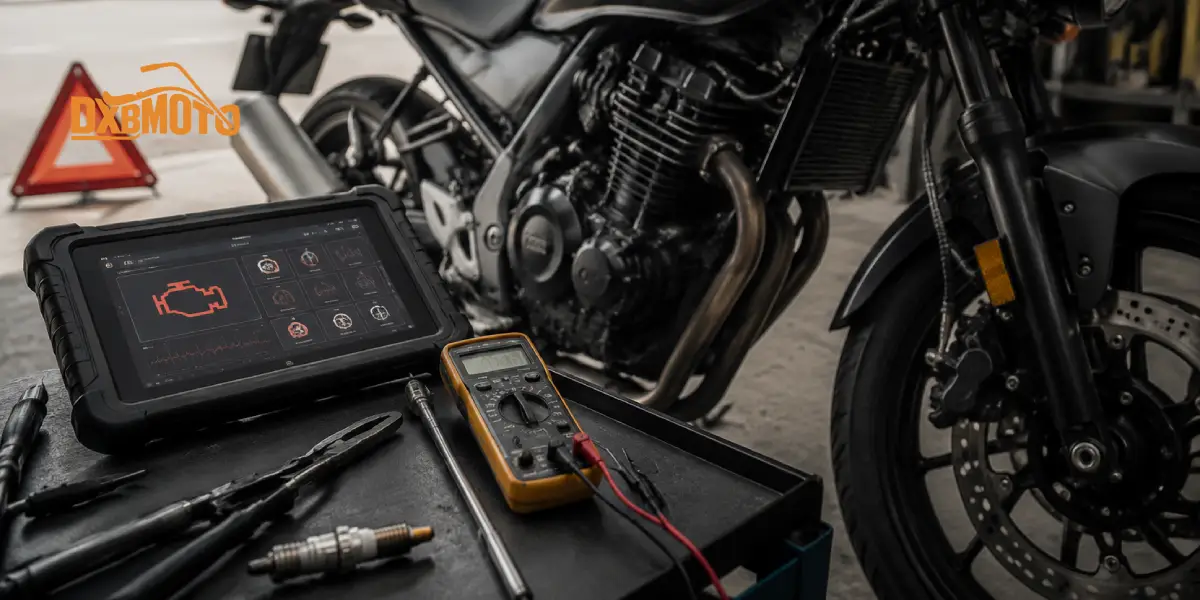
For modern motorcycles, diagnostic scanning can also help identify ECU-related issues, sensor faults, or abnormal engine readings.
Step 5: Perform Professional Engine Tests
If basic checks do not identify the problem, deeper inspection may be required.
A professional technician may perform:
- Compression test
- Leak-down test
- Oil inspection for metal debris
- ECU diagnostic scan
- Valve clearance inspection
These tests help determine whether the issue is related to combustion, valve timing, piston condition, or internal engine wear.
When Should You Stop Riding?
Not every engine noise requires immediate shutdown, but some warning signs should not be ignored.
Stop riding and inspect the motorcycle if:
- The knocking sound is deep and metallic
- The noise becomes louder with RPM
- The engine loses power
- The motorcycle overheats
- The oil contains metal particles
- The sound appears suddenly and gets worse quickly
Continuing to ride with serious engine knocking can turn a repairable issue into major engine damage.
Can You Ride a Motorcycle With Engine Knocking? Risk Assessment
Whether you can continue riding a motorcycle with engine knocking depends on the cause, the severity of the sound, and when it happens. A light pinging noise caused by fuel quality may require a simple correction, but a deep metallic knock from inside the engine can indicate serious mechanical damage.
The safest approach is neither to ignore the sound nor to continue riding until the problem worsens. Engine knocking is often a warning sign that something is affecting combustion, lubrication, or internal engine movement.
When Is It Unsafe To Ride With Engine Knocking?
You should stop riding and inspect the motorcycle if the knocking is:
- Loud and metallic
- Getting worse over time
- Increasing with engine RPM
- Appearing during acceleration or heavy load
- Combined with power loss or overheating
These symptoms can indicate problems such as worn bearings, piston damage, or insufficient lubrication. Continuing to ride in this condition may turn a repairable issue into a complete engine rebuild.
Can You Ride If The Knocking Is Only Light?
A light pinging sound during acceleration is sometimes related to fuel detonation rather than internal engine damage.
For example:
- The motorcycle was filled with lower-octane fuel
- The engine is running under extreme heat
- The bike is heavily loaded
- The engine is operating at low RPM with high throttle
In these cases, the motorcycle may still run, but the issue should be corrected as soon as possible.
A good first step is:
- Avoid aggressive acceleration.
- Check the fuel quality.
- Verify the engine oil level.
- Monitor whether the sound disappears or continues.
If the noise remains after these checks, professional diagnosis is recommended.
Engine Knocking Risk Assessment
| Situation | Risk Level | Recommended Action |
|---|---|---|
| Light pinging only under acceleration | Medium | Check fuel quality and ignition conditions |
| Deep knocking sound from engine | High | Stop riding and inspect internal components |
| Knocking with overheating or power loss | Very High | Do not continue riding |
| Noise becoming louder with RPM | High | Professional engine diagnosis required |
Why Ignoring Engine Knocking Can Become Expensive
A small combustion issue can sometimes be fixed with fuel correction, maintenance, or ignition adjustment. However, if the knocking is caused by internal wear, every additional ride can increase damage to expensive components.
Possible consequences include:
- Damaged connecting rod bearings
- Scored cylinder walls
- Piston damage
- Crankshaft problems
- Complete engine failure
The cost difference between early diagnosis and late repair can be significant.
For motorcycles in Dubai, where high temperatures and frequent stop-and-go traffic can increase engine stress, unusual engine noises should be checked earlier rather than later.
Motorcycle Engine Knocking vs Other Engine Sounds
Not every unusual sound coming from a motorcycle engine is a knocking problem. Many riders mistake normal mechanical noises, valve sounds, or loose components for engine knock and may replace parts unnecessarily.
The key difference is the type of sound, when it appears, and how it changes with engine speed or throttle input. Correctly identifying the sound can help prevent unnecessary repairs and find the real cause faster.
How To Tell Engine Knocking Apart From Other Motorcycle Noises
A true engine knock is usually described as a deep metallic pinging or hammer-like sound that becomes noticeable under load, especially during acceleration. It often comes from abnormal combustion or excessive movement between internal engine components.
Other sounds may come from different systems:
| Sound Type | How It Sounds | Common Causes |
|---|---|---|
| Engine Knocking | Deep metallic pinging or hammer-like sound, often louder under acceleration | Fuel detonation, ignition timing issues, low lubrication, or internal engine wear |
| Ticking | Light, repetitive clicking sound from the top area of the engine | Valve clearance, camshaft components, or injector operation |
| Rattling | Loose vibrating or shaking noise | Timing chain, loose covers, fasteners, or worn components |
| Clicking | Small regular clicking noise during operation | Fuel injectors, relays, or normal mechanical operation |
| Grinding | Rough metal-to-metal noise | Possible bearing damage, clutch problems, or serious mechanical issues |
Misdiagnosing engine sounds is common because several motorcycle components operate close together. For example, a valve train ticking noise may sound alarming but require only adjustment, while a deep connecting rod knock may indicate significant internal damage.
Before assuming the engine needs major repairs, check:
- Where the sound is coming from
- Whether it changes with RPM
- Whether it appears during acceleration or idle
- Whether the motorcycle has power loss or overheating symptoms
If the motorcycle has a serious mechanical issue, it's important to check its overall condition before buying or riding it further. Riders looking for reliable options can also explore used motorcycles in Dubai from trusted sources with proper inspection history.
A proper diagnosis saves time and prevents replacing parts that are not related to the actual problem.

How Much Does It Cost To Fix Motorcycle Engine Knocking?
The cost of fixing motorcycle engine knocking depends entirely on the cause of the noise. A knocking sound caused by poor fuel or overdue maintenance may be relatively inexpensive to solve, while internal engine damage involving bearings, pistons, or crankshaft components can require major repairs.
There is no single repair price for engine knocking because the same symptom can come from completely different problems. A proper diagnosis should always come before replacing parts.
Motorcycle Engine Knocking Repair Cost Factors
The main factors that affect the repair cost include:
- The actual cause of the knocking sound
- Motorcycle model and engine type
- Availability and price of replacement parts
- Whether the engine needs to be opened
- Labor time required for inspection and repair
A simple inspection can prevent unnecessary repairs because many knocking sounds are not caused by the same component.
Common Repair Types and Cost Level
| Repair Type | Typical Cost Level | When It Is Needed |
|---|---|---|
| Fuel system check or fuel replacement | Low | Knocking caused by poor fuel quality or detonation |
| Engine oil and filter replacement | Low | Low oil level, old oil, or incorrect lubrication |
| Spark plug or ignition inspection | Low to Medium | Ignition or combustion-related issues |
| Valve adjustment or timing inspection | Medium | Valve clearance or timing-related noise |
| Engine internal repair | High | Bearing, piston, crankshaft, or cylinder damage |
Why Diagnosis Should Come Before Repair
Replacing parts based solely on sound can be expensive. For example, a rider may assume a motorcycle needs an engine rebuild when the actual problem is incorrect fuel, valve clearance issues, or a low oil level.
A professional inspection usually starts with:
- Listening to the engine under different conditions
- Checking oil condition
- Inspecting spark plugs
- Scanning the ECU (for modern motorcycles)
- Performing compression or leak-down tests if needed
This approach helps identify the real cause before expensive work begins.
Is Engine Knocking Expensive To Repair?
It depends on the severity.
A minor combustion issue can sometimes be corrected with basic maintenance. However, if the knocking is due to internal engine wear, the repair can become significantly more expensive because components such as bearings, pistons, or the crankshaft may require replacement.
The earlier the problem is diagnosed, the lower the chance of additional engine damage.
For riders in Dubai, where motorcycles often operate in high temperatures and demanding traffic conditions, regular maintenance and early inspection can help avoid major repair costs.
When Should You Visit a Motorcycle Repair Shop?
Not every engine knocking sound requires an immediate engine rebuild, but ignoring unusual noises can allow a small problem to become a much more expensive repair. The right time to visit a motorcycle repair shop is when the knocking sound persists after basic checks or occurs alongside other warning signs.
A professional inspection can identify whether the issue is related to fuel, oil, ignition, cooling, or internal engine components before unnecessary parts are replaced.
Need Professional Help With Your Motorcycle?
If your motorcycle has engine knocking or unusual noises, get it inspected before the issue becomes more serious. Our team can help diagnose and repair motorcycle problems in Dubai.
Signs Your Motorcycle Needs Professional Inspection
You should have your motorcycle checked if you notice any of the following:
1. The Knocking Sound Gets Louder Over Time
A noise that gradually becomes stronger usually indicates that the underlying problem is getting worse.
Pay attention if:
- The sound increases with engine RPM
- The knock becomes louder during acceleration
- The noise changes from a light ping to a deeper metallic sound
These symptoms may indicate increasing stress on internal engine components.
2. Engine Performance Starts Changing
Knocking combined with performance problems should not be ignored.
Warning signs include:
- Loss of power
- Poor acceleration
- Difficulty starting
- Uneven engine operation
- Increased fuel consumption
These symptoms suggest that the problem may affect combustion or mechanical operation.
3. The Motorcycle Overheats
If engine knocking appears together with overheating, stop riding and inspect the motorcycle.
Possible causes include:
- Cooling system problems
- Incorrect fuel combustion
- Low engine oil
- Excessive internal friction
Riding an overheating motorcycle can accelerate engine damage.
4. You Find Metal Particles in Engine Oil
During an oil change, metallic particles or a shiny appearance in used oil can indicate internal wear.
Possible affected components include:
- Bearings
- Crankshaft parts
- Piston components
- Other moving engine parts
This situation requires professional diagnosis because continuing to ride may increase the damage.
What A Motorcycle Repair Shop Will Check
A proper inspection is not only about listening to the engine sound. A technician will usually check several areas to find the actual cause:
| Inspection Area | What It Helps Identify |
|---|---|
| Engine oil condition | Lubrication problems and possible internal wear |
| Spark plug inspection | Fuel mixture and combustion problems |
| ECU diagnostic scan | Sensor, ignition, and electronic system issues |
| Compression and leak-down test | Cylinder, piston, and sealing condition |
| Valve and timing inspection | Mechanical adjustment problems |
Why Early Diagnosis Matters
Many motorcycle owners delay inspection because the bike still runs normally. However, an engine can continue operating even as internal damage slowly increases.
Early diagnosis can help:
- Prevent major engine failure
- Reduce repair costs
- Avoid replacing unnecessary parts
- Keep the motorcycle reliable and safe
For riders in Dubai, where motorcycles often face high temperatures, heavy traffic, and prolonged exposure to engine heat, regular inspection is especially important when unusual engine sounds occur.
Final Thoughts: Fix Motorcycle Engine Knocking Before It Becomes Expensive
Motorcycle engine knocking should never be ignored, as the same sound can come from simple issues like poor fuel quality or low oil, as well as more serious problems such as internal engine wear.
The most important step is finding the real cause before replacing parts. Checking the fuel, engine oil, spark plug, cooling system, and ignition condition can help identify many common problems, while deeper issues require professional inspection.
For riders in Dubai, regular maintenance is especially important because high temperatures, heavy traffic, and long riding periods can increase engine stress. If your motorcycle is making unusual knocking sounds, getting an accurate diagnosis early can help prevent bigger repair costs.
Frequently Asked Questions
What causes a motorcycle engine to knock?
Motorcycle engine knocking can be caused by poor-quality fuel, incorrect octane rating, ignition timing problems, overheating, low engine oil, carbon buildup, or worn internal engine components. The correct repair depends on identifying the actual cause of the knocking sound.
Can low engine oil cause motorcycle knocking?
Yes. Low engine oil can reduce lubrication between moving components such as bearings, pistons, and crankshaft parts. This increased friction can create knocking sounds and may lead to serious engine damage if ignored.
Is it safe to ride a motorcycle with engine knocking?
It depends on the cause and severity of the noise. A light pinging sound may be related to fuel or combustion conditions, but a deep metallic knock that increases with RPM, overheating, or power loss should be inspected before continuing to ride.
Why does my motorcycle knock when accelerating?
Knocking during acceleration is often related to fuel detonation, low octane fuel, ignition timing issues, overheating, or carbon deposits inside the combustion chamber. The problem usually appears when the engine is under higher load.
Can changing engine oil fix motorcycle knocking?
Changing engine oil can solve knocking caused by low oil level, old oil, or incorrect lubrication. However, it will not repair internal problems such as damaged bearings, worn pistons, or crankshaft issues.
How do I know if my motorcycle engine knock is serious?
A serious engine knock usually becomes louder with RPM and may appear with symptoms such as loss of power, overheating, metal particles in oil, or sudden changes in engine noise. These signs require professional inspection.
Can a spark plug cause motorcycle knocking?
A spark plug usually does not directly create mechanical knocking, but an incorrect spark plug type, overheating, or poor combustion can contribute to abnormal combustion and engine pinging.
How much does it cost to repair motorcycle engine knocking?
The repair cost depends on the cause. Fuel or oil-related issues are usually less expensive to fix, while internal engine repairs involving bearings, pistons, or crankshaft components can require more extensive work.
Can I fix motorcycle engine knocking myself?
Basic checks such as inspecting oil level, fuel quality, and spark plugs can be done by riders. However, internal engine problems require professional tools and experience to diagnose correctly.
When should I take my motorcycle to a repair shop?
You should visit a motorcycle repair shop if the knocking continues, becomes louder, appears with overheating or power loss, or if you find metal particles in the engine oil. Early diagnosis can prevent expensive engine damage.
Why is motorcycle engine knocking more concerning in Dubai?
Dubai’s hot climate and heavy traffic conditions can increase engine temperature and stress. Regular maintenance and early inspection of unusual engine sounds can help prevent more serious motorcycle problems.

DXB Moto Team combines technical content writing experience with practical knowledge of motorcycle parts, fitment checks and rider needs. The team focuses on clear buying guides, spare-parts references, maintenance topics and real-world motorcycle use in Dubai and across the UAE.