

Blog
When to Replace Motorcycle Chain?
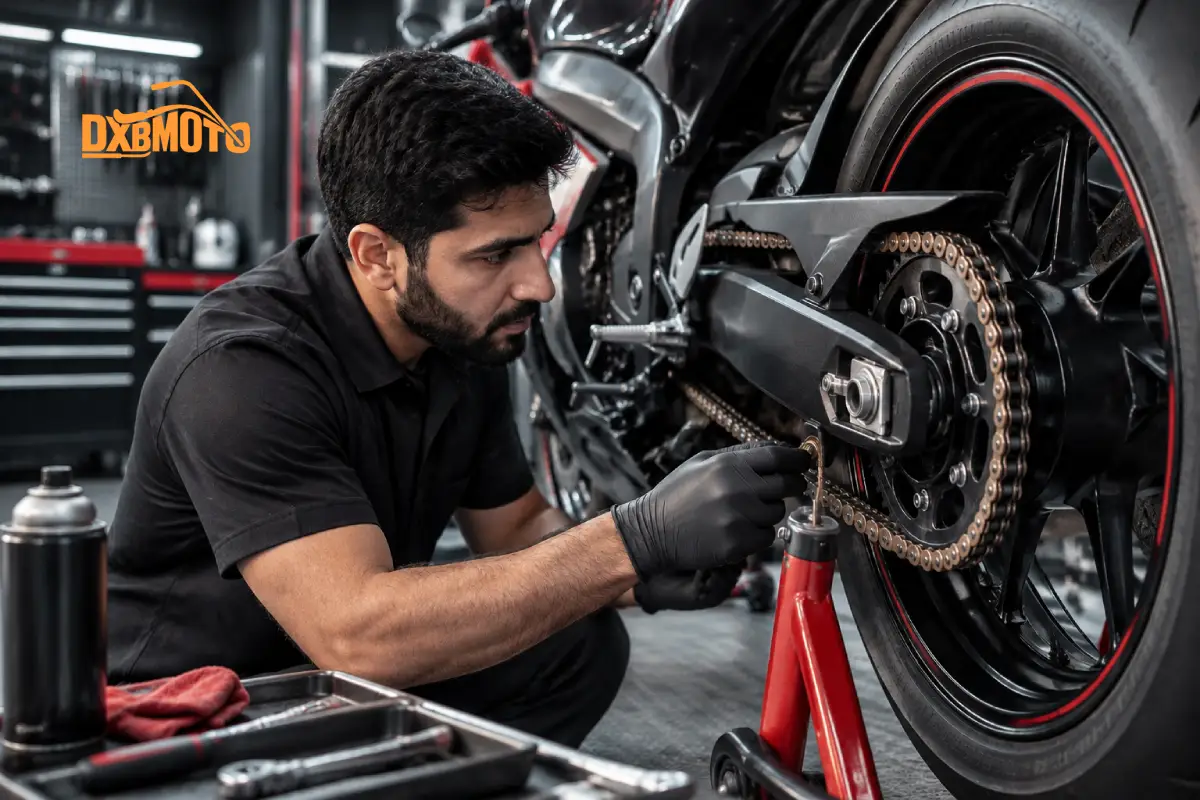
Replace a motorcycle chain when it shows clear signs of wear, such as excessive slack, damaged links, rust, tight spots, or worn sprocket teeth. Mileage alone cannot determine chain life because maintenance, riding style, weather conditions, and riding environment all affect how quickly the chain wears.
A properly maintained motorcycle chain can last thousands of kilometers, but ignoring early warning signs can damage the sprockets, reduce performance, and create safety risks.
For professional motorcycle inspection and repair support, DXB Moto helps riders keep their bikes safe and reliable on Dubai roads.
Motorcycle Chain Inspection & Service in Dubai
Not sure if your chain needs replacement? Our motorcycle specialists can inspect your chain, sprockets, tension and overall drivetrain condition.
How Do You Know When a Motorcycle Chain Needs Replacing?
The easiest way to know whether your motorcycle chain needs replacement is to inspect its condition, not just its mileage.
A chain is usually close to the end of its life when you notice multiple warning signs together:
- The chain requires frequent adjustments
- Chain slack changes noticeably during rotation
- Some links become stiff or cannot move smoothly
- Rust or damaged seals appear
- The chain makes unusual clicking or grinding sounds
- The sprocket teeth look sharp or hooked
- The chain can be pulled away from the rear sprocket easily
A single symptom does not always mean immediate replacement, but several signs together usually indicate that the chain and sprocket set should be inspected.
Motorcycle Chain Replacement Checklist
| Inspection Area | Replace Chain If |
|---|---|
| Chain tension | It reaches the adjustment limit |
| Chain links | Links are stiff, damaged or rusty |
| Chain movement | It has tight spots or uneven tension |
| O-rings | Seals are cracked or missing |
| Sprockets | Teeth look sharp or hooked |
| Riding feel | Bike feels jerky during acceleration |
What Are the Main Signs of a Bad Motorcycle Chain?
1. The Chain Needs Constant Adjustment
A healthy chain should maintain its correct tension for a reasonable period.
If you constantly need to adjust the chain after short rides, it usually means the internal components are worn and the chain is no longer maintaining its correct length.
Motorcycle chains do not simply "stretch like a rubber band. Wear happens mainly inside the chain between pins and bushings, which increases the chain's overall length. ran offroad
2. Stiff or Frozen Chain Links
A motorcycle chain should move smoothly around the sprockets.
During inspection, rotate the rear wheel and check whether every chain link bends naturally.
Warning signs:
- Links that stay straight
- Sections that feel tighter than others
- Chain movement that looks uneven
A stiff link can sometimes be caused by poor lubrication, but repeated binding usually means the chain has internal wear and should be replaced.
3. Rust, Damaged O-Rings or Corrosion
Modern motorcycle chains often use O-ring or X-ring seals to keep lubrication inside the chain and keep dirt out.
Inspect the chain for:
- Missing seals
- Cracked rubber rings
- Visible corrosion
- Dry or damaged rollers
Once the seals fail, internal lubrication is lost and chain wear increases much faster.
4. Excessive Chain Slack
Every motorcycle has a recommended chain slack range specified by the manufacturer.
Too much slack can cause:
- Jerky acceleration
- Increased drivetrain noise
- Uneven power delivery
- Faster sprocket wear
However, don't tighten a chain as much as possible. An over-tightened chain can put extra stress on drivetrain components.
Always adjust the chain according to the motorcycle manufacturer's specifications.
How to Check Motorcycle Chain Wear at Home
You can perform a quick inspection without special equipment.
Pull Test
One of the easiest checks:
- Place the motorcycle securely.
- Grab the chain at the rear sprocket.
- Pull the chain away from the sprocket.
- A healthy chain should sit tightly against the sprocket.
If you can pull it far enough to expose a large section of the sprocket tooth, the chain is likely worn.
Check For Uneven Tension
Rotate the rear wheel slowly and check chain tension at different points.
If one section is very tight and another section is loose, the chain may have uneven wear.
Uneven tension often signals that replacement is approaching.
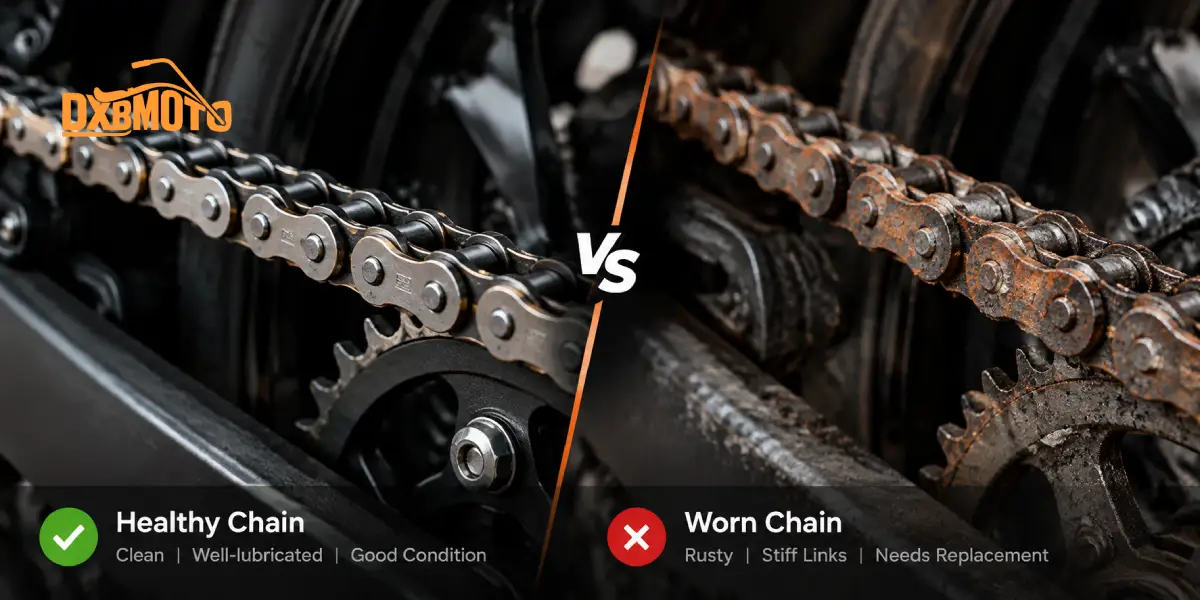
How Many Miles Does a Motorcycle Chain Last?
There is no exact mileage at which you must replace a motorcycle chain. A chain's lifespan depends on how you use the motorcycle, how often you maintain it, riding conditions, and the chain's quality. As a general guideline:
| Riding Style & Maintenance | Expected Chain Life |
|---|---|
| Regular cleaning and lubrication | 20,000–30,000 miles (32,000–48,000 km) |
| Aggressive acceleration and performance riding | Shorter lifespan |
| Poor maintenance or harsh conditions | Significantly reduced lifespan |
A rider who regularly cleans and lubricates the chain can get much more life from the same chain compared with someone who ignores maintenance.
The important point is that mileage should only be a reference. A motorcycle chain with 15,000 km can already be unsafe if neglected, while another chain with much higher mileage may still be in good condition.
What Factors Reduce Motorcycle Chain Life
Several factors directly affect how quickly a motorcycle chain wears.
Riding Style
Aggressive riding puts more stress on the drivetrain.
Examples:
- Hard acceleration
- Frequent high RPM riding
- Wheelies
- Sudden throttle changes
These actions increase the load transferred through the chain and sprockets.
Lack of Maintenance
A motorcycle chain needs regular cleaning and lubrication.
Dirt, sand and road debris work like abrasive material between moving parts, increasing wear over time.
A dry chain not only becomes noisy. It also loses flexibility and wears the rollers, pins and sprockets faster.
Weather and Riding Conditions
Environmental conditions greatly affect chain life.
Riding frequently in:
- Rain
- Dust
- Sand
- High temperatures
- Coastal areas with salty air
can accelerate corrosion and reduce chain lifespan.
For riders in Dubai, heat and dust are especially important factors. Regular inspection is recommended because fine sand particles can collect around the chain and sprocket area, especially after riding outside the city.
Should You Replace Motorcycle Chain and Sprockets Together?
In most cases, yes. Motorcycle chains and sprockets wear together, and replacing only one component can reduce the lifespan of the new part.
A new chain installed on worn sprockets may not sit correctly, causing:
- Faster chain wear
- Poor power delivery
- Increased noise
- Uneven movement
When replacing a chain, inspect:
- Front sprocket
- Rear sprocket
- Chain guides
- Chain tension system
If the sprocket teeth look sharp, curved, or hooked, you should usually replace the complete chain and sprocket set.
Signs Your Motorcycle Sprockets Are Worn
Many riders focus only on the chain, but sprocket condition matters just as much.
Look for:
Hooked Teeth
Healthy sprocket teeth have a smooth symmetrical shape.
Worn sprockets develop a curved hook shape because the chain pulls harder on one side of the tooth.
Sharp Teeth
A worn sprocket can start to look like a shark fin.
This means the metal has lost its original shape and the chain cannot engage correctly.
Uneven Tooth Wear
If some teeth look more damaged than others, it can create uneven chain movement.
This often feels like:
- Jerky acceleration
- Vibration
- Unstable throttle response

Why Is It Important to Replace Motorcycle Chain and Sprockets as a Set?
Replacing the chain and sprockets together provides better drivetrain performance because all components wear at the same rate.
Main benefits:
- Smoother power transfer
- Longer component lifespan
- Less noise
- Better acceleration response
- Improved riding safety
A worn sprocket can quickly damage a new chain, so replacing only the chain often becomes a short-term solution.
For riders who use their motorcycles daily, especially for commuting, keeping the complete drivetrain healthy prevents unexpected issues.
What Happens If You Ride With a Worn Motorcycle Chain?
Ignoring a worn chain can create more expensive problems than replacing it early.
Possible issues include:
Poor Power Delivery
A worn chain does not transfer engine power smoothly to the rear wheel.
The rider may notice:
- Delayed acceleration
- Jerking during throttle changes
- Increased vibration
Damage to Other Components
A damaged chain can accelerate wear on:
- Front sprocket
- Rear sprocket
- Countershaft components
- Chain guides
Chain Failure While Riding
A severely worn or damaged chain can break while riding.
A broken chain can:
- Damage the motorcycle
- Lock the rear wheel in some situations
- Create a serious safety risk
That is why regular inspection matters, especially before long-distance rides.
How Often Should You Inspect a Motorcycle Chain?
Check a motorcycle chain regularly, not only when problems appear.
A good inspection routine:
- Check chain condition every 500-1,000 km
- Inspect before long trips
- Check after riding in rain, dust or sand
- Inspect whenever unusual noise appears
During inspection, check:
- Chain slack
- Lubrication condition
- Rust or corrosion
- Damaged links
- Sprocket wear
Dubai Motorcycle Chain Maintenance Considerations
Dubai riding conditions can be harder on motorcycle chains compared with cooler environments.
Common factors include:
Heat
High temperatures can make lubrication break down faster.
Dust and Sand
Fine particles can enter moving chain components and increase friction.
Urban Riding
Frequent stopping and starting creates repeated acceleration loads on the chain.
For motorcycles used regularly in Dubai, shorter inspection intervals are a smart approach, even if the chain shows no obvious problems.
How to Make Your Motorcycle Chain Last Longer
A motorcycle chain can last significantly longer with the right maintenance routine. Most chain failures happen because of poor lubrication, incorrect tension or delayed inspection.
Following a simple maintenance schedule keeps the drivetrain running smoothly and reduces unnecessary replacement costs.
1. Clean Your Motorcycle Chain Regularly
Dirt and sand can increase friction between chain components.
A proper cleaning routine:
- Place the motorcycle securely.
- Rotate the rear wheel slowly.
- Remove dirt and old lubricant using a chain cleaner.
- Use a soft brush to clean between links.
- Dry the chain before applying lubricant.
Avoid using aggressive chemicals that can damage O-rings or seals.
For motorcycles used in dusty environments like Dubai, you may need to clean more often because sand particles can build up around the chain.
2. Lubricate the Chain Correctly
Chain lubrication reduces friction and protects internal components.
The best time to lubricate a motorcycle chain is:
- After cleaning
- After riding, when the chain is warm
- Before storing the motorcycle for a longer period
Apply lubricant evenly to the inside surface of the chain where it contacts the sprocket.
Avoid applying excessive lubricant because extra oil attracts dust and creates a dirty chain surface.
3. Maintain Correct Chain Tension
Correct chain slack is essential for both performance and safety.
A chain that is too loose can cause:
- Chain slap
- Poor throttle response
- Increased wear
A chain that is too tight can cause:
- Extra stress on drivetrain components
- Faster wear
- Poor suspension movement
Always follow the motorcycle manufacturer's recommended chain slack measurement.
4. Avoid Common Motorcycle Chain Maintenance Mistakes
Many chain problems stem from improper maintenance.
Avoid these mistakes:
Over-tightening the Chain
A tight chain does not mean a better chain.
The chain needs enough movement to handle suspension travel.
Using the Wrong Lubricant
Not every oil or spray is suitable for motorcycle chains.
Use a lubricant designed specifically for motorcycle chains, especially for O-ring and X-ring chains.
Ignoring Sprocket Wear
A chain and sprocket system works as a unit.
Replacing the chain while ignoring worn sprockets can lead to premature wear.
When Should You Replace a Motorcycle Chain Immediately?
Some situations require replacement without waiting.
Replace the chain as soon as possible if you notice:
- Broken chain links
- Missing O-rings
- Severe rust
- Cracked rollers
- Chain damage after an accident
- Chain reaching maximum adjustment limit
Don't use a damaged chain for long rides because it can fail suddenly.
Motorcycle Chain Replacement vs Chain Adjustment
Not every chain problem means replacement.
Sometimes adjustment or maintenance can solve the issue.
Chain Adjustment May Be Enough When:
- Slack is slightly outside the recommended range
- Chain movement is smooth
- No rust or damage exists
- Sprockets are still in good condition
Replacement Is Needed When:
- Chain has reached adjustment limits
- Links are damaged
- Wear is uneven
- Sprockets are worn
- Chain keeps losing tension
Conclusion
Knowing when to replace a motorcycle chain isn't just about mileage. The condition of the chain, sprockets, maintenance history and riding environment all matter.
Regular inspections help identify problems early and prevent expensive repairs or unsafe riding conditions.
If you notice unusual chain noise, excessive slack or worn sprocket teeth, professional inspection is the safest option.
DXB Moto provides motorcycle repair and maintenance support in Dubai to help riders keep their bikes reliable and road-ready.
FAQ
When should I replace my motorcycle chain?
A motorcycle chain should be replaced when it shows signs of wear such as excessive slack, stiff links, rust, damaged seals, worn sprocket teeth or when it reaches the adjustment limit.
How do I know if my motorcycle chain is worn?
You can identify a worn motorcycle chain by checking for uneven tension, tight spots, rust, damaged links, unusual noise and excessive movement from the rear sprocket.
How long does a motorcycle chain usually last?
A motorcycle chain usually lasts around 15,000 to 30,000 miles depending on maintenance, riding style, weather conditions and how regularly it is cleaned and lubricated.
Should I replace motorcycle chain and sprockets together?
Yes. Replacing the chain and sprockets together is usually recommended because worn sprockets can damage a new chain and reduce drivetrain performance.
Can a worn motorcycle chain be dangerous?
Yes. A severely worn or damaged motorcycle chain can break while riding, damage drivetrain components and create a safety risk.
How often should I check my motorcycle chain?
You should inspect your motorcycle chain every 500–1,000 km, before long rides and after riding in dusty, sandy or wet conditions.
Does Dubai weather affect motorcycle chain life?
Yes. Dubai heat, dust and sandy riding conditions can increase chain wear. Regular cleaning, lubrication and inspections help extend chain life.
Can I replace only the motorcycle chain?
It is possible, but replacing only the chain is not always recommended. If the sprockets are worn, they can cause faster wear on the new chain.
What are the signs of a bad motorcycle sprocket?
Common signs of worn sprockets include hooked teeth, sharp edges, uneven wear and poor chain engagement during acceleration.
How do I maintain my motorcycle chain?
Regular cleaning, correct lubrication, proper chain tension and frequent inspections are the main steps to keep your motorcycle chain working properly.

DXB Moto Team combines technical content writing experience with practical knowledge of motorcycle parts, fitment checks and rider needs. The team focuses on clear buying guides, spare-parts references, maintenance topics and real-world motorcycle use in Dubai and across the UAE.