
Blog
Suzuki vs Kawasaki Real Differences
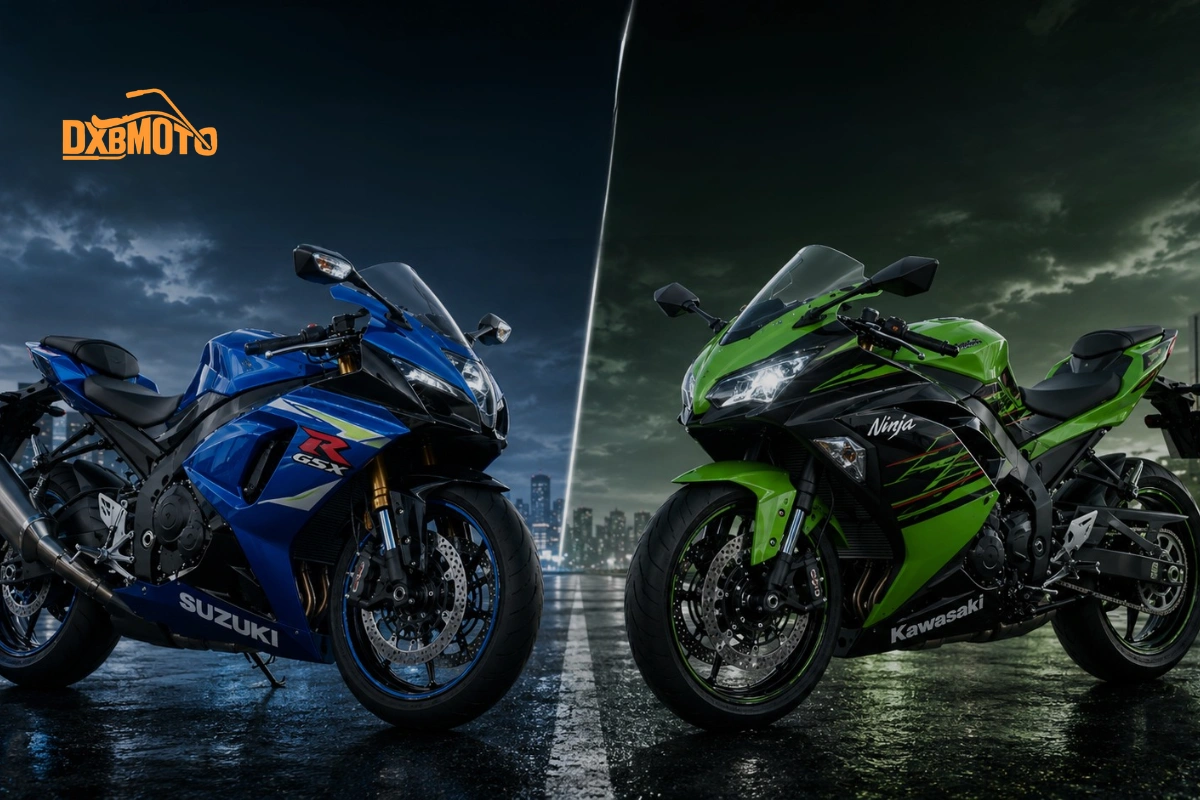
Suzuki vs Kawasaki is mainly a choice between practical control and sharper performance. Suzuki usually suits riders who want smoother power delivery, lower-stress ownership, strong long-distance usability, and reliable daily riding. Kawasaki is usually better for riders who want a more aggressive feel, stronger sportbike identity, sharper styling, and a wider Ninja and Z performance range.
For Dubai riders, the best choice depends on heat, traffic, highway use, service access, parts availability, and how the bike feels after the first month, not only the spec sheet. Choose Suzuki if you want a calmer motorcycle for daily riding, touring, or long-term use. Choose Kawasaki if you want more excitement, sportier response, and a bike that feels more direct from the first ride.
If you are comparing Suzuki vs Kawasaki before buying, check current motorcycles for sale in Dubai and compare real bikes by model year, mileage, condition, riding style, and price. The better brand choice becomes clearer when you compare actual available motorcycles instead of only reading brand claims.
Main Difference Between Suzuki and Kawasaki
The main difference between Suzuki and Kawasaki is how each brand delivers performance. Suzuki motorcycles usually feel smoother, calmer, and easier to settle into. The power delivery is often more predictable, which helps in traffic, long rides, and daily ownership.
Kawasaki motorcycles usually feel sharper and more energetic. The throttle response can feel more immediate, the styling is often more aggressive, and the brand has a stronger sportbike identity. This makes Kawasaki attractive for riders who want excitement, stronger road presence, and a bike that feels active from the first ride.
Neither brand is automatically better. Suzuki is usually the better fit for riders who want control and comfort. Kawasaki is usually better for riders who want sharper performance and a stronger emotional pull.
Suzuki Riding Character: Smooth, Practical, and Easier to Live With
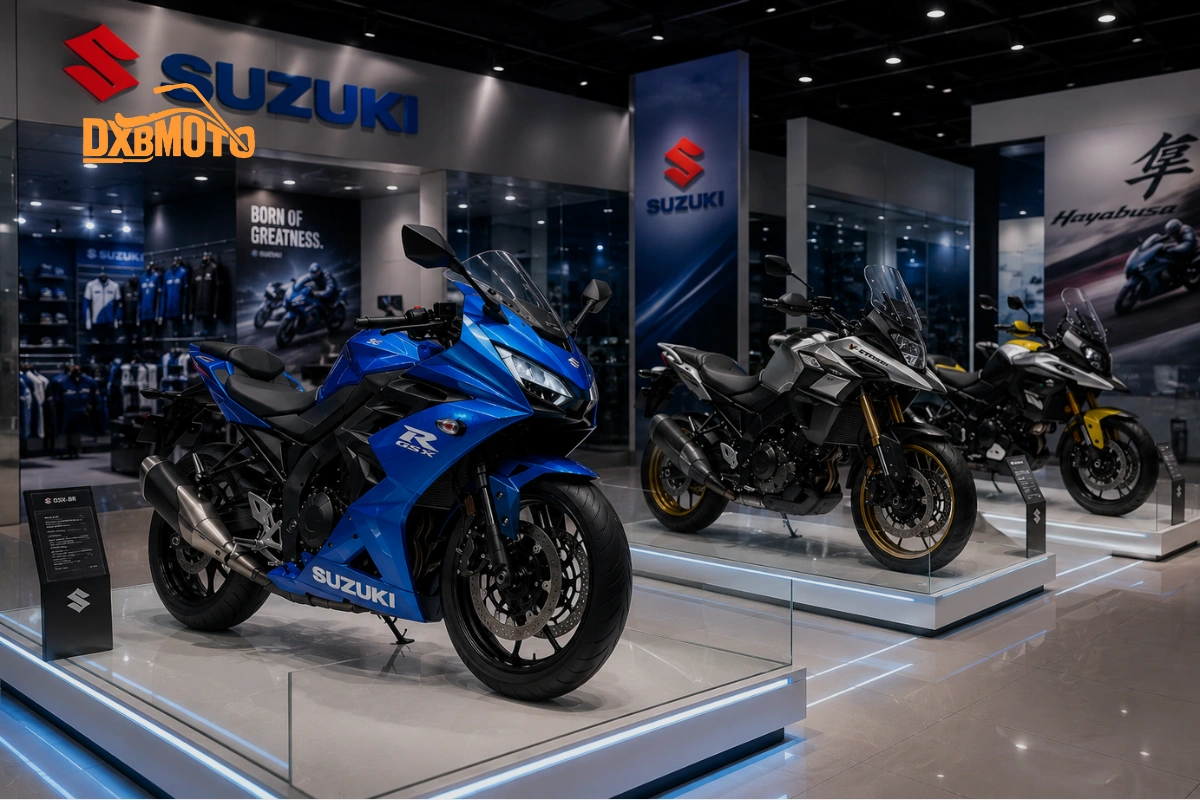
Suzuki motorcycles often feel more measured than dramatic. A Suzuki GSX-8R, V-Strom, Hayabusa, or GSX-S model usually gives power in a way that feels usable rather than nervous. The throttle response is smoother, the engine character feels controlled, and the bike does not constantly push the rider to ride harder than necessary.
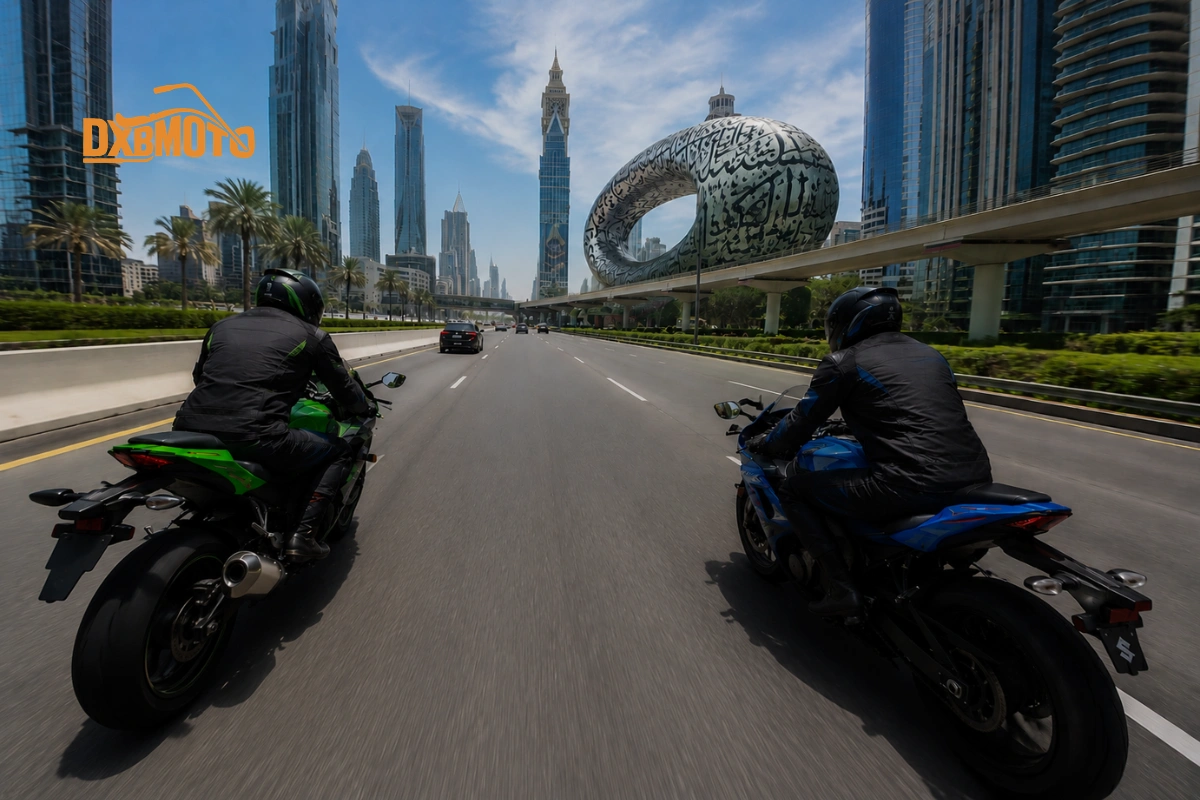
That matters in Dubai because many riders deal with heat, city traffic, long highway sections, parking exposure, and mixed riding conditions. A motorcycle that feels exciting for ten minutes is not always the motorcycle you want to live with for two years. Suzuki often works well for riders who want strong performance without stress.
Kawasaki Riding Character: Sharper, Sportier, and More Aggressive
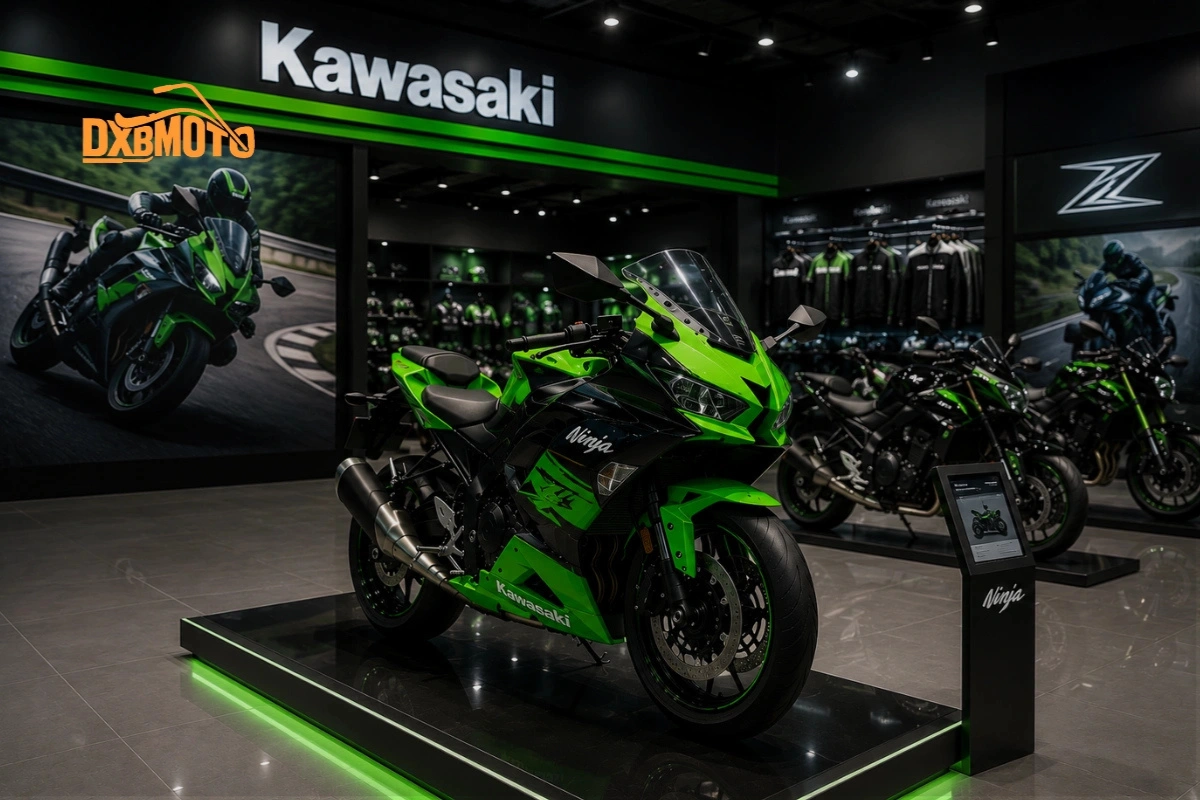
Kawasaki has a different energy. The brand has built a strong identity around Ninja sportbikes, Z naked bikes, and high-performance machines. A Kawasaki often feels more eager when you open the throttle. The riding position may feel more aggressive, the engine response can feel more immediate, and the designlanguage is usually sharper.
This is why Kawasaki attracts riders who want stronger visual impact and more excitement from the first ride. The Z900, Ninja ZX-6R, Ninja 650, ZX-10R, and Versys models all sit in different categories, but the brand character is still clear.In simple words, Kawasaki usually feels more “performance first,” while Suzuki feels more “performance with control.”
Suzuki vs Kawasaki by Motorcycle Type
Sportbike Buyers See The Difference FastFor sportbike riders, Suzuki vs Kawasaki becomes very specific. Suzuki has the Hayabusa and GSX-8R, while Kawasaki has a deeper Ninja lineup. Kawasaki covers more sportbike levels, from accessible middleweight machines to more serious supersport and superbike platforms.Kawasaki’s European model range includes the 2026 Ninja ZX-6R, ZX-4RR, ZX-4R, Ninja 650, and Ninja 500, showing how wide its sport category is. Suzuki’s global lineup includes categories such as supersport, ultimate sport, street, sport adventure tourer, cruiser, scooter, and dual purpose motorcycles.
Sport Bike
For sportbike riders, Suzuki vs Kawasaki becomes very specific. Suzuki has serious models such as the Hayabusa, GSX-R, and GSX-8R. Kawasaki has a deeper Ninja lineup across more rider levels, from accessible sport bikes to serious supersport and superbike machines.
Kawasaki usually has the stronger sportbike identity because the Ninja name is easy to recognize and covers more categories. Suzuki still matters for riders who want torque, road usability, and models such as the Hayabusa, which has a very different personality from a track-focused superbike.
If your comparison is mainly about sport bikes, read the DXB Moto guide to the best sport bikes in 2026 before choosing between Suzuki GSX models and Kawasaki Ninja models. It helps compare performance, control, rider level, and real-world usability instead of judging only by horsepower.
Adventure and Touring Bikes
Adventure and touring riders should not compare Suzuki and Kawasaki only by horsepower. Suzuki’s V-Strom range is one of the brand’s strongest areas because it focuses on comfort, range, stability, and long-distance usability. Kawasaki’s Versys models also work well for touring, but they are usually more road-focused.
If you ride mostly highways, city roads, and occasional mountain routes, a Versys can make sense. If you want a more rugged, practical, long-distance motorcycle with a calmer character, the V-Strom family deserves attention. In this category, the better choice depends less on brand loyalty and more on where you actually ride.
For riders comparing V-Strom and Versys models, the best adventure bike guide is a useful next step. It explains how adventure motorcycles should be judged by comfort, highway stability, off-road confidence, weight, reliability, and real UAE riding conditions.
Engine Character: Smooth Control vs Quick Reaction
Suzuki Engines Usually Feel Easier to Trust
Suzuki engines often feel mature and predictable. The GSX-8R, for example, uses a 776cc parallel-twin engine, and its character is built around smooth, controllable, torque-rich power from low RPM. That type of engine feel is useful because it gives the rider strong pull without making the motorcycle feel nervous in traffic.
This matters in Dubai. Heat, traffic, fast roads, and sudden slowdowns all test a motorcycle. A bike that only feels good at high RPM is not always enjoyable here. Suzuki’s calmer delivery can make the bike easier to manage in mixed conditions.
Kawasaki Engines Often Feel More Urgent
Kawasaki engines often feel more alive when ridden hard. The power delivery usually encourages quicker acceleration, sharper overtakes, and a more active riding style. On a Z900 or Ninja ZX model, the bike often feels like it wants to move, rev, and respond.
That can be exciting, but the rider should be honest about skill level. A sharper motorcycle is not automatically better. It is better only when the rider wants that character and can use it properly. In Suzuki vs Kawasaki, the better question is not “which one is faster?” The better question is “which one gives me the type of control I want every day?”
If you are still a new rider, do not choose Suzuki or Kawasaki only by brand image. Start with the best beginner motorcycles in Dubai and focus on manageable power, braking confidence, riding position, weight, and how easy the bike is to control in traffic.
Price Reality in Dubai and the UAE
Suzuki can be attractive because many models give a strong mix of power, comfort, and durability without feeling overpriced. Final prices in the UAE can change based on dealership, model year, condition, mileage, registration, insurance, accessories, and availability.
This is why buyers should not compare only the starting price. A cheaper motorcycle can become more expensive if it needs tyres, brakes, chain and sprockets, battery replacement, fork work, or cooling system repairs. When comparing Suzuki vs Kawasaki in Dubai, the smarter question is total ownership cost, not only the advertised price.
Kawasaki Can Cost More in Performance Segments
Kawasaki models can become more expensive when you move into Ninja, Z, and high-performance categories. That is not surprising because the brand has a strong performance image and some models hold strong demand among riders who want sharper bikes.
This does not mean Kawasaki is poor value. It means the buyer should check whether the extra cost matches the riding use. If the motorcycle will mostly be used for short city rides, a sharper and more expensive performance model may not be the most practical choice. If the rider wants weekend performance, fast road energy, or track-style character, the extra cost can make more sense.
Ownership: The Part Most Buyers Ignore
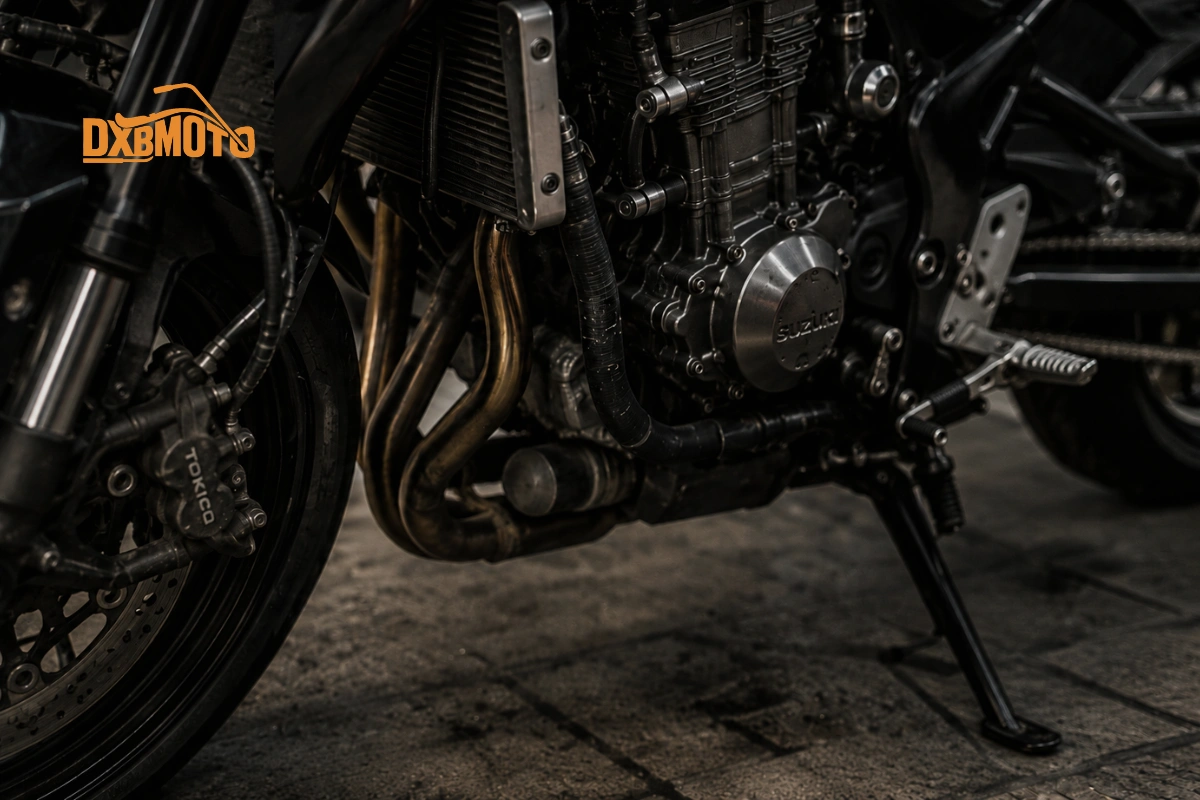
A motorcycle can look perfect online and still become annoying if service access, parts cost, or heat management is poor. In Dubai, this is not a small detail. Riders deal with long hot seasons, highway speeds, dust, parking exposure, and frequent stop-start riding.
This is where Suzuki vs Kawasaki should not be judged only from spec sheets. Suzuki has a reputation for mechanical simplicity and durability. Kawasaki has strong dealer presence and a loyal performance community. Both can be reliable, but they reward different ownership habits.
If you are checking used bikes, ask about service history, cooling system condition, chain and sprocket wear, brake condition, tyre age, battery health, fork seals, and accident history. A clean-looking motorcycle with poor maintenance can cost more than a higher-priced bike with proper records.
This is also where motorcycle repair Dubai becomes important, especially before buying a used Suzuki, Kawasaki, sportbike, or adventure motorcycle. A short inspection can reveal tyre age, brake wear, cooling issues, fork leaks, chain condition, battery weakness, and signs of crash repair before the bike becomes your responsibility.
Resale Value: Suzuki vs Kawasaki
Resale value is model-specific. Some Kawasaki models, especially Ninja and Z bikes, can attract strong buyer interest because the brand image is easy to understand. A Ninja looks like a Ninja, and many buyers already know what they want before they arrive.
Suzuki resale can also be strong, especially for the Hayabusa, V-Strom, GSX-R, and clean GSX models. Suzuki buyers are often more practical, so they may care more about condition, mileage, service history, and ownership records than pure image.
In Dubai, a clean Hayabusa can be easier to sell than a neglected Kawasaki. A well-kept Z900 can move faster than an unpopular Suzuki model. Brand matters, but condition, model demand, mileage, and service history still decide resale strength.
Riding Feel After the First Week
Suzuki Is Easier to Settle Into
The Suzuki riding experience often becomes more impressive after time. At first, it may not feel as dramatic as a Kawasaki. But after a week, the comfort, engine smoothness, gearbox feel, and predictable handling start to make sense.
For daily use, a motorcycle should respond clearly without making every ride feel like a test. Suzuki often gets this right. It lets the rider relax without feeling disconnected from the bike.
Kawasaki Makes a Stronger First Impression
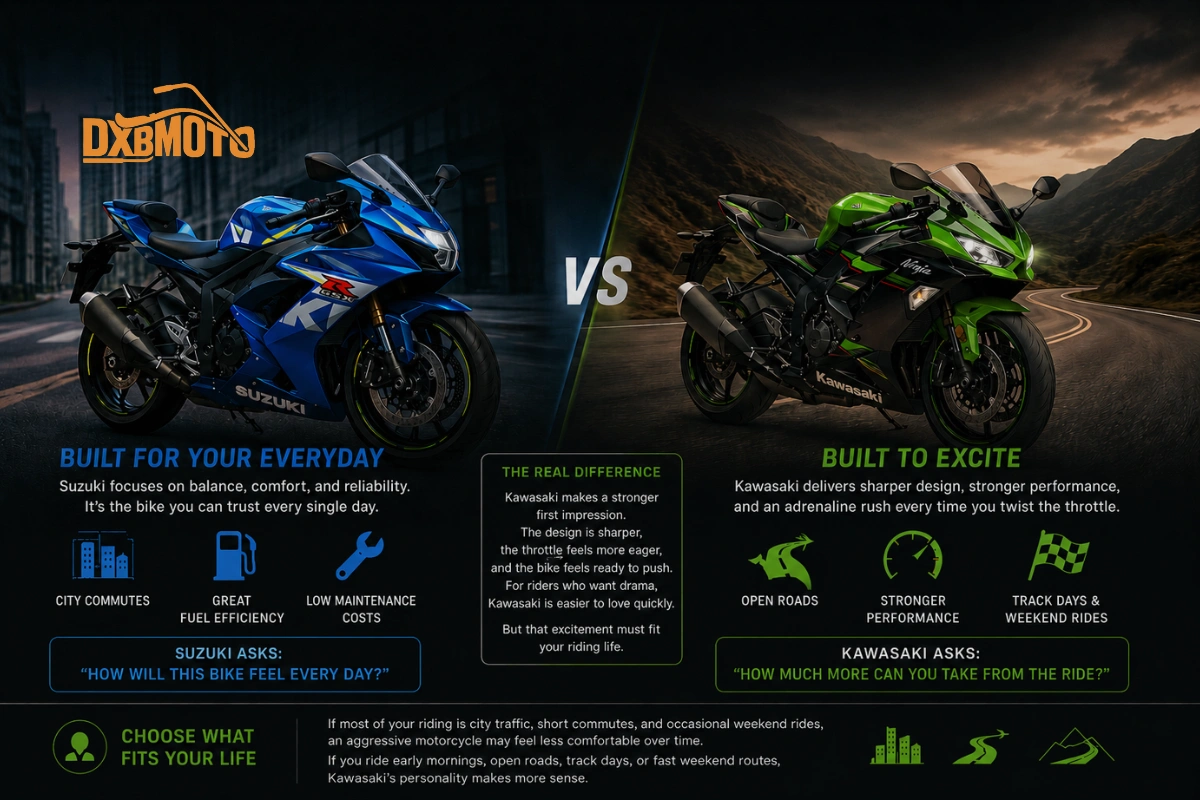
Kawasaki usually wins the first-impression test. The design is sharper, the throttle feels more eager, and the bike feels ready to push. For riders who want drama and stronger road presence, Kawasaki is easier to love quickly.
But that excitement must fit your riding life. If most of your riding is city traffic, short commutes, and occasional weekend rides, an aggressive motorcycle may feel less comfortable over time. If you ride early mornings, open roads, track days, or fast weekend routes, Kawasaki’s personality makes more sense.
Model-by-Model Comparison
Suzuki GSX-8R vs Kawasaki Ninja 650
The Suzuki GSX-8R feels like a modern middleweight sport motorcycle with strong torque, a newer engine character, and practical road behavior. The Kawasaki Ninja 650 is also road-friendly, but it has stronger Ninja recognition and an easier entry point for many riders.
If you want a more modern engine feel and a slightly more premium middleweight impression, the GSX-8R deserves attention. If you want a proven, accessible sportbike with a familiar name and easier recognition in the used market, the Ninja 650 still makes sense.
Suzuki V-Strom 800DE vs Kawasaki Versys 650
The V-Strom 800DE is more adventure-focused, while the Versys 650 is more road-touring focused. This comparison is not about which motorcycle is better overall. It is about terrain and riding style.
For broken roads, longer exploration, light adventure use, and a calmer long-distance character, the Suzuki V-Strom 800DE is the stronger fit. For comfortable road touring, daily usability, and mostly paved routes, the Kawasaki Versys 650 remains a strong choice.
Suzuki Hayabusa vs Kawasaki Ninja ZX-10R
This is not a direct personality match, but buyers compare them anyway because both are serious machines. The Hayabusa is about high-speed stability, torque, comfort, and legendary road presence. The Ninja ZX-10R is more track-focused, sharper, and more aggressive.
If you want a road-focused high-speed motorcycle with comfort, torque, and history, the Hayabusa makes sense. If you want a sharper superbike experience with more track energy, the Kawasaki ZX-10R fits better.
Final Decision: Should You Choose Suzuki or Kawasaki?
The best answer to Suzuki vs Kawasaki depends on how honest you are about your riding style. In DXB Moto, we suggest you choose Suzuki if you want a motorcycle that feels controlled, durable, practical, and easier to live with. Suzuki is especially strong if you value smooth power delivery, long-term reliability, adventure touring, daily comfort, and lower-stress ownership.
Choose Kawasaki if you want a sharper design, a stronger sport identity, a more aggressive riding feel, and a wider Ninja or Z performance culture. Kawasaki makes more sense if you want the bike to feel exciting from the first ride, and you enjoy a more active riding experience.
For daily riding, long ownership, and mixed Dubai conditions, Suzuki often makes more sense than people expect. For emotional pull, sportbike identity, and sharper road presence, Kawasaki is hard to ignore. Suzuki vs Kawasaki is not a question with one winner. It is a question about the rider, the model, the condition, and the type of riding the motorcycle will actually do.
Frequently Asked Questions
Is Suzuki better than Kawasaki?
Suzuki is better for riders who want smoother power delivery, practical ownership, daily comfort, touring usability, and lower-stress riding. Kawasaki is better for riders who want sharper response, aggressive styling, stronger sportbike identity, and a more exciting first impression.
Is Kawasaki better for sport bikes?
Kawasaki is usually stronger in sportbike variety because the Ninja lineup covers more rider levels, from accessible models to serious supersport and superbike machines. Suzuki still has strong sport models such as the Hayabusa, GSX-R, and GSX-8R.
Which is better for Dubai riding, Suzuki or Kawasaki?
For daily Dubai riding, Suzuki can feel easier because of smoother power delivery and practical ownership character. Kawasaki can be better if you want sharper performance, stronger road presence, and a more active riding experience.
Is Suzuki or Kawasaki better for used motorcycle buyers?
For used motorcycle buyers, condition matters more than brand. A well-maintained Suzuki is better than a neglected Kawasaki, and a clean Kawasaki is better than a poorly serviced Suzuki. Always check service history, accident signs, tyre age, brakes, chain, cooling system, and registration status.
Which brand has better resale value in Dubai?
Resale value is model-specific. Kawasaki Ninja and Z models can attract strong demand, while Suzuki Hayabusa, V-Strom, and clean GSX models can also hold value well. In Dubai, condition, mileage, service history, and model popularity matter more than brand name alone.
DXB Moto Team combines technical content writing experience with practical knowledge of motorcycle parts, fitment checks and rider needs. The team focuses on clear buying guides, spare-parts references, maintenance topics and real-world motorcycle use in Dubai and across the UAE.