
Blog
How do I Choose The Right Size Motorcycle Helmet?
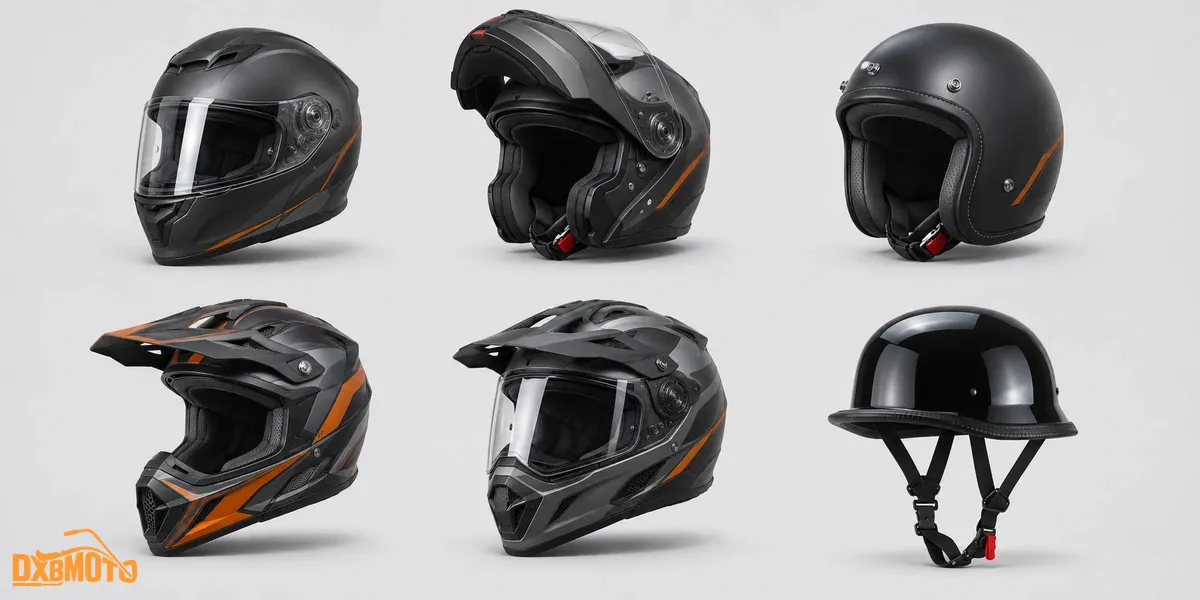
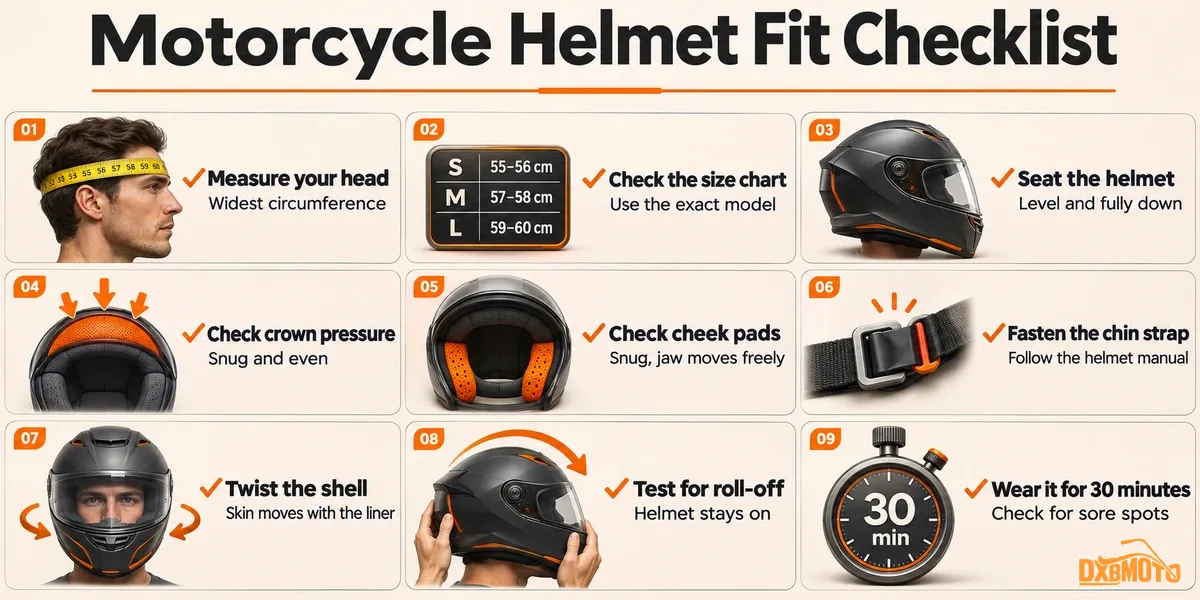
Measure your head, check the size chart for the exact helmet model, and try it on with the chin strap fastened. Look for even pressure and minimal movement. Pain or a helmet that nearly rolls off means you should try a different size or model.
Motorcycle Helmet Fit Checklist
- Head measurement: widest circumference recorded in centimetres.
- Size chart: measurement matched to the chart for the exact helmet model.
- Helmet position: level and fully seated on your head.
- Crown fit: firm, even contact without forehead or temple pain.
- Cheek pads: snug contact in a full-face helmet, with comfortable jaw movement.
- Chin strap: fastened and adjusted according to the manufacturer’s instructions.
- Twist test: skin moves with the liner when you gently twist the shell.
- Roll-off test: helmet stays securely on when you try to roll it forward from the lower rear edge.
- 30-minute try-on: no headache or sore spots, including behind your ears if you wear glasses.
1. Measure Your Head
- Tape Position: about 2.5 cm above your eyebrows, above your ears, and around the widest part at the back.
- Head Circumference: the largest reading with the tape level and snug, recorded in centimetres.
- Starting size: the size that matches your measurement on the exact model’s chart
- Between sizes: both sizes worth trying, starting with the smaller one if the manufacturer advises it.
Buy Motorcycle Accessories in Dubai
2. Match The Helmet to Your Head Shape
- Head shape: round oval, intermediate oval, or long oval, best judged from directly above.
- Forehead pressure with room at the sides: a sign to try a longer oval interior.
- Temple pressure with room at the front: a sign to try a rounder interior.
Read More: Must-Have Motorcycle Accessories for Riders
3. Check The Fit Before Buying
Seat the helmet squarely on your head and fasten the chin strap before testing.
- Crown: firm, even contact without a painful spot at the forehead or temples
- Cheek pads: gentle pressure in a full-face helmet, with enough room to open and close your mouth comfortably.
- Side-to-side movement: skin moving with the liner as you gently twist the shell, with minimal movement across your face,
- Roll-off test: helmet staying securely on when you grasp the lower rear edge and try to roll it forward.
- 30-minute try-on: time to catch a headache or sore spot, especially behind your ears if you ride with glasses.
| What you notice | What to try next |
|---|---|
| The shell rotates freely while your head stays still | Try the next size down and repeat the movement checks |
| Your forehead hurts but the sides feel roomy | Try a model with a longer oval interior |
| Both temples feel pinched but there’s room at the front | Try a model with a rounder interior |
| The crown fits evenly but the cheek pads squeeze too hard |
Motorcycle Helmet Sizing – FAQ
1. Will a tight motorcycle helmet loosen up?
The comfort padding can soften with wear, especially around the cheeks. If the helmet gives you a headache or creates a painful spot on your forehead during the try-on, choose a different size or head shape.
2. Can I buy the right helmet size online?
Use the model’s size chart to choose your starting size and check the exchange policy before ordering. When it arrives, do the fit checks indoors and keep the tags and packaging intact until you’re happy with the fit.
3. Should I measure over a balaclava?
Take your bare-head measurement for the chart. If you regularly ride in a balaclava, bring it to the try-on and repeat the fit checks with it on. Pay particular attention to any seam that creates a pressure point.

DXB Moto Team is Expert in used and new motorcycles, spare parts, accessories, and professional motorcycle services and Repair in Dubai.
Mini Bikes
Scooters
Sport Bikes
Naked Bikes
Cruiser Bikes
Touring Bikes
Adventure Bikes