

Blog
Why Won’t My Motorcycle Start? 10 Common Causes and How to Fix Them
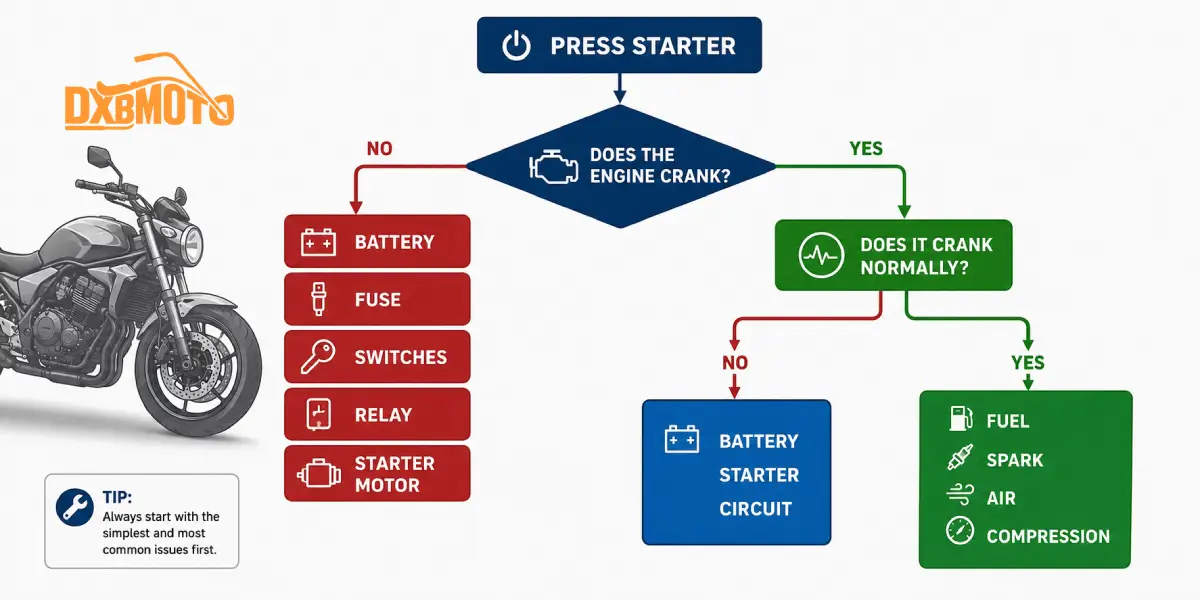
A motorcycle that won't start is usually dealing with a problem in the battery or electrical system, starting circuit, fuel system, or ignition system. The fastest way to narrow it down is to check what happens when you press the starter: nothing happens, you hear a click, the engine turns slowly, or it cranks normally but does not start.
The good news is that you do not need to replace parts at random to find the problem. Start with the simplest checks and use the motorcycle's symptoms to narrow down the cause.
This guide on DXB Moto covers the 10 most common reasons a motorcycle will not start, what causes each problem, how to check it, and what you can do about it.
Motorcycle Won't Start: What Should You Check First?
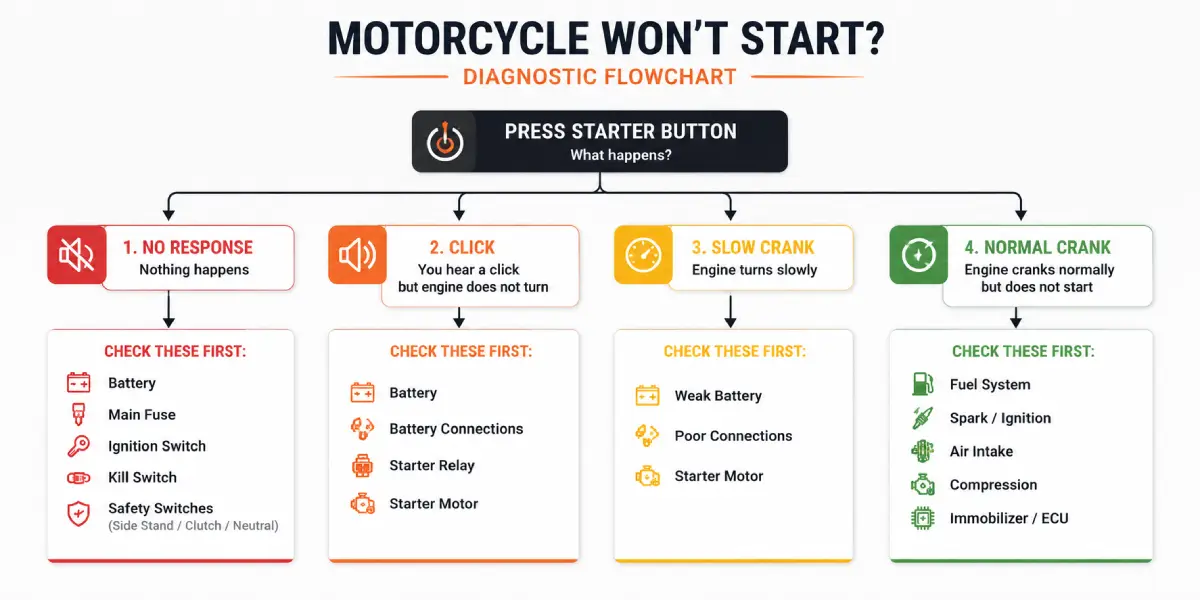
Before checking individual components, pay attention to what the motorcycle actually does when you press the starter button. This first observation can eliminate a large part of the possible causes.
| What happens when you press the starter? | What to check first |
|---|---|
| Nothing happens | Battery, main fuse, ignition switch, kill switch, safety switches |
| You hear a click but the engine does not turn | Battery, battery connections, starter relay, starter motor |
| The engine turns slowly | Weak battery, poor battery connection, starter motor |
| The engine cranks normally but does not start | Fuel, spark, air, ignition, immobilizer, compression |
| The engine starts but immediately dies | Fuel delivery, idle system, air/fuel mixture, sensors or electrical faults |
This distinction matters because "the motorcycle won't start" can describe two different problems.
If the engine does not turn over, the starting or electrical circuit is the first place to look.
If the engine turns over normally but never fires, the starter motor is already doing its job. Your attention should move to fuel, spark, air, ignition control, and eventually engine compression.
Why Won't My Motorcycle Start? 10 Common Causes
The most common causes fall into a few main systems: battery and electrical power, starting interlocks, fuel delivery, ignition, and engine-related problems.
The important part is not simply knowing which parts can fail. It is knowing which symptom points toward which system.
1. A Weak or Dead Motorcycle Battery
A weak or completely discharged battery is one of the first things to check when a motorcycle refuses to start.
A battery problem can produce different symptoms depending on how much charge is left. You may get:
- No response when you press the starter.
- A single click or repeated clicking.
- Slow engine cranking.
- Dashboard or headlights that become noticeably dim when you try to start the bike.
- Electrical power that cuts in and out.
A battery can also appear to have enough power to turn on the dashboard but still be too weak to crank the engine properly. Starting the engine requires significantly more current than powering basic electrical accessories.
What causes a motorcycle battery to go weak?
Common causes include:
- Leaving the ignition or electrical accessories on.
- Long periods without riding.
- An old or failing battery.
- A charging-system problem.
- A parasitic electrical drain
- while the motorcycle is parked.
- Loose or corroded battery terminals.
How to check the battery
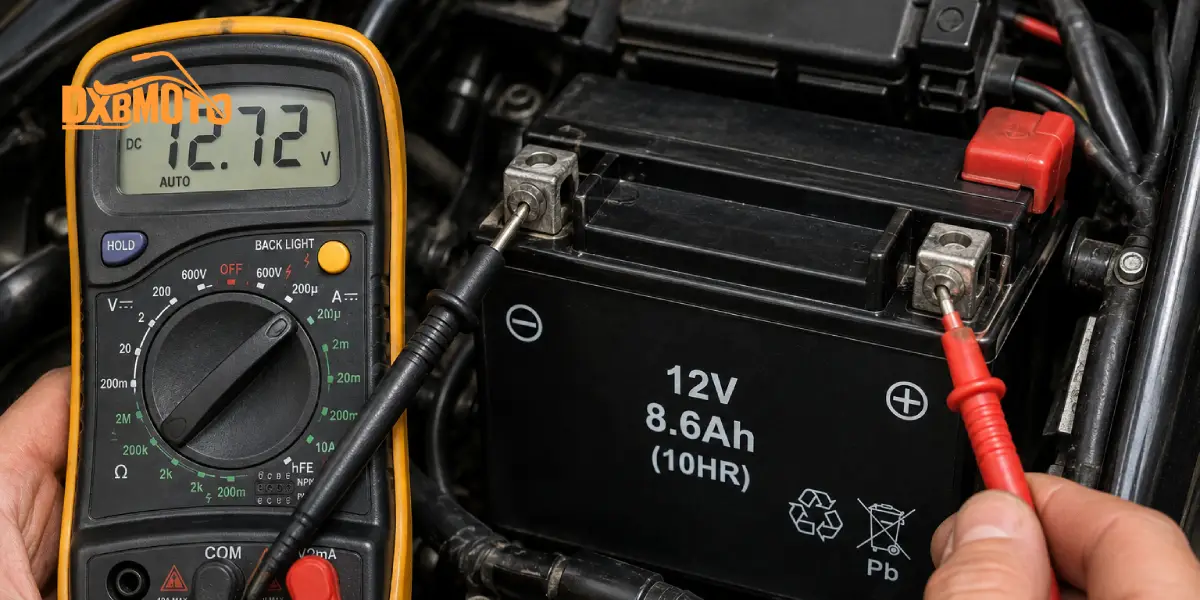
Start by checking the battery terminals. They should be clean, secure and free from significant corrosion.
If you have a multimeter, measure the battery according to the testing procedure and specifications for your motorcycle. A voltage reading alone does not always prove that a battery is healthy; a battery can show acceptable voltage at rest and still fail when a heavy starting load is applied.
If the battery repeatedly goes flat after being charged, do not immediately assume that the battery itself is the only problem. The motorcycle's charging system or an electrical drain may be causing the battery to discharge again.
What to do: Charge and test the battery. If it fails the appropriate battery/load test or cannot hold its charge, replacement may be necessary. If a new or fully charged battery quickly becomes weak again, the charging system and electrical circuit should be diagnosed rather than repeatedly replacing batteries.
2. The Kill Switch Is in the Wrong Position
The kill switch is one of the simplest things to check, but it is also easy to overlook.
If the engine stop switch is set to OFF, the motorcycle may have electrical power and the dashboard may light up, but the engine will not start.
Move the switch to the RUN position and try again.
If it is already in the correct position but the motorcycle still shows no response, the switch itself or its electrical circuit may need further diagnosis.
Do not assume that a motorcycle has a major mechanical fault until these basic controls have been checked.
3. The Side-Stand, Clutch or Neutral Safety Switch Is Preventing the Start
Modern motorcycles commonly use safety interlocks to prevent the engine from starting or the motorcycle from moving unexpectedly under certain conditions.
Depending on the motorcycle, the starting circuit may monitor:
- Side-stand position.
- Neutral position.
- Clutch lever position.
For example, a motorcycle may refuse to start if it is in gear with the side stand down. Some bikes require the clutch lever to be pulled even when the transmission is in neutral.
Start by putting the motorcycle in neutral, raising the side stand, and pulling the clutch lever while attempting to start it.
If the motorcycle starts intermittently depending on the position of the side stand, clutch lever, or handlebars, a faulty switch, sensor, wiring connection, or related interlock circuit could be responsible.
Do not permanently bypass a safety switch just to make the motorcycle start. These systems exist to prevent unintended movement and should be properly diagnosed if they malfunction.
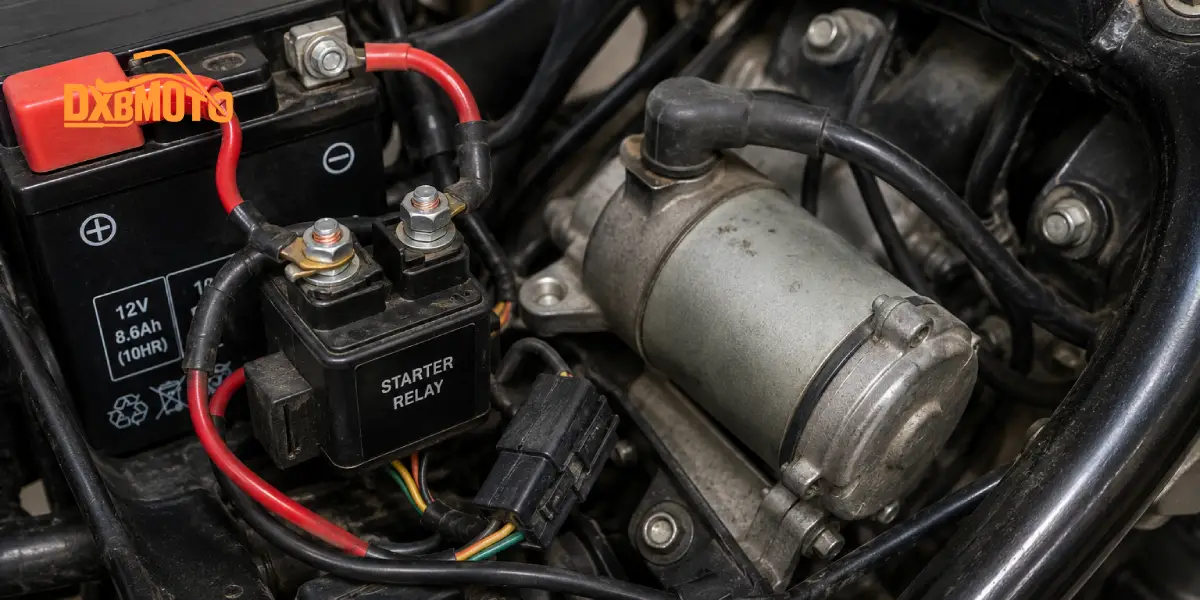
4. The Starter Relay or Starter Motor Has a Problem
If the battery is charged and the motorcycle still will not crank, the starter circuit is the next place to look.
When you press the starter button, electrical power passes through the starting circuit to the starter relay and starter motor. A fault in any of these components can prevent the engine from turning over.
What are the symptoms of a bad starter relay or motor?
You may notice:
- A single click when you press the starter.
- Repeated clicking.
- No engine movement despite having electrical power.
- Slow or unusually heavy cranking.
- The starter works intermittently.
- The starter button does nothing.
A click does not automatically mean the starter relay is bad. A weak battery, poor battery connection, or bad ground can also cause clicking.
What should you check?
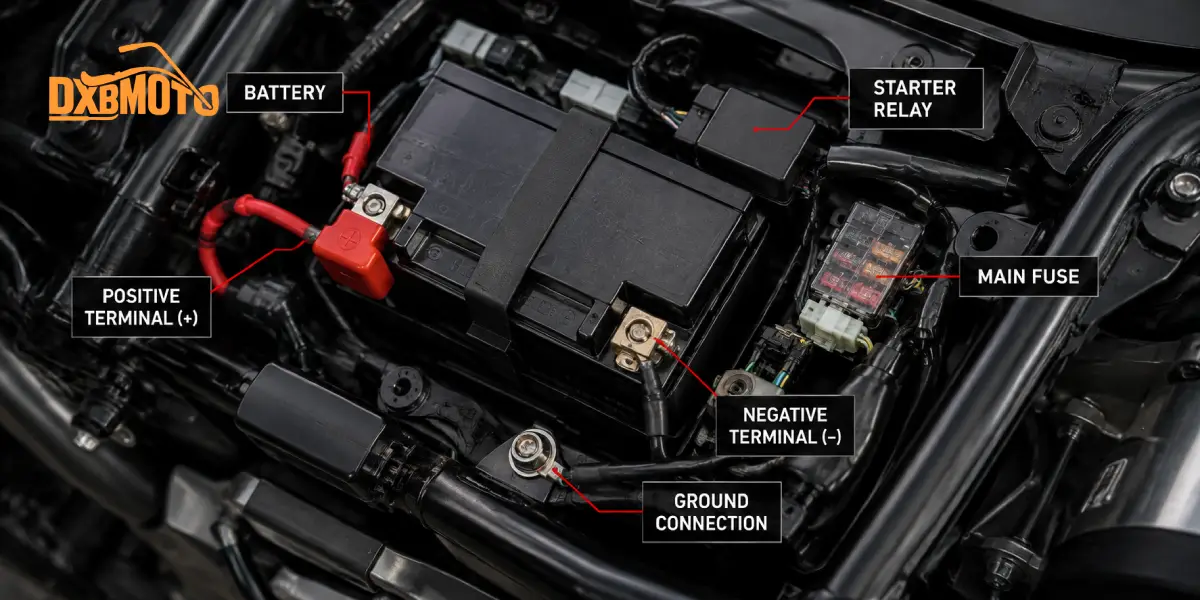
Start with the battery and its connections. Make sure the terminals are tight and clean.
If the battery passes the appropriate test, listen carefully when you press the starter:
- No sound: The problem may be in the starter button, safety interlock, fuse, wiring, or relay control circuit.
- One click but no crank: Check battery voltage under load, battery connections, ground connections, and the starter circuit.
- Rapid clicking: The battery may not be able to supply enough current, or there may be a poor electrical connection.
- Strong starter sound but the engine does not turn: The starter drive or another mechanical part of the starting system may need inspection.
What is the fix?
The correct repair depends on what testing finds. It could be as simple as cleaning a corroded connection or as involved as replacing the starter relay or starter motor.
Do not replace the relay or starter motor simply because you hear a click. Test the circuit first.
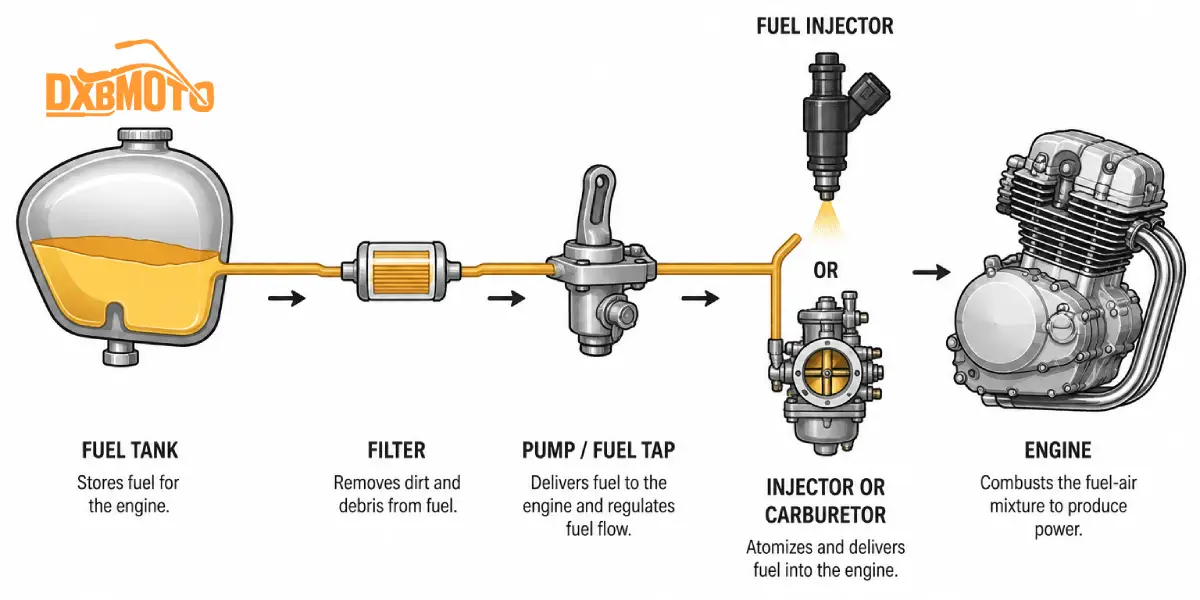
5. Fuel Is Not Reaching the Engine
If the engine cranks normally but does not start, fuel delivery is one of the first systems to investigate.
The motorcycle may have enough fuel in the tank, but that does not necessarily mean fuel is reaching the engine correctly.
What can stop fuel from reaching the engine?
Common causes include:
- Empty fuel tank.
- Incorrect or inaccurate fuel gauge reading.
- Blocked fuel filter.
- Kinked or damaged fuel line.
- Faulty fuel pump.
- Closed fuel tap on motorcycles equipped with one.
- Electrical problems preventing the fuel pump from operating.
On a fuel-injected motorcycle, listen for the fuel pump's initial operation when the ignition is switched on, if the motorcycle's design normally allows you to hear it.
However, the absence of an obvious pump sound does not by itself prove that the fuel pump has failed. The electrical supply, fuse, relay, wiring and pump control system may also need to be checked.
What should you check first?
Start with the obvious:
- Confirm that there is actually fuel in the tank.
- Check whether the motorcycle has a fuel tap and whether it is in the correct position.
- Look for damaged, disconnected or kinked fuel lines.
- Check the relevant fuse if the motorcycle uses an electric fuel pump.
- If the pump appears not to operate, have the electrical supply and fuel system properly tested.
Do not start replacing fuel-system components based on a single symptom.
What is the fix?
The repair depends on the cause. A blocked filter or damaged fuel line may need replacement, while a fuel pump problem may require further electrical and pressure testing before the pump is replaced.
If fuel is leaking anywhere in the system, do not continue trying to start the motorcycle. Fuel leaks create a fire hazard and should be repaired before starting the engine.
6. The Carburetor or Fuel Injection System Has a Problem
Sometimes fuel is present and reaching the motorcycle's fuel system, but the engine still cannot start because the fuel is not being delivered or mixed correctly.
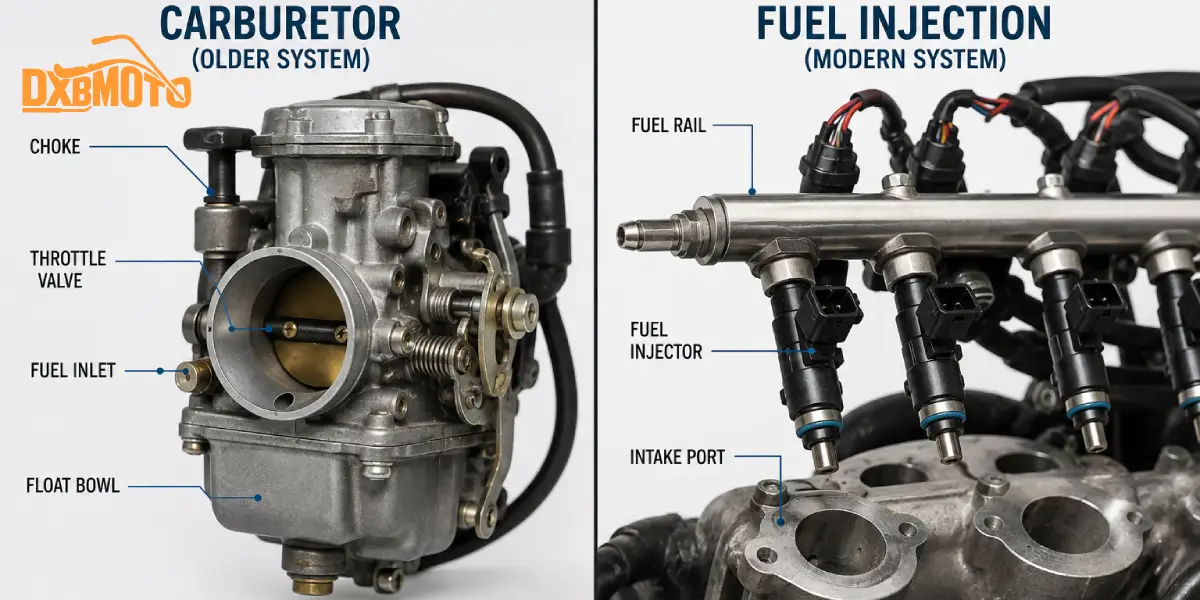
The likely causes depend heavily on whether the motorcycle uses a carburetor or fuel injection.
Carbureted motorcycles
On an older or carbureted motorcycle, starting problems can be caused by:
- Stale fuel.
- A clogged pilot jet.
- Blocked carburetor passages.
- A stuck float or needle valve.
- Incorrect fuel level.
- Contaminated fuel.
A carburetor that has become dirty after the motorcycle has been sitting for a long period.
These problems can be particularly noticeable after a motorcycle has been stored for weeks or months.
A motorcycle may crank normally and briefly try to start but fail to keep running because the carburetor cannot deliver the correct amount of fuel at starting or idle.
Fuel-injected motorcycles
Fuel-injected motorcycles use electronic controls to determine how much fuel the engine receives.
Possible causes of a no-start condition include:
- Fuel pump failure.
- Insufficient fuel pressure.
- A blocked injector.
- Injector electrical problems.
- Wiring or connector faults.
- A sensor or control-system problem.
However, a suspected fuel-injection problem should not automatically be treated as an injector failure. The fuel supply, electrical power, fuel pressure and control signals should be checked before replacing expensive components.
What should you check?
First determine whether the motorcycle is carbureted or fuel-injected.
Then consider the motorcycle's symptoms and history.
For example, if the bike has been sitting unused for a long time, stale fuel or carburetor contamination becomes more relevant on a carbureted motorcycle.
If a fuel-injected motorcycle suddenly develops a no-start condition, the fuel pump circuit, fuel pressure, injector operation and related electrical systems may need to be tested.
What is the fix?
The solution depends on the diagnosis.
A carbureted motorcycle may require carburetor cleaning or fuel-system service. A fuel-injected motorcycle may require electrical testing, fuel-pressure testing, injector diagnosis or fuel-system repair.
Do not replace the carburetor, injector or fuel pump before confirming that the component is actually causing the no-start condition.
Did the motorcycle start normally before this happened?
The timeline can help narrow the diagnosis.
- Started normally, then suddenly stopped: Electrical, fuel-pump, ignition or sensor-related problems become more relevant.
- Started getting harder to start over time: Battery condition, fuel delivery, ignition components or maintenance-related issues may be involved.
- Stopped starting after sitting for a long time: Battery discharge and fuel-system problems deserve particular attention.
- Starts briefly and then dies: Fuel delivery, idle/fueling problems or an electrical/control issue may be involved.
The goal is to identify the system causing the failure before replacing parts.
Quick Diagnostic Tip
If the engine cranks at a normal speed but does not fire, move away from the starter system and focus on the basic requirements for combustion:
Fuel + Spark + Air + Compression
If those basic requirements are present, the diagnosis may need to move toward ignition timing, sensors, immobilizer systems or other electronic and mechanical faults.
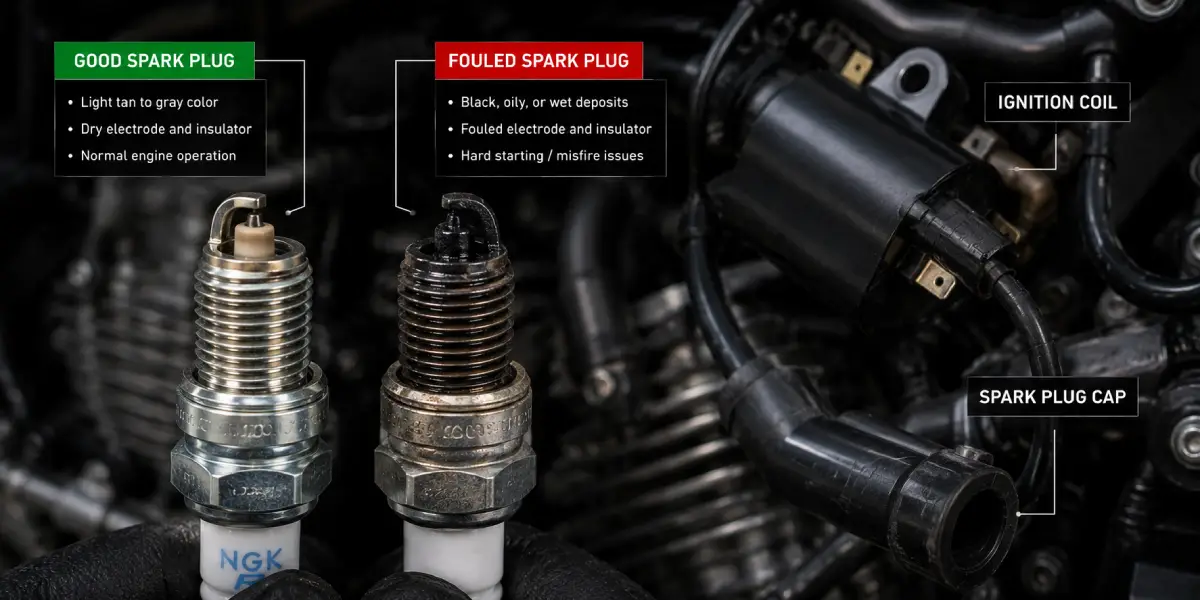
7. The Spark Plug or Ignition System Is Not Producing a Spark
A motorcycle needs a reliable spark to ignite the air-fuel mixture. If the ignition system cannot produce or deliver that spark, the engine may crank normally but fail to start.
The spark plug is one possible cause, but it is not the only one.
What can cause a spark-related starting problem?
Common possibilities include:
- Fouled spark plug.
- Worn or damaged spark plug.
- Damaged spark plug cap or ignition lead.
- Faulty ignition coil.
- Loose or damaged wiring or connectors.
- An ignition-system control fault.
A spark plug can also become wet with fuel after repeated starting attempts. This does not automatically mean the plug itself has failed. It can indicate that fuel is reaching the cylinder without being ignited properly.
What are the symptoms?
You may notice:
- The engine cranks normally but does not start.
- The motorcycle becomes progressively harder to start.
- The engine misfires before eventually refusing to start.
- The spark plug is fouled or wet.
- The problem appears intermittently.
What should you check?
Start with the spark plug and inspect it for obvious damage, fouling or abnormal wear.
If the plug appears acceptable but the motorcycle still will not start, the diagnosis should move through the rest of the ignition circuit rather than immediately replacing the plug.
Depending on the motorcycle, this may include the plug cap, ignition lead, ignition coil, wiring, connectors and electronic ignition controls.
Important: Spark testing should be carried out using the correct procedure and equipment for the motorcycle. Do not improvise by holding ignition components against the engine while cranking.
What is the fix?
If the spark plug is worn or fouled beyond the manufacturer's service limits, replacement may solve the problem.
If the plug is not the cause, the ignition system needs further testing to identify where the spark is being lost.
8. The Motorcycle Is Flooded
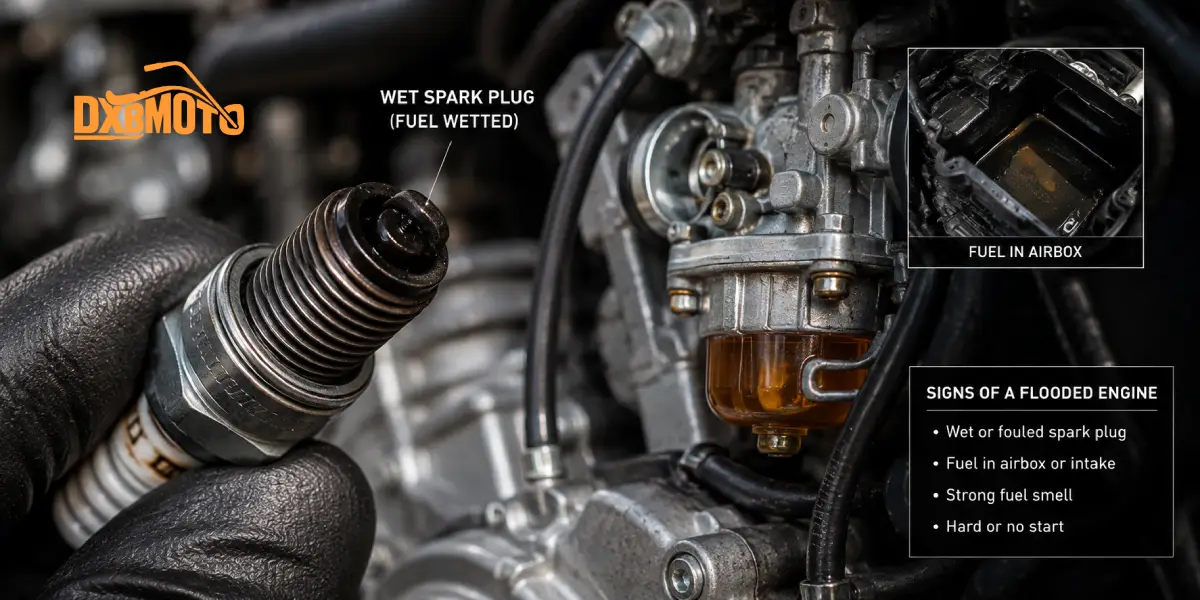
A flooded engine has too much fuel relative to the amount of air available for normal ignition.
This can happen particularly on carbureted motorcycles, although excessive fueling can also occur on fuel-injected bikes when there is an underlying fuel or control problem.
What are the signs of a flooded motorcycle?
Typical clues include:
- The engine cranks normally but does not start.
- You can smell a strong fuel odor.
- The spark plug may be wet with fuel.
- The engine may briefly try to start but fail to run.
- Repeated starting attempts make the problem worse.
A wet spark plug can support the diagnosis, but it does not prove that the engine is flooded. The plug may be wet because of another fueling or ignition problem.
Why does an engine flood?
Possible causes include:
- Excessive use of the choke on a carbureted motorcycle.
- Repeated unsuccessful starting attempts.
- A carburetor float or needle problem.
- Excessive fuel delivery.
- An injector or fuel-control problem on some fuel-injected motorcycles.
What should you do?
First, stop repeatedly pressing the starter. Continuing to introduce fuel can make the condition worse and may create additional problems.
The correct procedure for clearing a flooded engine varies by motorcycle. Follow the manufacturer's starting procedure for your specific model.
If flooding happens repeatedly, do not simply keep clearing the engine. The underlying fuel-delivery or ignition problem should be diagnosed.
9. A Fuse, Wiring or Electrical Connection Has Failed
Not every no-start problem comes from the battery itself. A blown fuse, damaged wire, corroded connector or poor ground connection can interrupt power to a critical part of the starting or ignition system.
What electrical problems can prevent a motorcycle from starting?
Check for possible issues with:
- Main fuse.
- Ignition-system fuse.
- Starter-circuit fuse.
- Loose battery terminals.
- Poor ground connections.
- Corroded electrical connectors.
- Damaged or disconnected wiring.
What should you check first?
If the motorcycle suddenly has no electrical response, check whether the relevant fuses are intact and whether the battery connections are secure.
If you find a blown fuse, do not replace it with a higher-rated fuse.
The fuse is there to protect the electrical circuit. Installing a fuse with a higher rating can allow excessive current to flow and potentially damage wiring or components.
If a replacement fuse blows again immediately, stop replacing fuses and have the circuit diagnosed. A recurring blown fuse usually points to an underlying electrical fault.
What about a bad ground connection?
A poor ground can create confusing symptoms.
The dashboard may appear to work, but the starter may not operate correctly. Electrical components may also behave intermittently.
That is why battery terminals and ground connections should be checked before assuming that an expensive electronic component has failed.
10. The Immobilizer, ECU/CDI or Another Electronic Control System Has a Fault
Modern motorcycles rely on electronic control systems for starting, ignition, fuel delivery and security.
When basic checks do not explain a no-start condition, an immobilizer or electronic control problem may need to be considered.
Possible systems include:
- Immobilizer or key
- recognition system.
- ECU on fuel-injected motorcycles.
- CDI or other ignition control systems on applicable motorcycles.
- Sensors involved in engine starting.
- Electronic wiring and communication circuits.
What are the warning signs?
An electronic fault may be more likely when you notice:
- An immobilizer or security warning.
- The key is not being recognized.
- Intermittent starting problems.
- A sudden no-start condition despite apparently normal battery power.
- Missing spark or fuel control with the basic circuits functioning correctly.
However, an ECU or CDI should not be the first thing you blame.
Many electrical and starting faults can produce similar symptoms.
What should you check before the ECU?
A sensible diagnostic sequence is:
Battery → Fuses → Safety switches → Wiring → Fuel → Spark → Sensors → Electronic control systems
This prevents a relatively simple electrical or starting-circuit problem from being mistaken for an expensive ECU or CDI failure.
What is the fix?
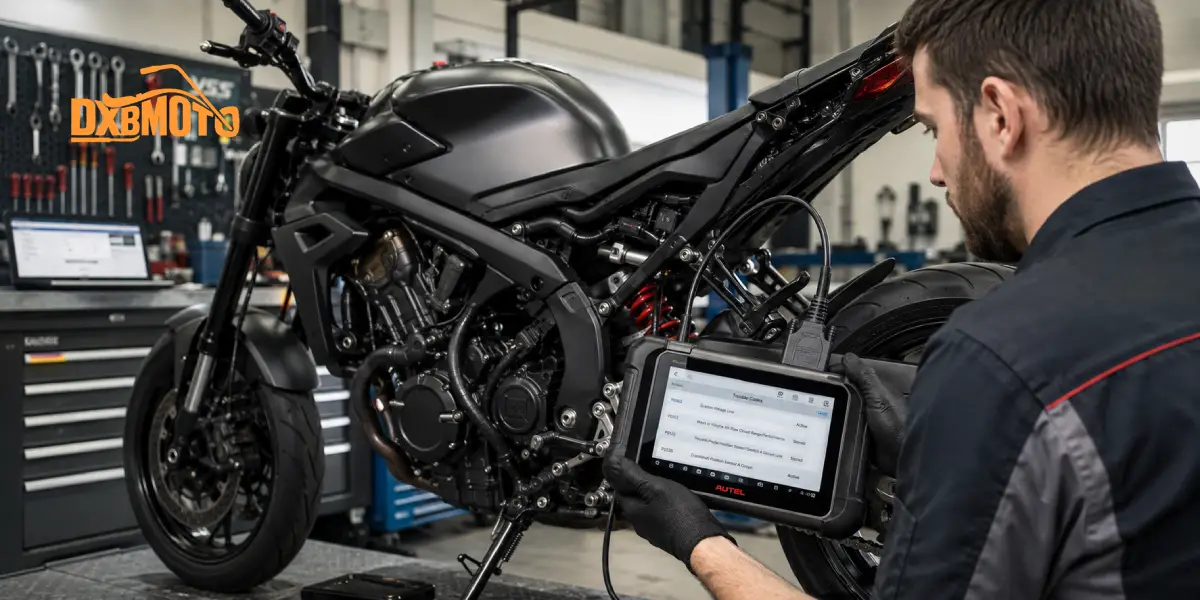
Electronic faults often require model-specific diagnostic equipment and testing.
If the immobilizer is involved, the motorcycle may need key-system diagnosis or manufacturer-specific procedures.
For ECU, CDI or sensor-related faults, a technician can test the relevant inputs, outputs, wiring and control signals before replacing a component.
Do not replace an ECU simply because the motorcycle will not start.
What If My Motorcycle Cranks but Won't Start?
If your motorcycle's engine turns over normally when you press the starter but never actually starts, the battery and starter motor are usually not the first systems to investigate.
The engine is already cranking. The next question is whether it is getting the basic requirements needed to run:
Fuel + Spark + Air + Compression
If one of these is missing, the engine can crank normally without firing.
Start with these checks
1. Check fuel delivery
Make sure there is fuel in the tank and that fuel is reaching the engine. On fuel-injected motorcycles, the fuel pump, fuse, wiring and fuel pressure may need to be checked.
2. Check for spark
A fouled spark plug, ignition coil, plug cap, wiring fault or ignition-control problem can prevent combustion.
3. Check air intake
A severely restricted air filter or intake problem can affect the air-fuel mixture and prevent proper combustion.
4. Consider flooding
A strong fuel smell or a fuel-wet spark plug after repeated starting attempts can point toward excessive fueling.
5. Check compression if the basic systems work
If fuel and spark are present but the engine still refuses to start, compression and mechanical condition may need to be tested.
A compression test is a diagnostic step rather than a part to replace. Low compression can point toward an internal engine or valve-related problem and generally requires further inspection.
Quick answer: If your motorcycle cranks normally but will not start, check fuel, spark and air first. If those are present, compression and electronic or mechanical faults may need further diagnosis.
What If My Motorcycle Won't Crank at All?
If you press the starter and the engine does not turn over, focus on the starting and electrical circuits before investigating fuel or spark.
Work through the simplest possibilities first:
- Check the battery.
- Check the battery terminals and ground connection.
- Make sure the kill switch is in the RUN position.
- Put the motorcycle in neutral.
- Check the side-stand and clutch safety switches.
- Check the relevant fuse.
Listen for a starter-relay click.
If the basic checks pass, the starter relay, starter motor or wiring may require testing.
The exact starting circuit varies between motorcycle models, so the manufacturer's wiring diagram and specifications should be used for electrical diagnosis.
What if the lights work but the motorcycle won't start?
Working headlights or a dashboard do not prove that the battery is healthy enough to crank the engine.
Starting the engine places a much higher electrical demand on the battery than powering basic accessories. A battery can therefore appear normal at rest while failing under starting load.
If the lights work but the starter does nothing or only clicks, check the battery condition and connections before assuming the starter motor has failed.
Why Does My Motorcycle Click but Not Start?
A clicking sound usually means the starting circuit is responding in some way, but it does not identify one specific failed component.
The most common areas to investigate are:
- Weak battery.
- Loose or corroded battery terminals.
- Poor ground connection.
- Starter relay or solenoid.
- Starter motor.
- Starting-circuit wiring.
What does rapid clicking mean?
Rapid clicking often occurs when the battery voltage drops too far when the starter attempts to operate.
However, the battery should be tested rather than diagnosed by sound alone.
What does one click mean?
A single click with no engine movement can occur when the starter relay activates but sufficient current is not reaching the starter motor.
Possible causes include a weak battery, poor electrical connections, a faulty relay or a problem with the starter motor itself.
Do not replace the starter relay based on the clicking sound alone.
The correct diagnosis requires checking the battery, connections and starting circuit.
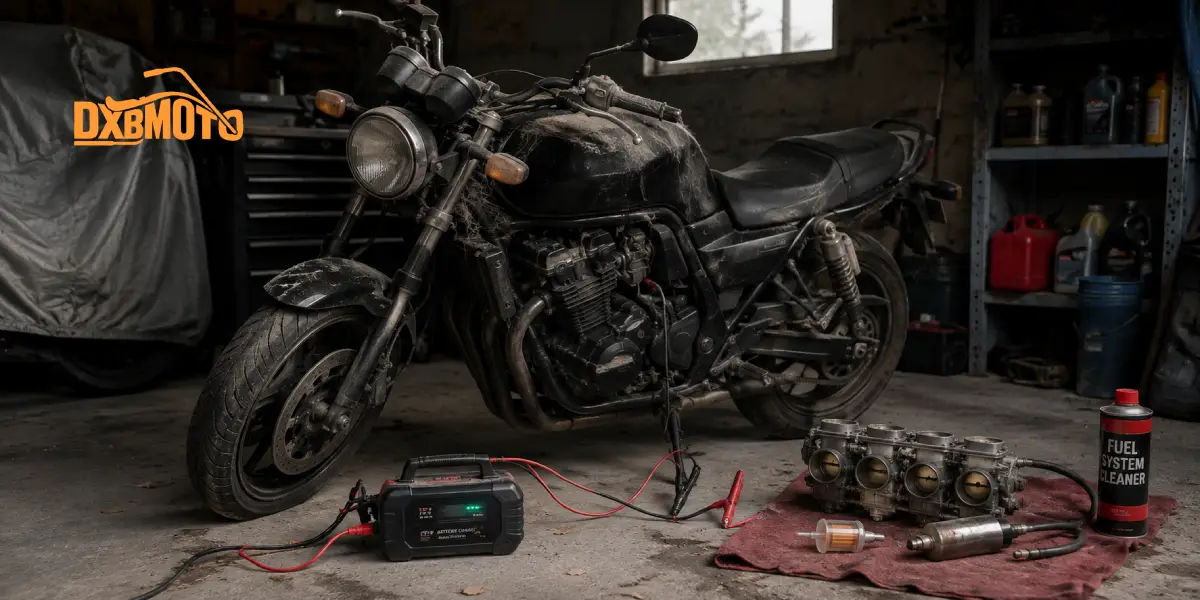
Why Won't My Motorcycle Start After Sitting for a Long Time?
A motorcycle that has been parked for weeks or months can develop starting problems even if it was running normally before storage.
The two systems worth checking first are the battery and fuel system.
Battery discharge
A motorcycle battery can gradually lose charge while the bike is sitting. Some motorcycles also have small electrical loads that continue operating when the ignition is off.
If the battery has been sitting discharged for a long time, it may also have deteriorated rather than simply needing a recharge.
Old or stale fuel
Fuel-related problems become particularly relevant on motorcycles that have been stored for a long period.
On carbureted motorcycles, old fuel can contribute to deposits and clogged passages, including the small pilot circuits used during starting and idle.
What should you check?
Start with:
- Battery condition.
- Fuel condition.
- Fuel level and delivery.
- Carburetor condition on applicable motorcycles.
- Electrical connections.
Spark plug condition.
If the motorcycle still will not start after these checks, a proper fuel, ignition and compression diagnosis may be needed.
What If My Motorcycle Starts but Dies Immediately?
A motorcycle that starts and then immediately stalls is a slightly different problem from a motorcycle that never starts.
The engine is capable of firing, so the diagnosis should focus on why it cannot continue running.
Possible causes include:
- Insufficient fuel delivery.
- Carburetor pilot-circuit problems.
- Incorrect idle speed.
- Fuel-air mixture problems.
- Fuel injection problems.
- Air intake issues.
- Sensor or electrical faults.
- An immobilizer or electronic-control problem on applicable motorcycles.
Does it only stay running with the choke?
If a carbureted motorcycle only runs while the choke or enrichment system is engaged and dies when it is switched off, the carburetor's low-speed fuel circuit may need attention.
A clogged pilot jet is one possible cause. Old fuel and long periods of storage can contribute to this type of carburetor problem.
Does it die as soon as you release the starter?
If the motorcycle fires while the starter is being used but immediately stalls afterward, look at fuel delivery, idle control and the systems that keep the engine running after startup.
Do not assume the battery is responsible simply because the problem happens during starting.
How Do I Know If My Motorcycle Has a Fuel or Spark Problem?
When an engine cranks normally but refuses to start, separating fuel problems from ignition problems can make diagnosis much faster.
The symptoms can provide clues, but they are not always enough for a definite diagnosis.
Signs that may point toward a fuel problem
- The engine cranks normally.
- There is little or no fuel smell.
- The motorcycle has been sitting for a long time.
- The fuel pump does not appear to operate normally.
- The engine starts briefly and then dies.
- A carbureted motorcycle runs only with the choke.
Signs that may point toward an ignition problem
- The engine cranks normally but never fires.
- The spark plug is fouled or damaged.
- The motorcycle has developed misfires before the no-start condition.
- There is an ignition warning or electrical fault.
- Fuel appears to be reaching the engine, but combustion does not occur.
The important point is that symptoms suggest where to investigate; testing confirms the fault.
A motorcycle technician can use electrical tests, spark testing, fuel-system checks and, when necessary, compression testing to narrow down the actual cause.
Motorcycle Won't Start in Dubai: What Should You Check?
Dubai's climate can make motorcycle maintenance more demanding, but extreme heat should not automatically be blamed for every no-start problem.
If your motorcycle is having starting problems in Dubai, begin with the same basic diagnostic process used anywhere else.
Pay particular attention to battery condition
If a motorcycle is regularly exposed to high temperatures or sits unused for long periods, battery condition deserves attention.
A bike that spends extended periods parked can also develop a combination of battery and fuel-related problems.
Check for long periods of inactivity
If you use your motorcycle only occasionally, do not assume that a bike that worked perfectly a few months ago will start immediately after sitting.
Check:
- Battery condition.
- Fuel condition.
- Electrical connections.
- Tire and general vehicle condition.
- Signs of fuel leakage.
Service history. - Don't blame the heat before checking the basics
A no-start condition still needs a diagnosis.
If the motorcycle cranks normally, investigate fuel and ignition.
If it does not crank, investigate the battery and starting circuit.
This approach is much more useful than assuming the weather is the cause.
5-Minute Motorcycle No-Start Diagnostic Checklist
Before replacing parts, use this quick sequence to narrow down the problem.
Step 1: Do the dashboard and electrical systems turn on?
- No:
Start with the battery, battery connections, main fuse and ignition power supply. - Yes:
Move to the starter circuit.
Step 2: Does the engine crank?
- No:
Check the battery, kill switch, neutral/side-stand/clutch switches, fuses, starter relay and starter motor. - Yes:
Move to fuel, spark and air.
Step 3: Is the engine cranking normally?
- Slowly:
Check battery condition, electrical connections and starter system. - Normally:
Focus on fuel, spark, air and eventually compression.
Step 4: Has the motorcycle been sitting for a long time?
- Yes:
Pay particular attention to battery condition and fuel-system problems.
Step 5: Is there a strong fuel smell?
- Yes:
Consider flooding or excessive fuel delivery. Stop repeated starting attempts and investigate the cause.
Step 6: Does a fuse blow again after replacement?
- Yes:
Do not keep replacing the fuse. The underlying electrical fault needs to be diagnosed.
When Should You Stop Troubleshooting and See a Motorcycle Mechanic?
Basic checks can help you identify the likely system causing a no-start problem, but not every motorcycle fault is suitable for DIY diagnosis.
You should consider professional motorcycle diagnostics when:
- The motorcycle still will not start after basic checks.
- The battery is known to be good but the engine will not crank.
- A fuse repeatedly blows.
You suspect a wiring or ground fault. - The starter motor or relay needs electrical testing.
- The fuel system requires pressure testing.
- The motorcycle has no spark after basic checks.
- You suspect an immobilizer or ECU/CDI problem.
- The engine appears to have low compression.
- There is a fuel leak.
- You smell a large amount of fuel.
- You are not comfortable performing electrical or fuel-system tests.
Modern motorcycle diagnostics can require a multimeter, wiring diagrams, compression-testing equipment and model-specific diagnostic tools.
Why professional diagnosis can save money
The most expensive approach to a no-start problem is often replacing parts until something works.
A proper diagnosis identifies the system causing the fault before parts are replaced.
For example, a motorcycle with a weak starter may have a battery problem, a poor ground connection, a relay problem or a starter-motor fault. Replacing the starter without testing the rest of the circuit may solve nothing.
If basic checks have not found the cause, a professional inspection can help prevent unnecessary parts replacement.
Final Takeaway: Diagnose Before You Replace Parts
A motorcycle that will not start does not necessarily need a new battery, spark plug, fuel pump or starter motor.
The fastest way to narrow down the problem is to start with the symptom.
Does the motorcycle have electrical power?
Does the engine crank?
Does it crank slowly or normally?
If it cranks normally, is it getting fuel and spark?
From there, the diagnosis can move toward air intake, compression, ignition control and other mechanical or electronic systems.
The key is simple: do not replace parts at random. Diagnose the problem first.
If basic checks do not identify the cause, professional motorcycle diagnostics can help find the fault and prevent unnecessary parts replacement.
If you need motorcycle service and repair in Dubai, DXB Moto can inspect the motorcycle, diagnose the starting problem and determine what actually needs to be repaired.
Frequently Asked Questions
Why won't my motorcycle start even though the battery is good?
A good battery does not rule out other starting problems. Check the starting safety switches, fuses, starter relay, starter motor, fuel system and ignition system depending on whether the engine cranks.
If the engine cranks normally but does not start, focus on fuel, spark, air and compression rather than the starter circuit.
Why does my motorcycle click but not start?
Clicking can be caused by a weak battery, poor battery connection, poor ground, starter relay problems or a starter-motor fault.
A click alone is not enough to identify the failed component.
Why does my motorcycle crank but not start?
When the engine cranks normally but does not fire, the most important systems to investigate are fuel, spark and air. If those are functioning correctly, compression, ignition timing and electronic or mechanical faults may need to be investigated.
Why won't my motorcycle start after sitting?
A discharged or deteriorated battery and old fuel are common areas to investigate after long periods of storage.
On carbureted motorcycles, stale fuel can contribute to clogged carburetor passages and difficult starting.
Can a bad spark plug prevent a motorcycle from starting?
Yes. A damaged, worn or heavily fouled spark plug can prevent the ignition system from properly igniting the air-fuel mixture.
However, a no-start condition does not automatically mean the spark plug is the problem. The ignition coil, plug cap, wiring and other ignition components may also need to be checked.
Can a weak battery start a motorcycle?
Sometimes a weak battery can still power the dashboard and other electrical accessories but fail to provide enough current for reliable engine cranking.
If the motorcycle cranks slowly or the electrical system drops noticeably when the starter is pressed, the battery and its connections should be tested.
Why won't my motorcycle start but the lights work?
Working lights do not prove that the battery and starting circuit are healthy.
The starter requires much more current than the lights, so a weak battery or poor connection can allow the lights to work while preventing the engine from cranking properly.
Why does my motorcycle start and then die?
Possible causes include fuel-delivery problems, carburetor issues, incorrect idle settings, air/fuel problems, sensor faults or electronic control problems.
If it only stays running with the choke on, a carburetor fuel-delivery problem may be worth investigating.
How do I know if my motorcycle has a fuel or spark problem?
Symptoms can provide clues, but testing is more reliable.
If the engine cranks normally, check whether fuel is reaching the engine and whether the ignition system is producing a proper spark. A technician can test both systems rather than relying on symptoms alone.
When should I take my motorcycle to a mechanic?
If basic checks do not identify the problem, or if the motorcycle has an electrical, fuel-system, compression, immobilizer or ECU-related fault, professional diagnosis is recommended.
A technician can test the relevant systems and identify the actual cause before parts are replaced.

DXB Moto Team combines technical content writing experience with practical knowledge of motorcycle parts, fitment checks and rider needs. The team focuses on clear buying guides, spare-parts references, maintenance topics and real-world motorcycle use in Dubai and across the UAE.