Spare & Part

How to Choose the Right Motorcycle Brake Pads?

How to Choose the Right Motorcycle Brake Pads?

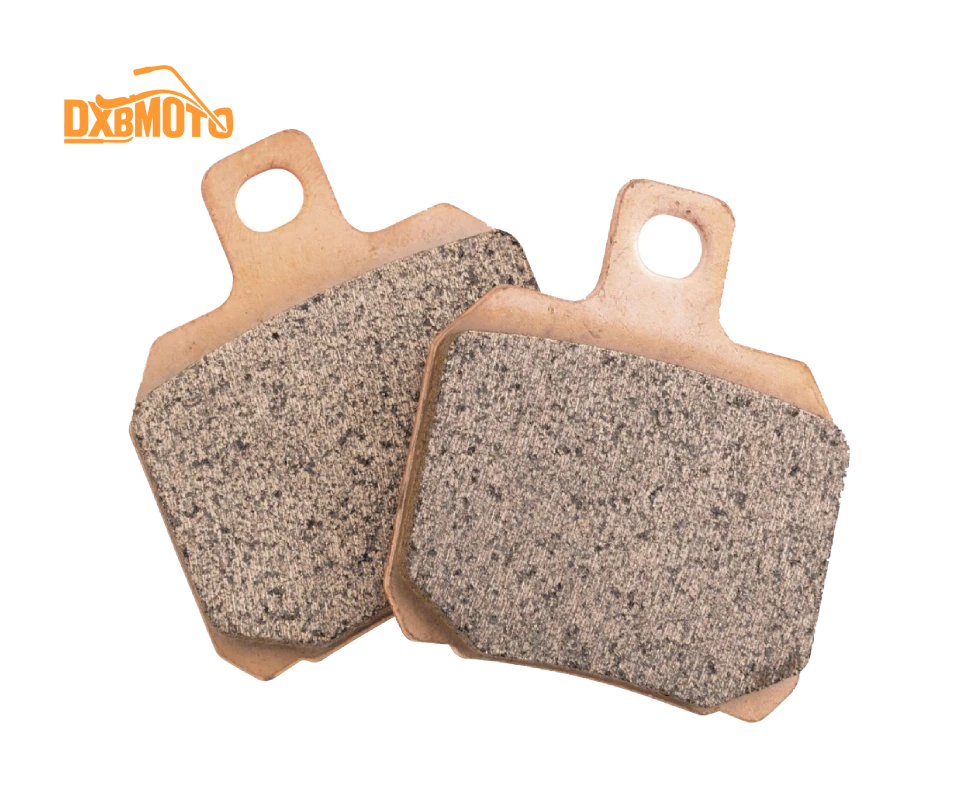
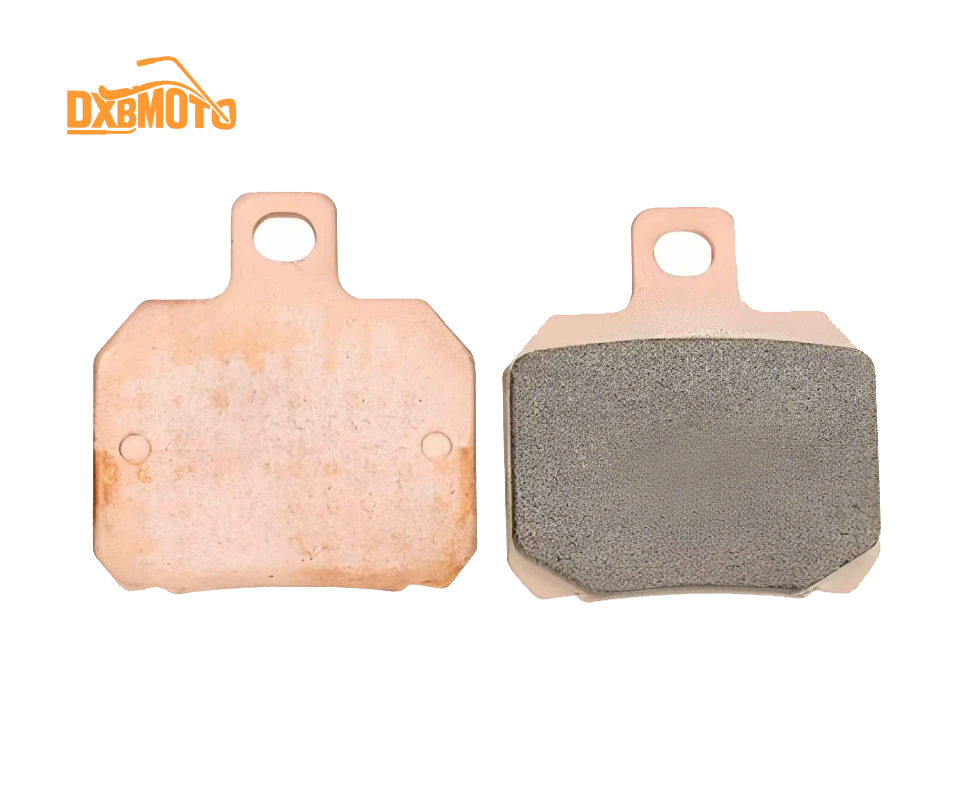
Choosing the right motorcycle brake pads starts with fitment. The pad must match your exact motorcycle model, model year, brake position and caliper before you compare compounds or performance. After fitment is confirmed, choose the pad based on how you ride: daily street use, touring, sport riding or track use. You can find compatible brake pads and motorcycle spare parts from DXB Moto.

Brake pads can feel very different even when they fit the same bike. Organic, semi-metallic and sintered pads differ in initial bite, heat resistance, durability and braking feel. This guide explains those differences, shows what to check before ordering, and helps you narrow down the right option without buying a pad that does not suit your motorcycle or riding style.

How Do I Know Which Brake Pads Fit My Motorcycle?

Start with fitment, not pad material or brand. A brake pad should match your motorcycle’s exact make, model, model year and brake position. Manufacturers such as EBC use vehicle-specific fitment data for this reason rather than recommending pads by motorcycle brand alone.
Before ordering, check:

  • Motorcycle make and exact model
  • Model year
  • Front or rear brake
  • Brake caliper fitted to the bike
  • Single or dual front-disc setup
  • Current brake pad part number, if available

Do not assume that a pad fits just because it is listed for the same motorcycle family. Different model years or versions can use different braking components.

Before You Buy

Brake Pad Fitment Check
01 Make
02 Model
03 Year
04 Front / Rear
05 Caliper
06 Number of Discs
07 Pad Reference
Confirm all seven before ordering your brake pads.

If any of these details are uncertain, confirm the fitment before placing the order. It is much safer than choosing a pad based only on its shape or dimensions.

What Are the Different Types of Motorcycle Brake Pads?

Motorcycle brake pads are generally divided into organic, semi-metallic and sintered compounds. The right choice depends on the braking feel, heat resistance and durability you need—not simply which material sounds more “performance-focused.” EBC also classifies modern motorcycle pads into these three main groups.

Brake Pad Type Best For Main Advantage Main Trade-Off
Organic Light street riding, commuting Smooth and progressive braking feel Lower resistance to repeated high-heat braking
Semi-Metallic Everyday and mixed road use Balance of feel, durability and heat performance Does not specialise as strongly as either extreme
Sintered Street, sport, touring and demanding braking Strong heat resistance and long service life Can produce more noise and may increase rotor wear depending on the pad/disc combination

Organic Brake Pads

Organic pads use fibres bonded together with resin and generally provide a smoother, more progressive brake feel. They can work well for lighter motorcycles and less demanding street use, but they are not usually the first choice where the brakes regularly see high temperatures.

Semi-Metallic Brake Pads

Semi-metallic pads combine organic material with metallic fibres. Their main advantage is balance: good cold performance, reasonable durability and controlled braking for everyday riding. Manufacturers also use semi-metallic or semi-sintered compounds for applications such as scooters and heavier street motorcycles.

Sintered Brake Pads

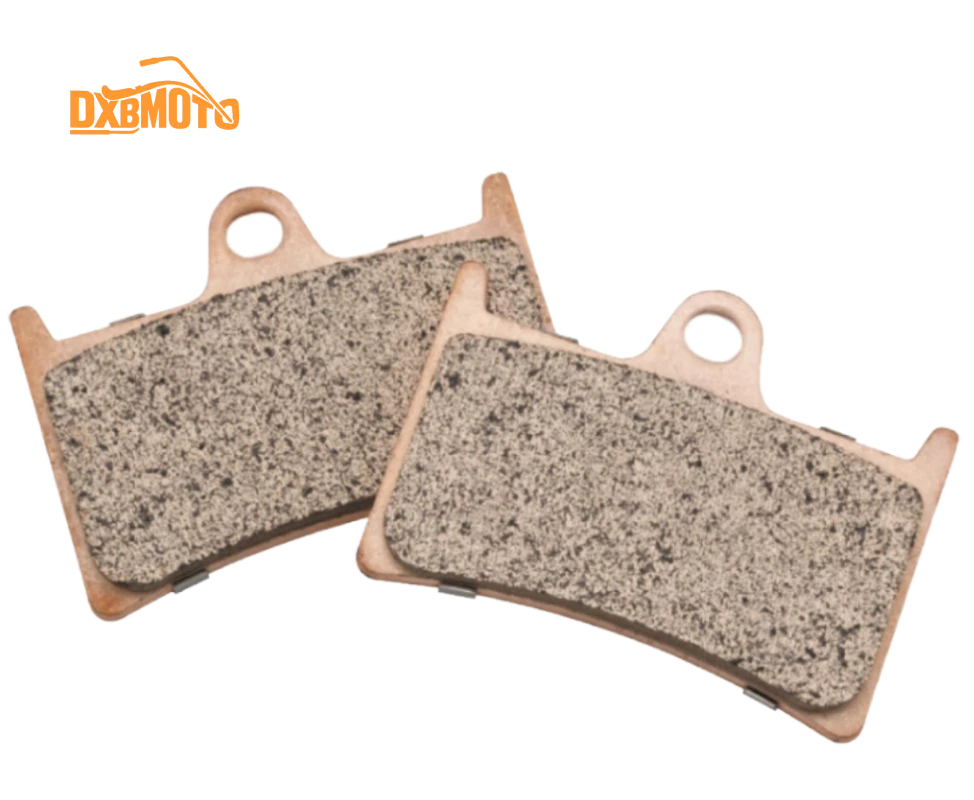
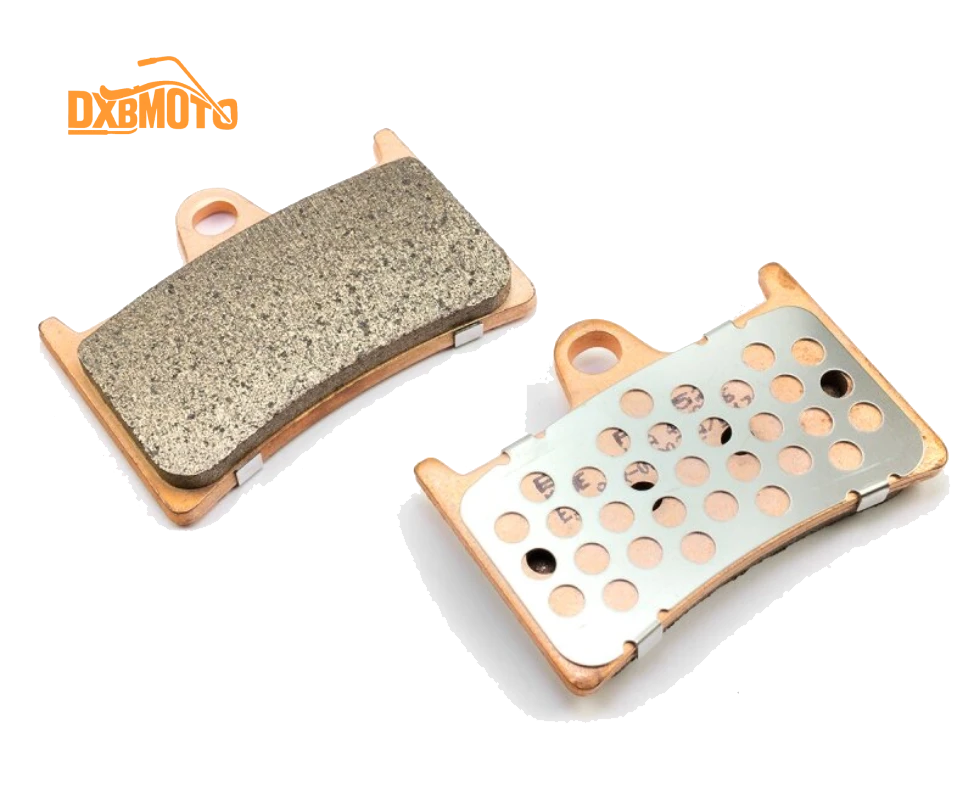
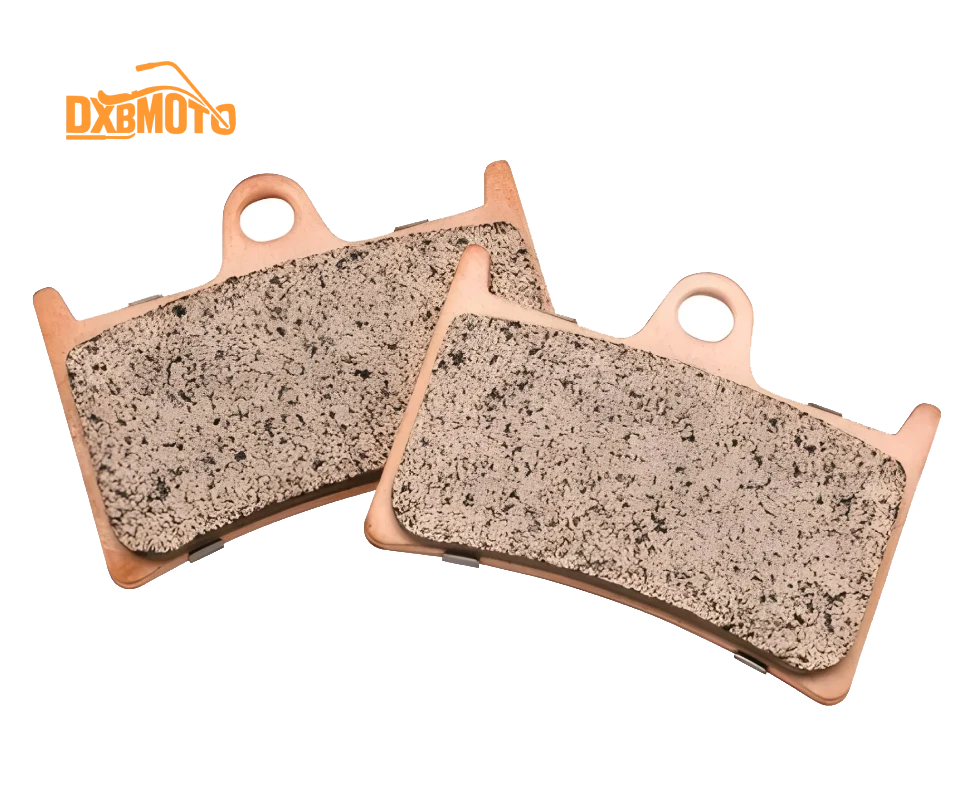
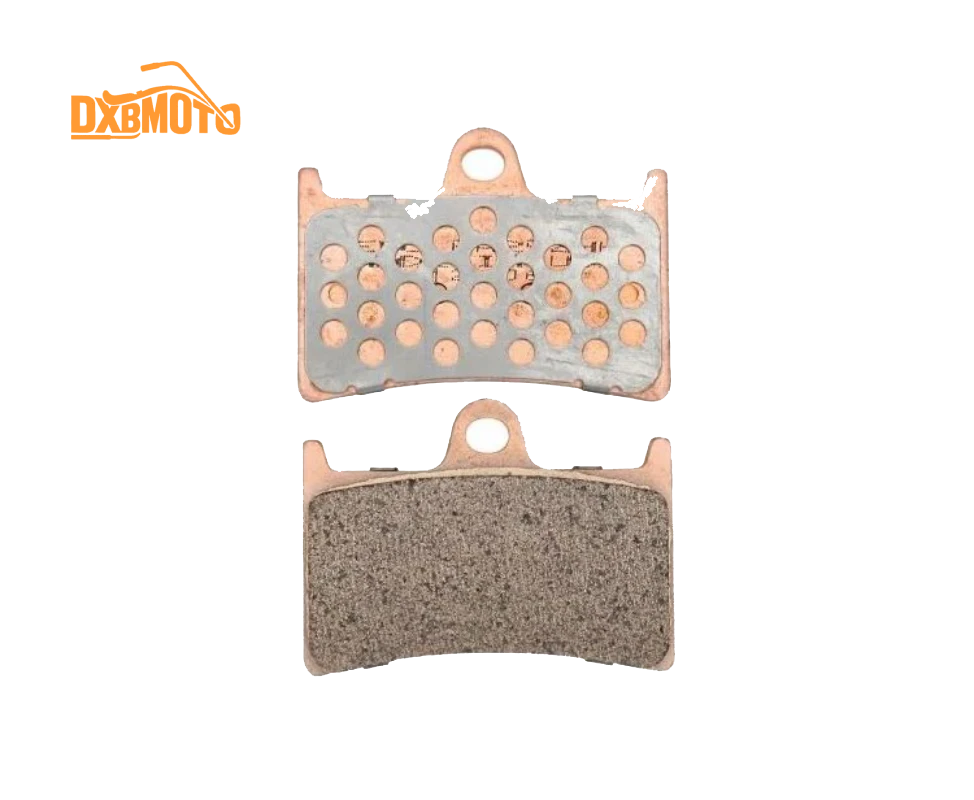
Sintered pads are made from metallic materials fused under heat and pressure. They are designed to cope well with heat, repeated braking and demanding conditions, which makes them common on modern road and performance motorcycles.
Important: pad material comes after fitment. A sintered pad with impressive specifications is still the wrong pad if its reference, position or caliper fitment does not match your motorcycle.

Are Sintered or Organic Brake Pads Better?

Neither is automatically better. Organic pads are generally better when you want smooth, progressive braking and lower rotor wear, while sintered pads are better suited to repeated braking, higher temperatures and more demanding riding conditions.
Choose organic pads if you mainly want:

  • Smooth and progressive brake feel
  • Everyday street or lighter motorcycle use
  • Lower noise
  • Less aggressive rotor wear

Choose sintered pads if you need:

  • Better resistance to brake heat
  • Consistent performance during repeated hard braking
  • Longer service life in demanding use
  • Reliable performance in both wet and dry conditions

The motorcycle itself still matters. A heavy touring bike, fast street bike or performance motorcycle can place very different demands on its brakes than a lightweight commuter. Always confirm the manufacturer-approved pad type and exact fitment before changing compounds.

Are Sintered Brake Pads Good for Daily Street Riding?

Yes. Sintered brake pads can work very well for daily street riding, especially on modern sport, naked, touring and heavier motorcycles. They handle heat well, maintain consistent braking under repeated use and generally offer good durability.

However, “sintered” does not automatically mean “race only.” For example, EBC positions its Double-H sintered pads as street-sport pads, while it offers separate compounds for track-day and racing use. (ebcbrakes.com)

For a daily rider, sintered pads make the most sense when the motorcycle regularly sees:

  • Fast road riding
  • Frequent braking in traffic
  • Highway-to-city riding
  • Higher motorcycle or luggage weight
  • Wet and dry riding conditions

The important point is still compatibility. A street-rated sintered pad is only a good choice when its part number, caliper fitment and rotor compatibility match your motorcycle.

What Does HH Mean on Motorcycle Brake Pads?

HH is a friction rating, not a fitment code. It indicates that the brake pad maintains a high friction classification across the test conditions used for brake-lining identification. SAE J866 is the standard used to classify brake-lining friction coefficients.

For riders, the practical point is simple: an HH-rated pad is designed to provide a strong and consistent braking response, but the HH marking alone does not tell you whether the pad fits your motorcycle or whether it is the best compound for your riding style.

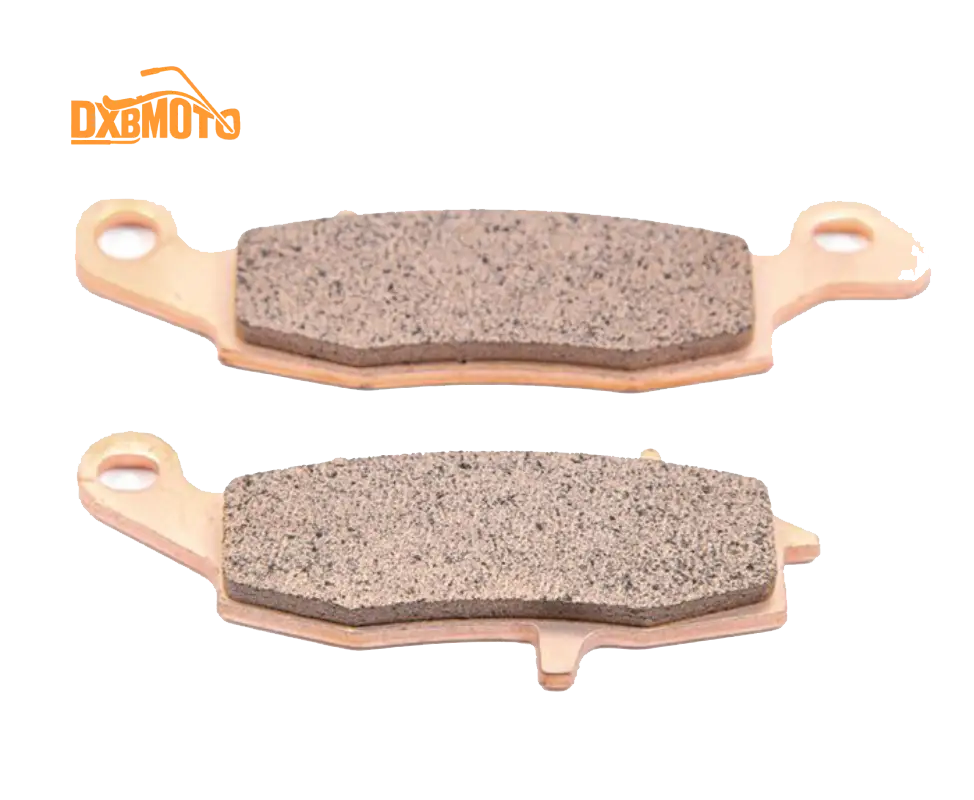
EBC’s Double-H range, the same family as the brake pads available from DXB Moto, is described by EBC as an ultra-high-friction HH-rated sintered pad intended primarily for fast street and performance motorcycle use.

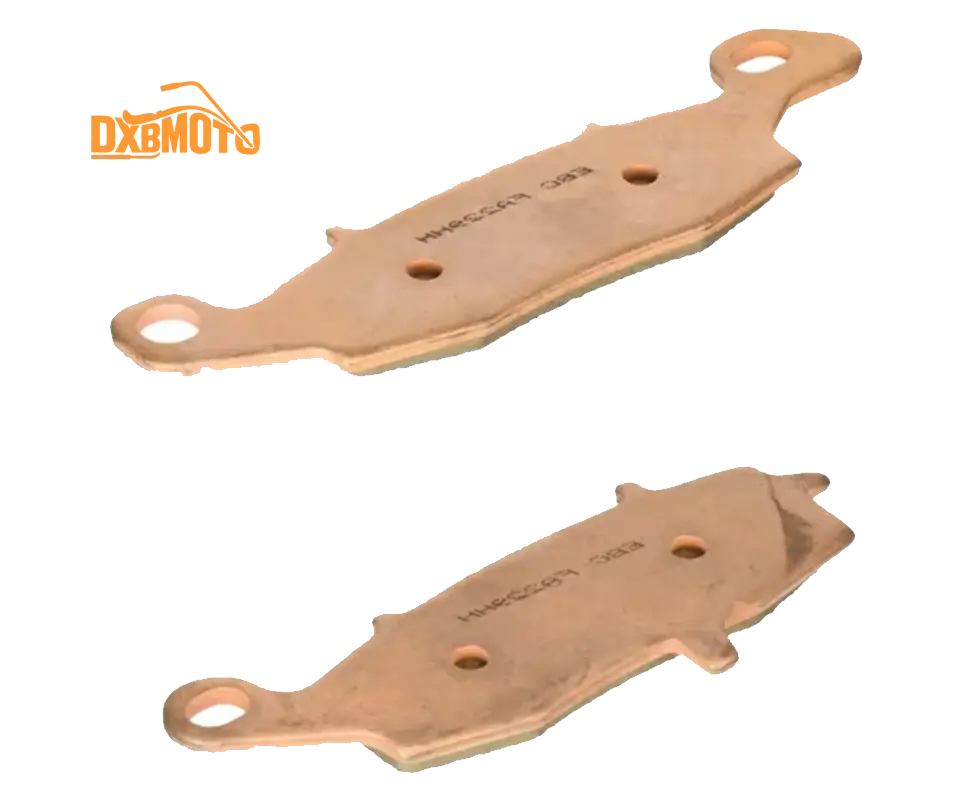
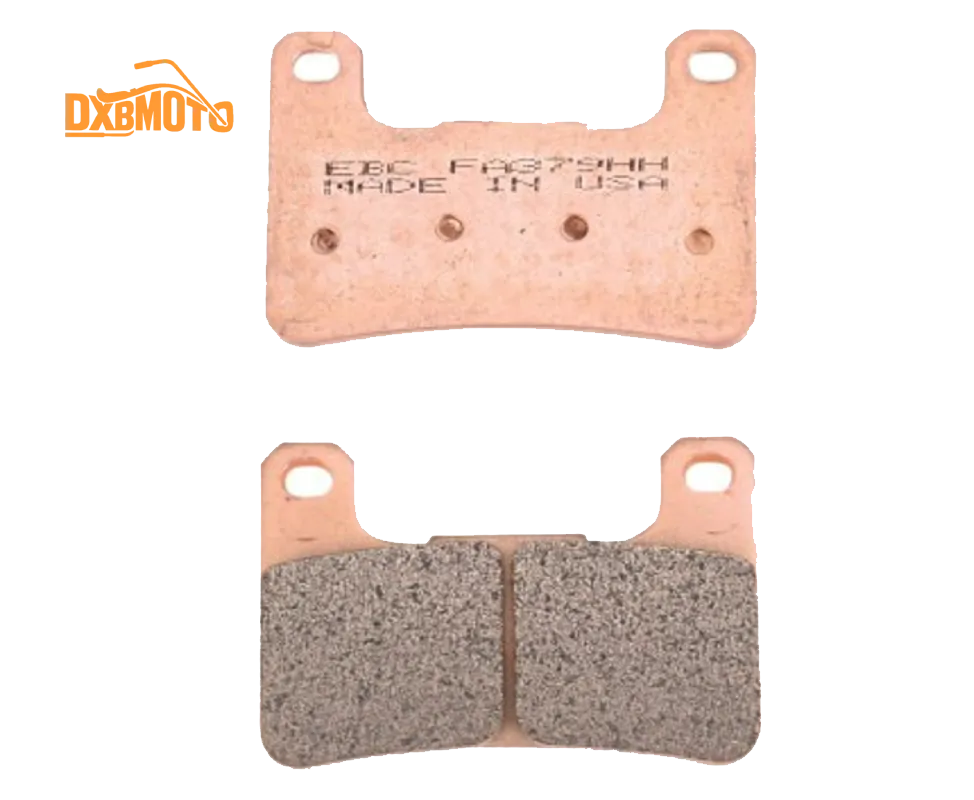
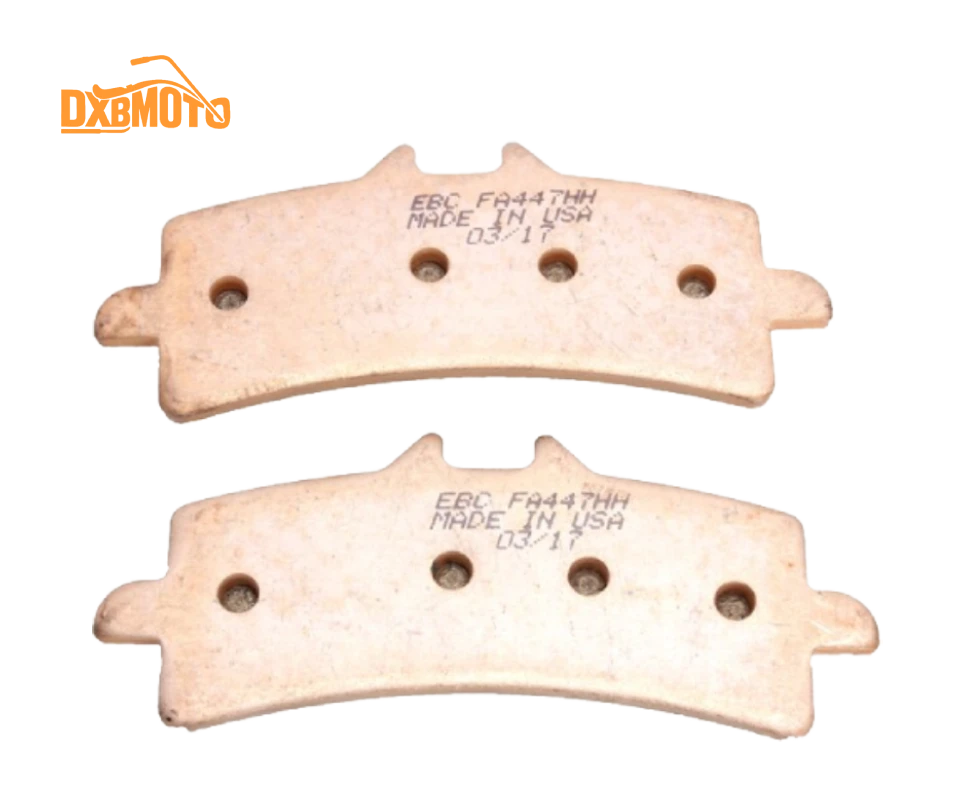
So when you see a reference such as FA447HH, read it as two separate pieces of information:

  • FA447 = the specific pad shape/reference
  • HH = the friction rating

The reference determines whether the pad fits your braking system; the HH suffix describes its friction characteristics. Always confirm the FA part number and motorcycle fitment first.

How Do I Know Which Brake Pads Fit My Motorcycle?

Which Brake Pads Should I Choose for My Riding Style?

Your riding style changes what you should prioritise from a brake pad. City riding needs good cold response and control, while faster road riding and track use place much more heat into the braking system.

Daily Street Riding

Look for predictable braking from cold, smooth modulation and controlled initial bite. Organic or suitable street-focused sintered pads can both work depending on the motorcycle and braking system.

Best for: commuting, regular city riding and relaxed road use.

Sport and Fast Road Riding

Repeated harder braking generates more heat, so consistent performance as temperatures rise becomes more important. Sintered street-sport pads are often better suited to this type of use when approved for the motorcycle.

Best for: sport bikes, naked bikes and riders who regularly ride at a quicker road pace.

Touring & Heavier Motorcycles

A heavier motorcycle, passenger or luggage increases the load the brakes have to manage. Prioritise predictable braking, durability and consistency across repeated stops rather than simply choosing the pad with the strongest initial bite.

Best for: touring motorcycles, heavier bikes and regular two-up riding.

Track Riding

Track riding requires a different approach. Repeated high-speed braking generates significantly higher temperatures, and track-specific compounds are designed around those conditions. Do not assume that every high-friction street pad is automatically the correct track pad. (Galfer)

Quick rule: choose the pad for the riding you actually do most often—not for the most extreme riding your motorcycle could theoretically handle.

Which EBC Brake Pads Can I Buy from DXB Moto?

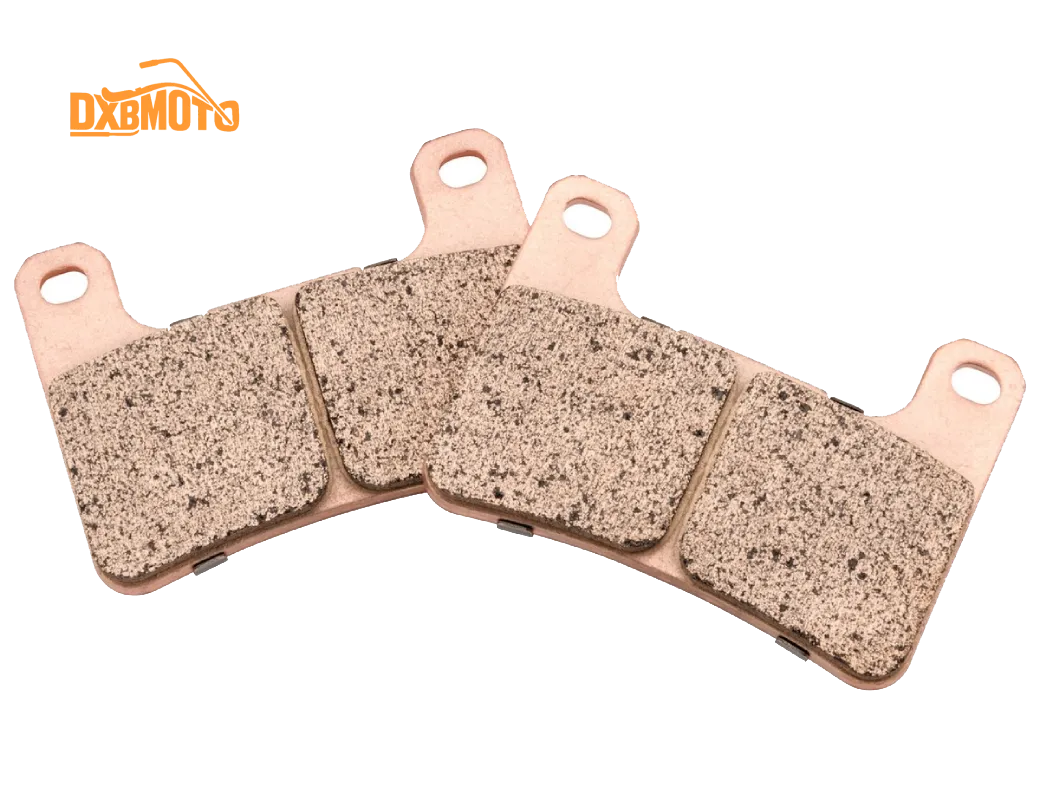
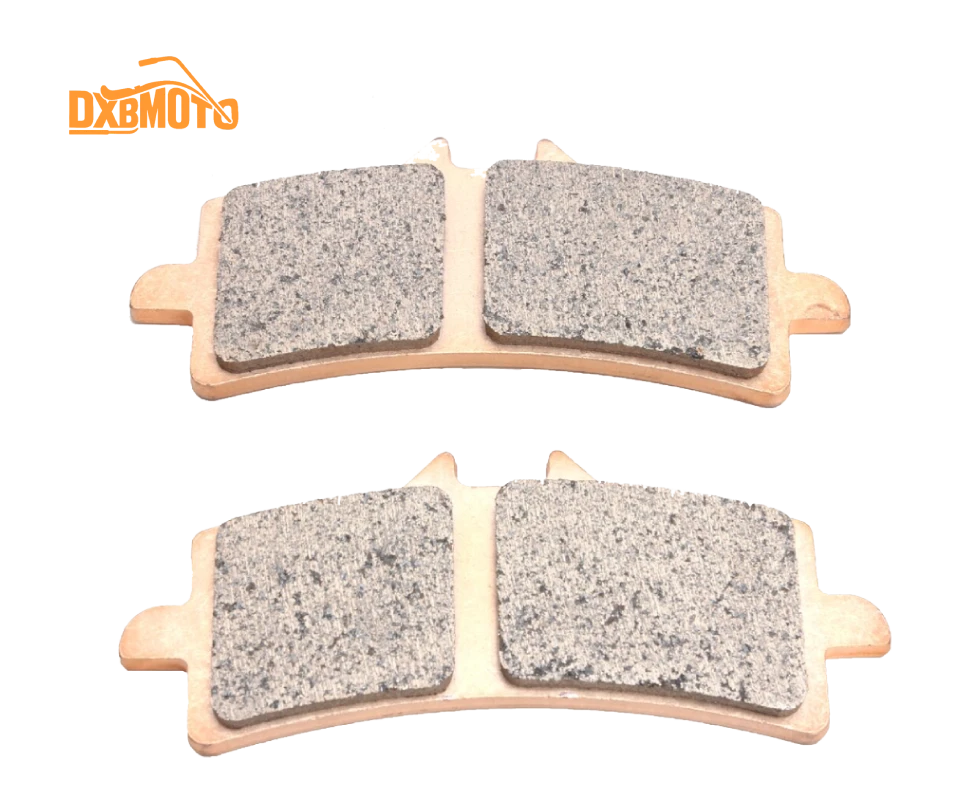
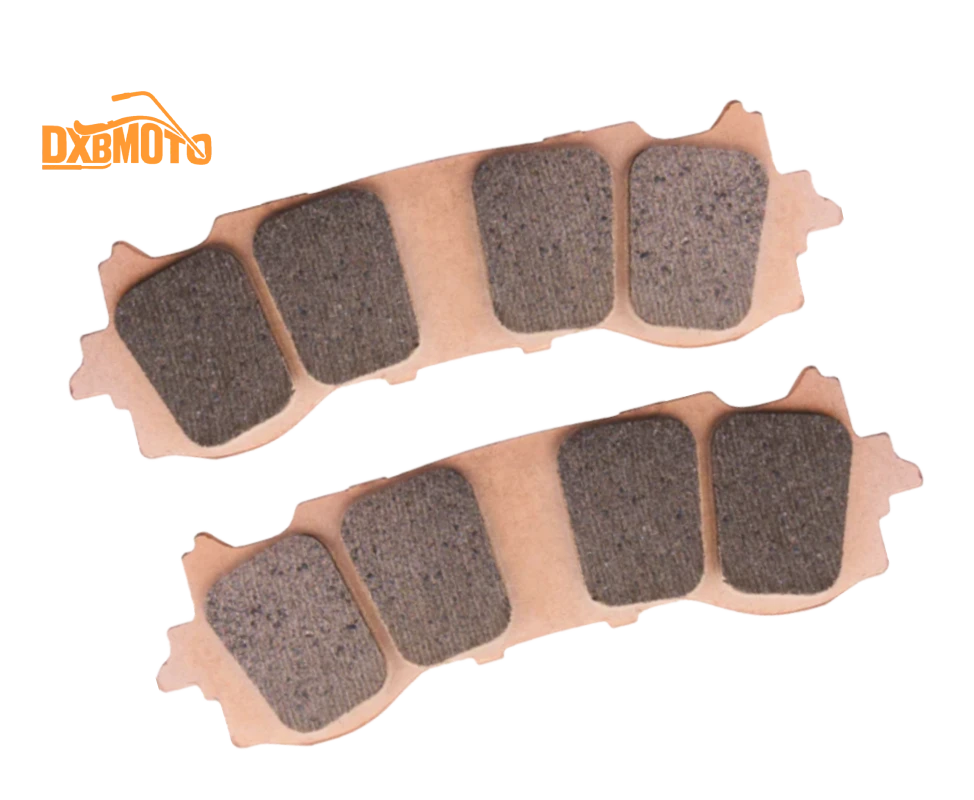
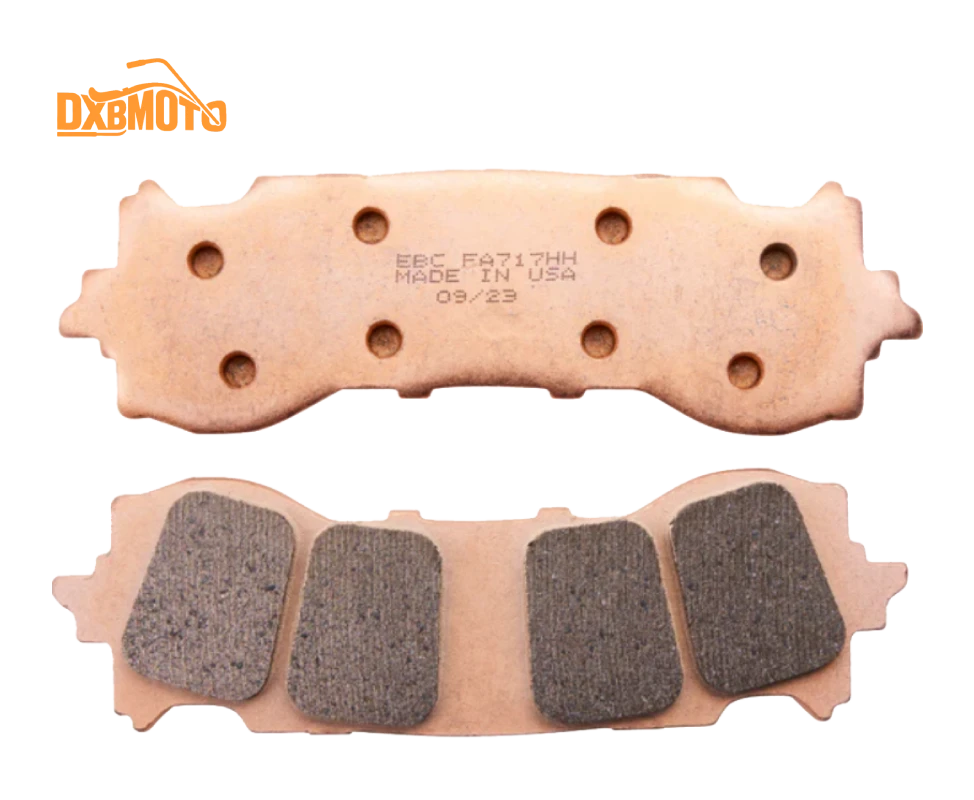
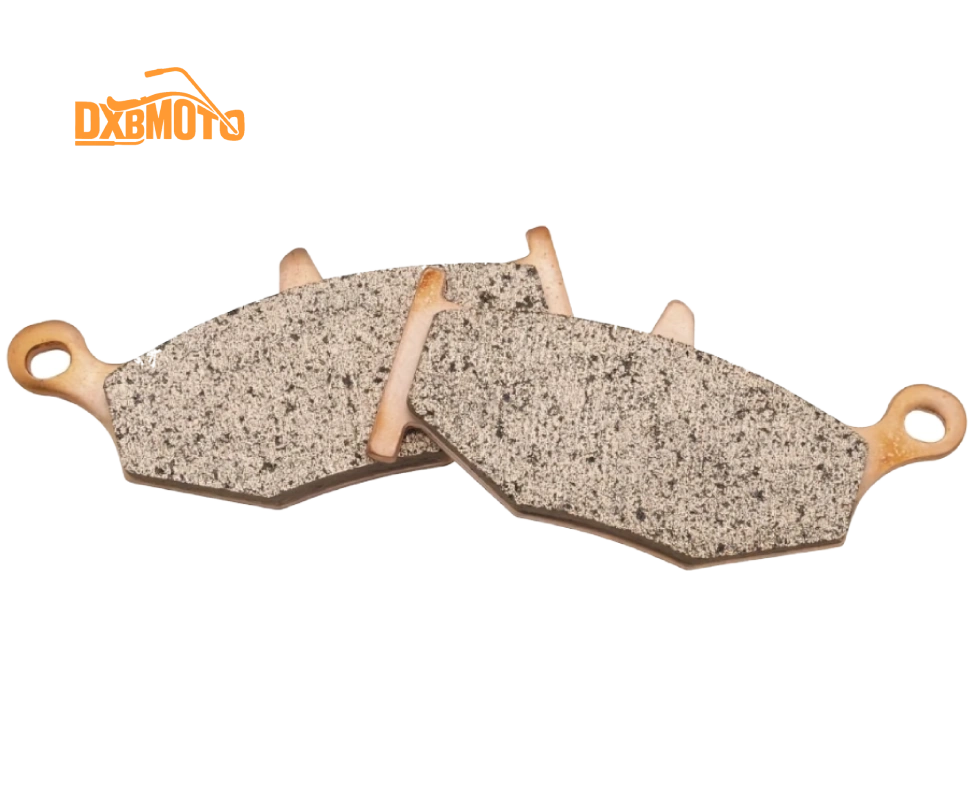
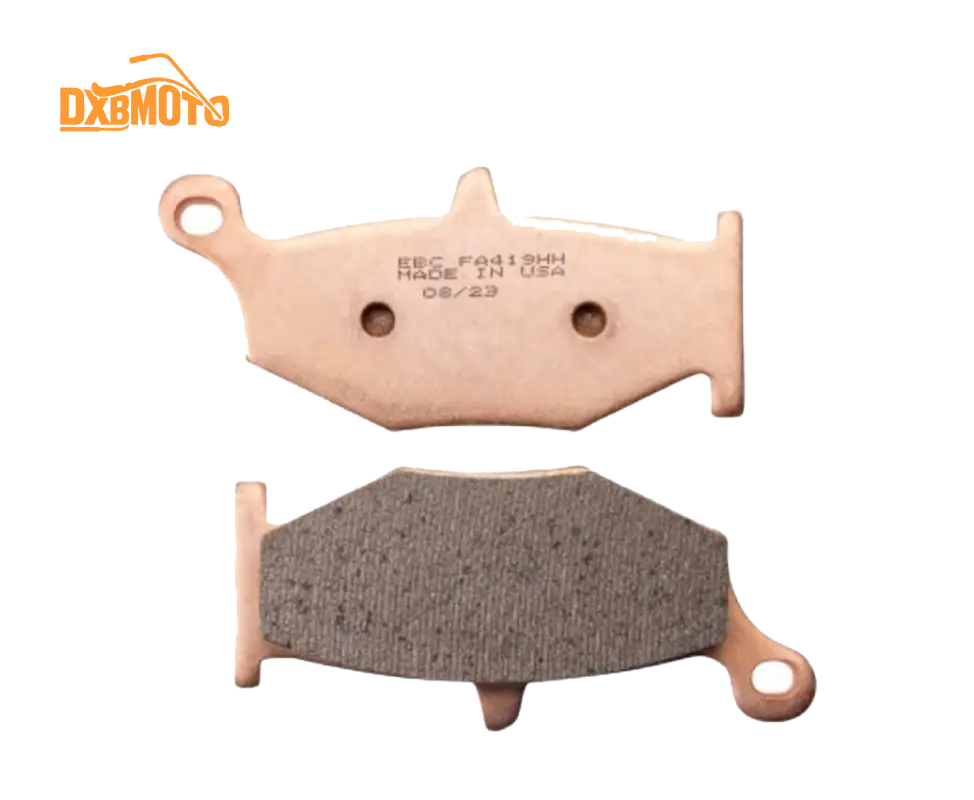
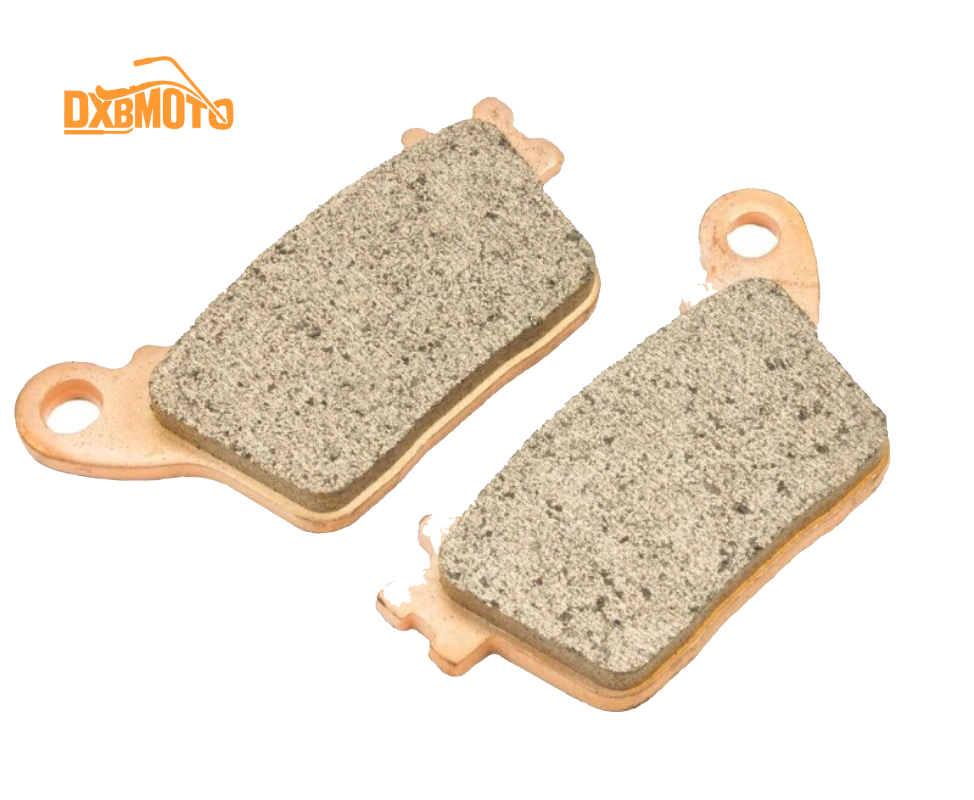
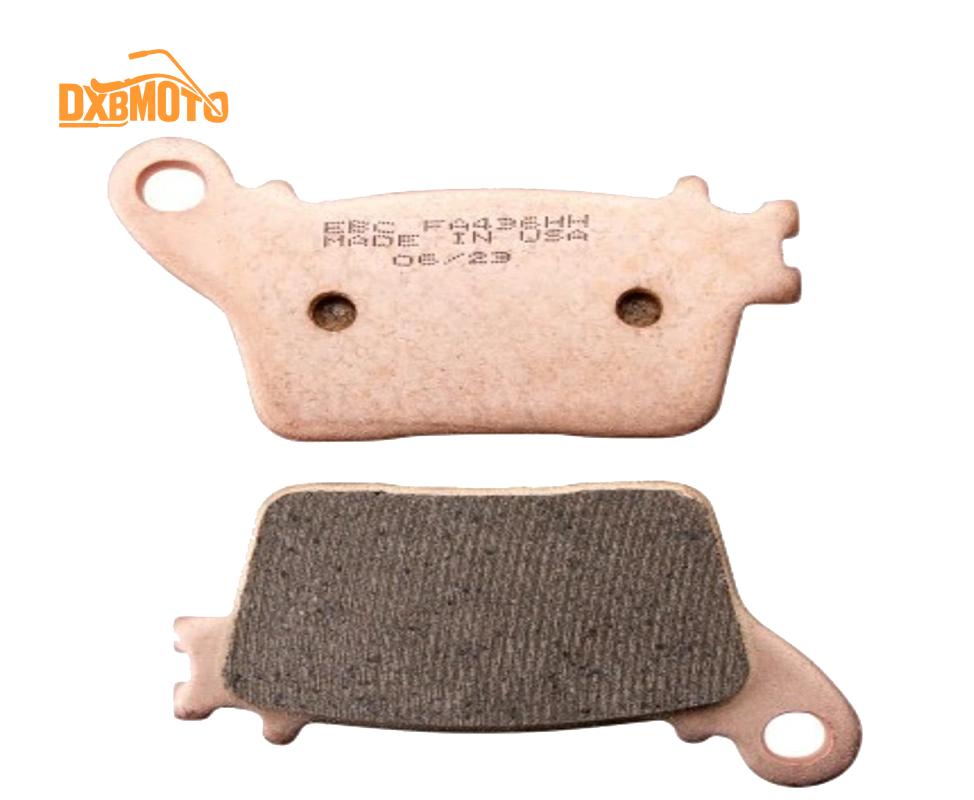
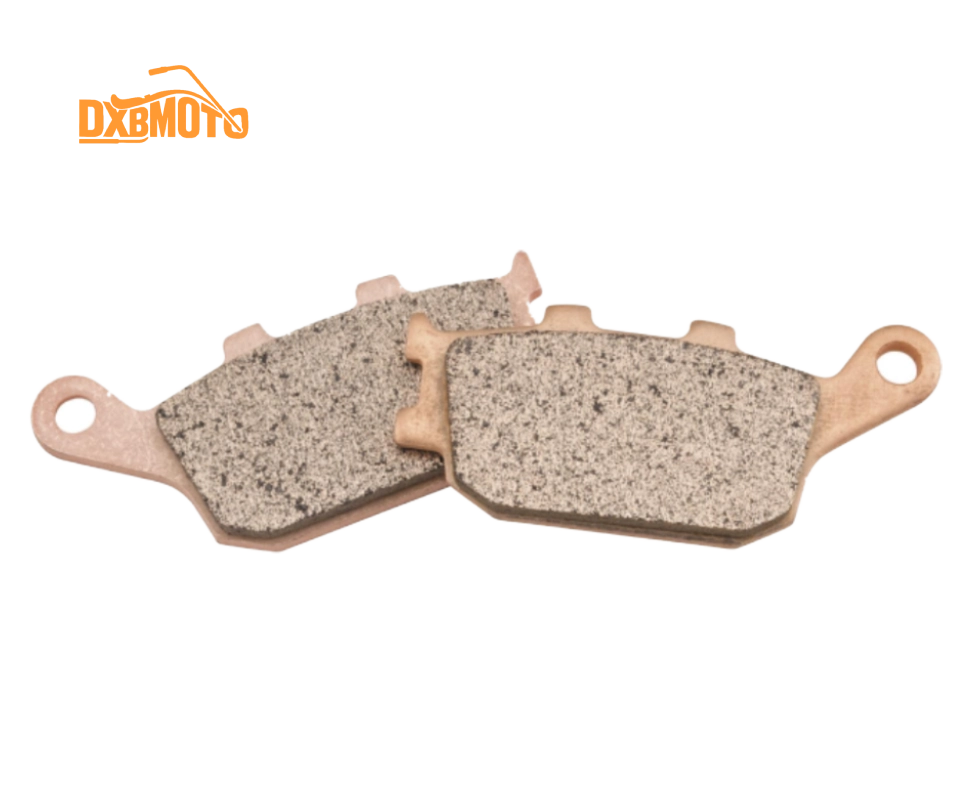
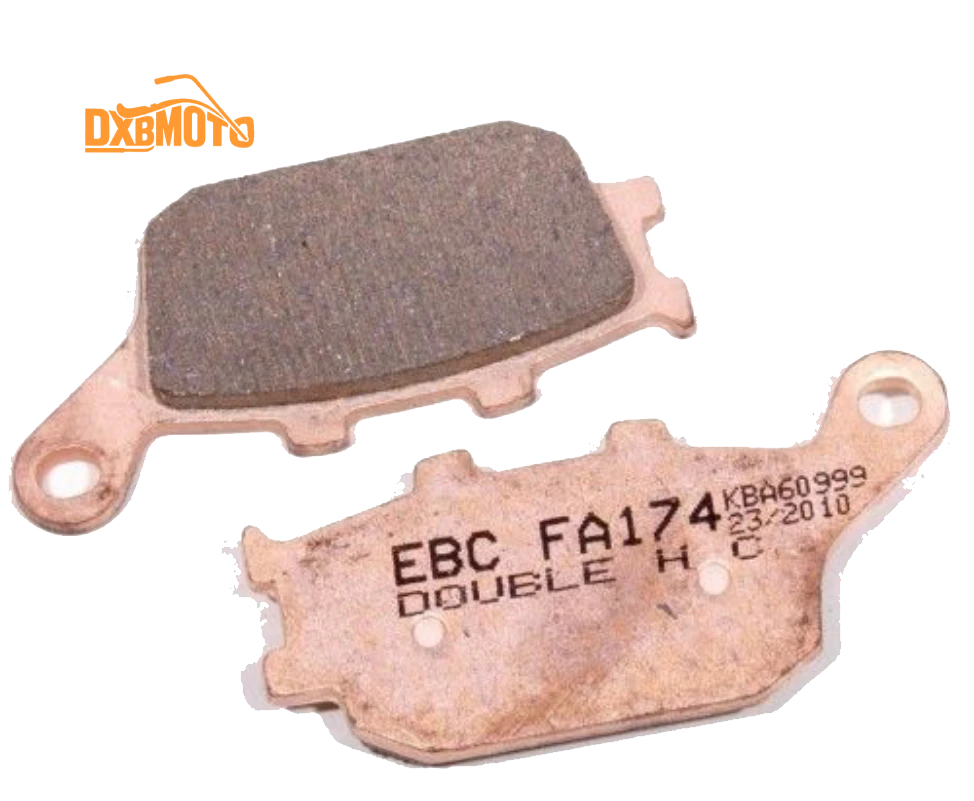
DXB Moto currently stocks EBC Double-H HH-rated sintered brake pads for a range of sport, naked, touring, adventure and performance motorcycles. The important point is to choose by the exact FA reference and confirmed fitment, not simply by motorcycle brand.

Front Brake Pads

Rear Brake Pads

Position Depends on the Motorcycle

Do not order from this list alone. Confirm the motorcycle model, year, brake position, caliper and required number of sets on the individual product page before purchase.

Browse all motorcycle spare parts in Dubai to check the currently available brake pad references.

Can I Use Sintered Brake Pads on Any Motorcycle?

No. A sintered pad is only suitable if its part number, caliper fitment and intended application match your motorcycle. The fact that a pad is sintered—or even HH-rated—does not mean it can be fitted to every bike.

Motorcycle brake manufacturers offer different compounds for different applications. EBC, for example, lists separate sintered, semi-sintered and other motorcycle-specific pad ranges rather than treating one compound as suitable for every braking system.

Before switching to a sintered pad, confirm:

  • The exact pad reference for your motorcycle
  • Front or rear brake position
  • Model year and caliper
  • Rotor condition and compatibility
  • The type of riding the pad was designed for

The pad and disc should work as a system. Galfer likewise notes that matching the brake pad and disc correctly is important for consistent braking performance and reliability.

Do Front and Rear Motorcycle Brake Pads Need to Be the Same?

No. Front and rear motorcycle brake pads do not have to be the same compound or part number. The two ends of the bike do different jobs under braking, and manufacturers often specify different pad references for the front and rear. Galfer, for example, lists dedicated front and rear compounds within the same motorcycle brake-pad range.

In most road motorcycles, the front brake handles a larger share of the braking load, so front pads are usually chosen with strong, consistent braking and heat management in mind. Rear pads may be tuned more toward control and stability.

What matters is that each pad is correct for its position:

  • Front pad reference must match the front caliper
  • Rear pad reference must match the rear caliper
  • Do not assume the same FA number fits both ends
  • Follow the fitment specified for your exact motorcycle and model year

This is also why DXB Moto lists some EBC pads specifically as front or rear applications rather than treating them as interchangeable.

Do I Need One or Two Sets of Front Brake Pads?

It depends on how many front calipers and rotors your motorcycle uses. If the bike has a single front disc with one caliper, one pad set may be enough. If it has dual front discs with two calipers, you will usually need two pad sets to service both sides.

This is important because many motorcycle brake pads are sold as a set for one rotor / one caliper. For example, DXB Moto lists the EBC FA447HH and FA379HH with coverage for one front rotor and one caliper.

For motorcycles with two front calipers, both sides should normally be replaced together rather than fitting fresh pads to only one side. Galfer specifically recommends replacing both front sets at the same time on dual-front-caliper motorcycles to maintain balanced braking.

Before checkout, check:

  • One front disc + one caliper → usually 1 pad set
  • Two front discs + two calipers → usually 2 pad sets
  • Never assume the quantity from the product photo
  • Check the product’s set coverage and your motorcycle’s brake setup

Important: “one set” does not necessarily mean enough pads for the entire front brake system. Always confirm how many calipers that set is designed to service.

Do ABS Motorcycles Need Special Brake Pads?

Not necessarily. ABS does not mean you need a completely separate type of brake pad. The priority is still choosing a pad that is approved for your exact motorcycle, caliper and brake position. Brembo likewise recommends checking pad compatibility by the specific motorcycle model rather than treating ABS as a standalone fitment category.

What ABS does make more important is predictable and progressive braking behaviour. Galfer specifically recommends pads with progressive, controllable response for ABS-equipped motorcycles so the braking system can operate consistently.

When buying pads for an ABS motorcycle, check:

  • Exact motorcycle model and year
  • Correct front or rear pad reference
  • Caliper compatibility
  • Suitable compound for your riding style
  • Predictable braking response

So, do not search for an “ABS brake pad” based on the ABS label alone. Find the correct pad for your motorcycle first, then compare the compound and braking characteristics.

How Do I Know When My Motorcycle Brake Pads Need Replacing?

How Do I Know When My Motorcycle Brake Pads Need Replacing?

There is no single mileage interval that applies to every motorcycle brake pad. Pad life changes with the compound, motorcycle weight, riding style, braking frequency and conditions, so regular inspection is more useful than relying on a fixed kilometre figure. Brembo likewise recommends checking pad condition regularly and replacing pads based on wear and braking behaviour rather than a universal interval.

Check the pads if you notice:

  • Friction material approaching the manufacturer’s wear limit
  • Grinding or unusual braking noise
  • Noticeably reduced braking performance
  • Uneven or abnormal pad wear
  • Heavy scoring or damage on the brake disc
  • One pad wearing substantially faster than the other

Uneven wear also deserves attention rather than simply fitting another set of pads. Caliper condition and pad alignment can contribute to abnormal or tapered wear.
Do not wait for metal-to-metal contact. Once the friction material is exhausted, the pad backing plate can contact the rotor and turn a routine pad replacement into a more expensive brake repair.

Also, do not use mileage alone to decide. A motorcycle used heavily in traffic or for faster riding may consume pads very differently from the same bike ridden gently over longer distances.

What Should I Check Before Installing New Brake Pads?

Before fitting new motorcycle brake pads, inspect the rest of the braking system as well. New pads will not perform properly if the rotor is badly worn, the caliper is sticking or the brake fluid is in poor condition. Brembo recommends checking pad wear, brake fluid condition and caliper cleanliness as part of regular brake maintenance.

Check these items before installation:

  • Brake disc condition — look for deep scoring, damage or excessive wear.
  • Caliper pistons — make sure they move correctly and are not sticking.
  • Pad pins and retaining hardware — inspect for damage, corrosion or abnormal wear.
  • Brake fluid — check its condition and follow the motorcycle manufacturer’s replacement interval.
  • Pad orientation and fitment — confirm the correct front/rear reference before installation.
  • Required quantity — dual front-caliper motorcycles normally require pads for both calipers.

A sticking piston or caliper can cause uneven wear and excessive brake temperatures, so simply replacing the pads may not solve the underlying problem. EBC also recommends checking caliper operation and using the correct pad for the intended application.

If you notice uneven pad wear, damaged discs, sticking calipers or an unusual brake lever feel, have the braking system inspected through a motorcycle service and repair in Dubai before relying on the new pads.

Does Dubai Heat Affect Motorcycle Brake Pad Choice?

Dubai heat can increase the thermal load on a motorcycle’s braking system, but it does not mean every rider automatically needs a sintered pad. Fitment, motorcycle type and riding style still come first.

Hot roads, stop-and-go traffic and repeated braking can put more heat into the pads, discs and brake fluid. DXB Moto also notes that worn pads or old brake fluid can make braking feel less consistent during hot-weather riding.

For riders in Dubai, it is sensible to prioritise:

  • A pad compound suited to repeated braking
  • Good heat resistance for heavier or performance motorcycles
  • Correct brake fluid condition
  • Healthy discs and freely moving calipers
  • More frequent brake checks during demanding summer use

This is where a quality street-focused sintered pad can make sense for many sport, naked and touring motorcycles—but only when the pad is approved for the bike.

For more local maintenance advice, see common motorcycle problems in Dubai heat.

Motorcycle Brake Pad Buying Checklist

Before ordering motorcycle brake pads, run through this checklist:

  1. Confirm the exact motorcycle make and model
  2. Check the model year
  3. Identify whether you need front or rear pads
  4. Confirm the caliper fitted to the bike
  5. Check whether the front uses one or two discs
  6. Match the correct brake pad reference
  7. Choose the compound for your actual riding style
  8. Inspect the brake disc condition
  9. Confirm how many pad sets are required
  10. Recheck fitment before checkout

The most common mistake is choosing by motorcycle brand, pad appearance or compound alone. Fitment comes first.

Choose the Right Brake Pads with Confidence

The right motorcycle brake pad is not simply the one with the highest friction rating or the most aggressive compound. Correct fitment comes first, followed by the pad type that matches your motorcycle, braking system and riding style.

Before ordering, confirm the exact model, year, front or rear position, caliper, number of discs and pad reference. If those details match, you can then compare compounds based on the braking feel, heat resistance and durability you actually need.

DXB Moto stocks EBC Double-H sintered brake pads for selected motorcycles, with individual fitment information available on each product page.

Check the available brake pads and confirm your fitment before ordering.
Frequently Asked Questions

How do I find the correct brake pad part number for my motorcycle?

Check your motorcycle’s exact make, model, model year, brake position and caliper. Do not choose a pad only by its shape or motorcycle brand. If the current pads are accessible, the reference printed on the backing plate can also help confirm the correct fitment.

Are EBC Double-H brake pads good for street riding?

Yes. EBC Double-H pads are HH-rated sintered street-sport brake pads designed for strong braking, heat resistance and consistent performance. They can work well on sport, naked, touring and heavier road motorcycles when the exact FA reference matches the bike.

Can I use different brake pads on the front and rear?

Yes. Front and rear brakes often use different pad shapes, part numbers and sometimes different compounds. What matters is that each pad is correct for its own caliper, brake position and motorcycle application.

Should I replace both front brake pad sets together?

If your motorcycle has dual front discs and two front calipers, both front pad sets should normally be replaced together. This helps maintain balanced braking and consistent performance across both sides of the front brake system.

How long do motorcycle brake pads last?

There is no single mileage that applies to every motorcycle. Brake pad life depends on the compound, motorcycle weight, riding style, traffic, braking frequency and brake-system condition. Check the remaining friction material and follow the manufacturer’s wear limit rather than relying only on kilometres ridden.

DXB Moto Team combines technical content writing experience with practical knowledge of motorcycle parts, fitment checks and rider needs. The team focuses on clear buying guides, spare-parts references, maintenance topics and real-world motorcycle use in Dubai and across the UAE.

Leave a Reply

Your email address will not be published. Required fields are marked *