
Blog
Original vs Aftermarket Motorcycle Parts Guide
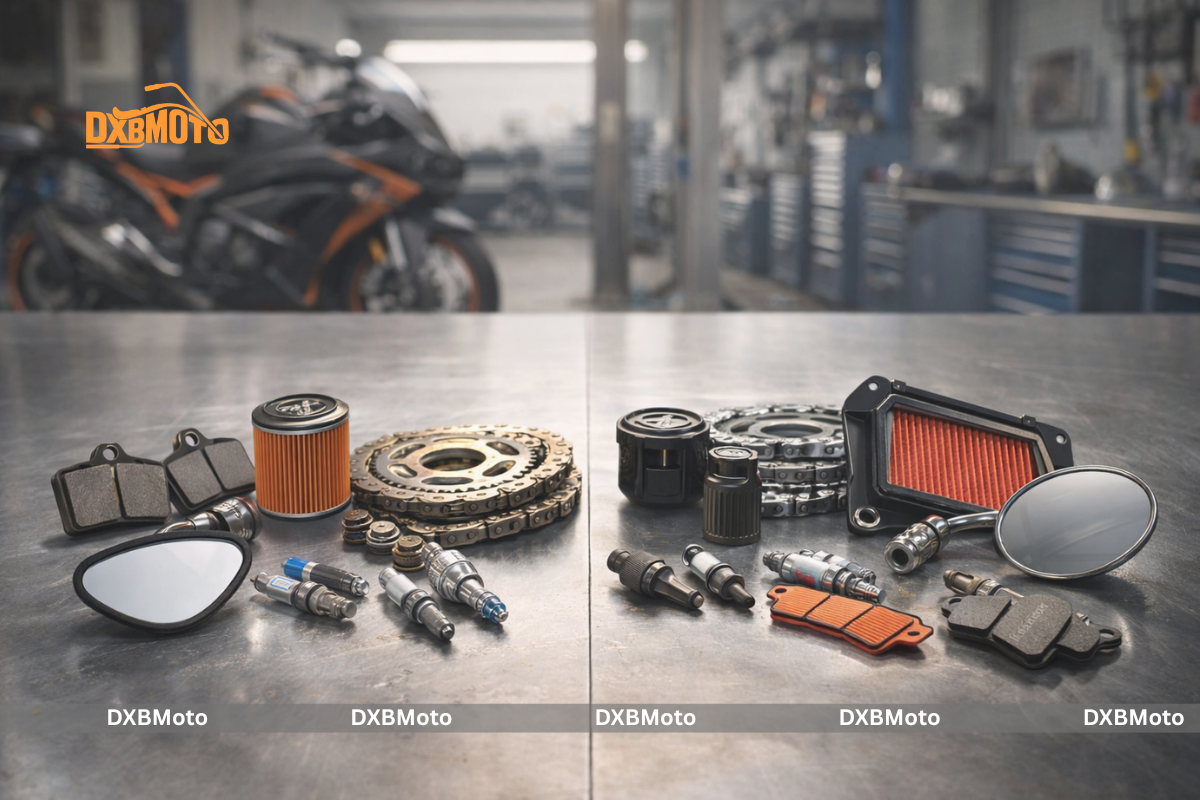
Original vs Aftermarket Motorcycle Parts is one of the most important choices riders face when replacing mirrors, brake parts, filters, body panels, electronics, lights, or engine components. The best option depends on the part itself, the motorcycle model, the risk level, your budget, and how you use the bike.
In Dubai, this decision matters even more because motorcycles deal with heat, dust, long highway rides and regular stop-start traffic. Some parts are better kept original, while others can be replaced with quality aftermarket options if fitment, brand quality and installation are checked properly. Read more about this in this article on DXB Moto.
What Are Original Motorcycle Parts?
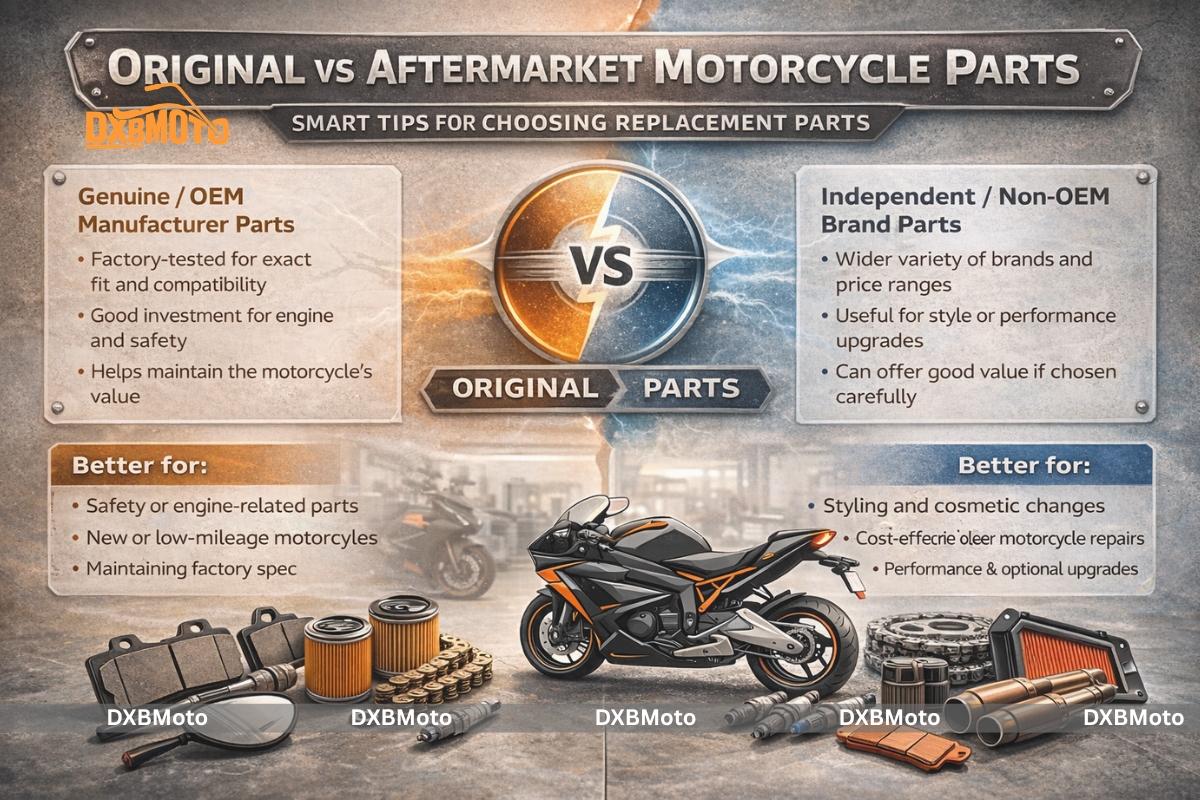
Original motorcycle parts, often called OEM parts, are made by the motorcycle manufacturer or by an approved supplier for that specific model. These parts are designed to match the motorcycle’s original specifications, fitment, and performance requirements. For example, a genuine Honda filter, Yamaha brake lever, BMW electronic component, or Ducati engine-related part would usually be treated as an original part. Riders often choose OEM parts when exact fitment, predictable quality and long-term reliability matter most. Original parts are usually the safer choice for critical systems such as engine components, braking parts, sensors, electronics and parts that affect the motorcycle’s mechanical reliability.
What Are Aftermarket Motorcycle Parts?
Aftermarket motorcycle parts are made by third-party manufacturers instead of the motorcycle brand itself. These parts may be designed as direct replacements, styling upgrades, performance improvements or budget-friendly alternatives. The aftermarket category is very wide. Some aftermarket brands are highly respected and produce excellent parts. Others focus mainly on low prices, and quality can vary. That is why riders should not judge aftermarket parts as one single category. A mirror, windscreen, luggage rack, backrest, phone mount or styling cap may work well as an aftermarket part. But a random low-quality brake component, electronic part or engine-related item can create more risk if the fitment or quality is poor.
Original vs Aftermarket Motorcycle Parts: Quick Comparison
| Buying Factor | Original Parts | Aftermarket Parts |
|---|---|---|
| Fitment | Usually designed for exact factory fit. | Can fit well, but must be checked by model and year. |
| Price | Usually more expensive. | Often more flexible, from budget to premium options. |
| Quality | Consistent and manufacturer-controlled. | Depends heavily on the aftermarket brand. |
| Best For | Engine, brake, electronics and critical components. | Mirrors, accessories, body parts, lighting, styling and selected upgrades. |
| Risk Level | Lower risk when exact specification matters. | Can be smart if the brand, fitment and installation are checked. |
When Original Parts Are the Better Choice
Original parts are usually the better option when the component affects safety, engine reliability, braking, electronics or long-term mechanical performance. These parts are built around the motorcycle manufacturer’s specification, so the fitment and expected performance are more predictable. Choose original motorcycle parts when the part controls how the motorcycle stops, runs, charges, cools, shifts or communicates with electronic systems. This includes brake components, engine parts, sensors, filters, electrical modules, fuel-related parts and critical mounting hardware. For riders who want factory-level fit and less installation guesswork, original parts are often worth the higher price.
When Aftermarket Parts Make Sense
Aftermarket parts can be a smart choice when the part is not safety-critical and the buyer wants better value, different styling or more upgrade options. Many riders use aftermarket mirrors, windscreens, luggage racks, seats, backrests, lights, protection parts and comfort accessories without any issue. The key is not simply choosing “aftermarket.” The key is choosing a good aftermarket part. Riders should check the brand, material, reviews, fitment notes, model year compatibility, and installation requirements before buying. For motorcycle accessories and practical upgrades, the motorcycle accessories in Dubai category is useful for comparing rider comfort, storage, protection and visibility products.
Parts That Need Extra Care Before Buying
Some parts are not always “bad” as aftermarket options, but they need careful checking before purchase. These include LED lights, mirrors, backrests, brake levers, caps, luggage brackets, electronics, fairing parts and model-specific accessories.
| Part Type | Recommended Buying Approach |
|---|---|
| Brake parts | Use OEM or trusted premium brands because braking affects safety. |
| Engine parts | Original parts are usually safer for long-term reliability. |
| Mirrors | Aftermarket can work well if thread size, angle and vibration are checked. |
| LED lights | Check voltage, wiring, beam direction and road-use suitability. |
| Backrests and seats | Check model year, seat shape, bracket fitment and rider comfort. |
| Body panels and styling parts | Aftermarket is common, but color match and mounting points matter. |
Dubai Riding Conditions Make Quality More Important
Motorcycles in Dubai face high temperatures, dust, traffic, highway riding and frequent short trips. A part that looks fine online may not perform well if the material, fitment or installation quality is weak. Heat can affect plastics, rubber, adhesives, electronics and low-quality finishes. Dust can also make poor seals, weak hardware and badly fitted components more noticeable over time. This is why choosing a part only because it is cheap can create more cost later. If a part is important to regular riding, it is better to think about long-term reliability, not only the first purchase price.
How to Decide Before Buying Any Motorcycle Part
Before choosing between original and aftermarket motorcycle parts, ask these questions:
- Does this part affect safety, braking, engine performance or electronics?
- Is the motorcycle new, valuable or still close to factory specification?
- Is the aftermarket brand known and trusted?
- Does the part clearly mention the correct model and year?
- Will installation need workshop support?
- Could a poor fitment damage nearby parts?
- Is the cheaper part still cheaper if it fails early?
For maintenance, installation checks and repair support, motorcycle service and repair in Dubai can help riders confirm whether a replacement part is suitable before regular use.
OEM, Aftermarket or Used Parts?
In some cases, riders also compare used parts. Used motorcycle parts can make sense when the part is original, in good condition and difficult to find new. But used parts should be inspected carefully, especially if they affect safety or mechanical reliability. For cosmetic parts, panels, mirrors or certain accessories, a good used part can be practical. For brake components, electronics, engine parts or heavily worn items, used parts need much more caution. If you are buying a second-hand bike or checking what parts may need replacement later, this used motorcycle Dubai guide can help you understand what to inspect before spending money.
Best Practical Rule for Riders
The best choice is often not 100% original or 100% aftermarket. Many experienced riders use a mix. Use original parts where precision, safety and reliability matter most. Use quality aftermarket parts where styling, comfort, storage, visibility or value matters more. Avoid unknown low-quality parts for critical systems, even if the price looks attractive. This balanced approach helps riders protect the motorcycle, control costs and still upgrade the bike in ways that match their riding style.
Final Verdict
Original vs Aftermarket Motorcycle Parts is not a simple “one is always better” decision. Original parts are usually better for critical systems, exact fitment and factory reliability. Aftermarket parts can be a smart choice for accessories, styling upgrades, comfort parts and selected performance improvements when quality and fitment are checked properly. For Dubai riders, the smartest choice is to match the part to the risk. If it affects safety, engine behavior or electronics, choose original or a premium trusted brand. If it is cosmetic, comfort-based or accessory-focused, a good aftermarket part can offer strong value.
Original vs Aftermarket Motorcycle Parts FAQ
Are original motorcycle parts always better?
Original motorcycle parts are usually better for critical systems such as engine components, brakes, electronics, sensors and parts where exact factory fitment matters. However, they are not always necessary for simple cosmetic accessories, mirrors, luggage parts or comfort upgrades if the aftermarket option is good quality and fits correctly.
Are aftermarket motorcycle parts safe to use?
Aftermarket motorcycle parts can be safe when they come from a trusted brand, match the exact motorcycle model and year, and are installed correctly. Riders should be more careful with low-quality aftermarket parts used for braking, electrical systems, engine performance or structural mounting points.
When should I choose OEM motorcycle parts?
Choose OEM motorcycle parts when the part affects safety, reliability, braking, engine performance, cooling, fuel delivery or electronics. OEM parts are also a better choice when the motorcycle is expensive, new, still close to factory specification or when exact fitment is more important than saving money.
When is an aftermarket motorcycle part a good choice?
An aftermarket motorcycle part can be a good choice for accessories, styling upgrades, mirrors, windscreens, backrests, luggage racks, protection parts and selected lighting upgrades. The buyer should still check material quality, brand reputation, model-year compatibility and installation requirements before buying.
What should I check before buying motorcycle parts online?
Before buying motorcycle parts online, check the exact motorcycle model, year range, fitment notes, material, package contents, mounting points, voltage for electrical items and whether professional installation is needed. For aftermarket parts, also check reviews, brand quality and whether the part is suitable for Dubai riding conditions.
DXB Moto Team combines technical content writing experience with practical knowledge of motorcycle parts, fitment checks and rider needs. The team focuses on clear buying guides, spare-parts references, maintenance topics and real-world motorcycle use in Dubai and across the UAE.